THE ADVENTURE COLLECTIVE® · Independent discovery and booking for outdoor travel

See colossal Hellenistic statues at Mount Nemrut and the world’s oldest megaliths at Göbekli Tepe on a 2-night, 3-day tour from Cappadocia. Expect long drives, sunrise views at 2,150 m, and short hikes across ancient stone terraces.
See colossal Hellenistic statues at Mount Nemrut and the world’s oldest megaliths at Göbekli Tepe on a 2-night, 3-day tour from Cappadocia. Expect long drives, sunrise views at 2,150 m, and short hikes across ancient stone terraces.
You arrive before dawn, the minivan leaving Cappadocia cutting through Anatolian plains as stars pale. By the time you step onto the gravel at Mount Nemrut's east terrace the air is thin and sharp at roughly 2,150 m; stone heads—some toppled, some intact—catch the first gold of sunrise and the wind seems to push you between east and west.
Verified experiences and guided adventures in the surrounding area.
Operated by I Am Cappadocia Tour & Travel · Kahta, Adıyaman
You arrive before dawn, the minivan leaving Cappadocia cutting through Anatolian plains as stars pale. By the time you step onto the gravel at Mount Nemrut's east terrace the air is thin and sharp at roughly 2,150 m; stone heads—some toppled, some intact—catch the first gold of sunrise and the wind seems to push you between east and west.
This two-night, three-day circuit threads Hellenistic commemoration and Neolithic ritual. Nemrut is the mausoleum of King Antiochos I (1st century BC), where colossal limestone statues—8–10 m bases—surround royal terraces carved into volcanic slopes. Göbekli Tepe, by contrast, rewrites the timeline: ringed pillars and carved animal reliefs from c. 9500–8000 BCE are often called the world's oldest megaliths and sit on a gentle plateau outside Şanlıurfa.
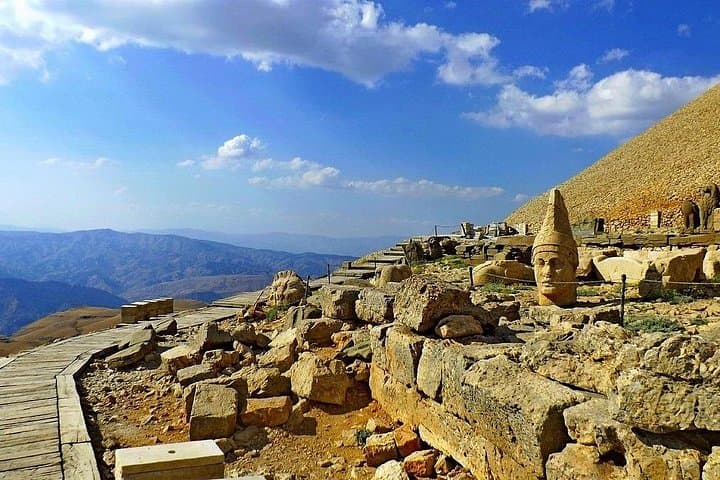
Geology here moves from volcanic cones and limestone heads to the alluvial plains of the Euphrates; culture shifts equally fast from Commagene kingcraft to prehistoric ritual. Expect short but uneven walks—Nemrut's terraces are 0.5–2 km round trips with roughly 150–250 m of ascent from the nearest parking; Göbekli Tepe involves low, controlled paths and raised boardwalks.
Practically: sunrise and sunset at Nemrut are prime but cold—plan for layers, headlamps for early starts, and sturdy boots for loose scree. Museum entrances and lunches are included; vehicle transfers cover long drives between sites so travel windows are the trip's backbone. Stay in Kahta or Adıyaman for shorter transfers and allow a recovery morning after long drives. Follow guide directions, carry water (1–2 L/day), and give yourself time at each site—these places reward slow, attentive walking.
Expect roughly 4–6 hours of driving depending on starting point, traffic and stops; the itinerary schedules long transfers over two days.
Yes—this tour includes museum and archaeological site entrances as noted in the itinerary.
Sites feature uneven ground and short steep sections; infants can use strollers for some transfers but summit walks are not stroller-friendly—check with the operator for tailored assistance.
Spring and fall offer the most comfortable temperatures; sunrise at Nemrut is spectacular year-round but winter can bring ice and snow on access roads.
I Am Cappadocia Tour & Travel operates guided outdoor trips and adventures with an emphasis on safety, stewardship, and memorable experiences.
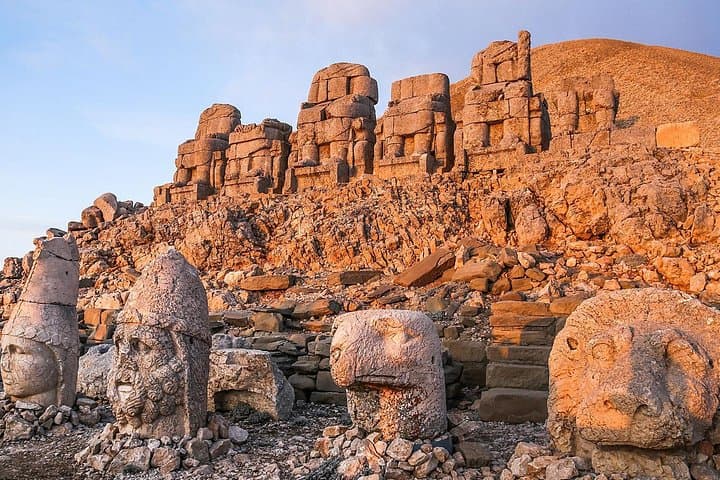
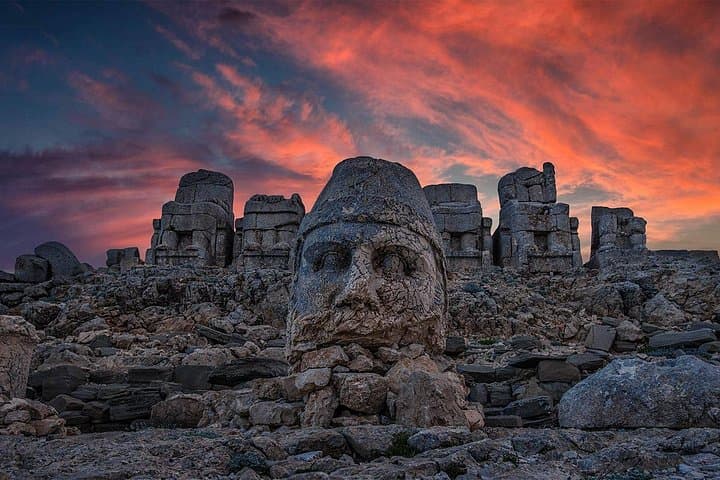
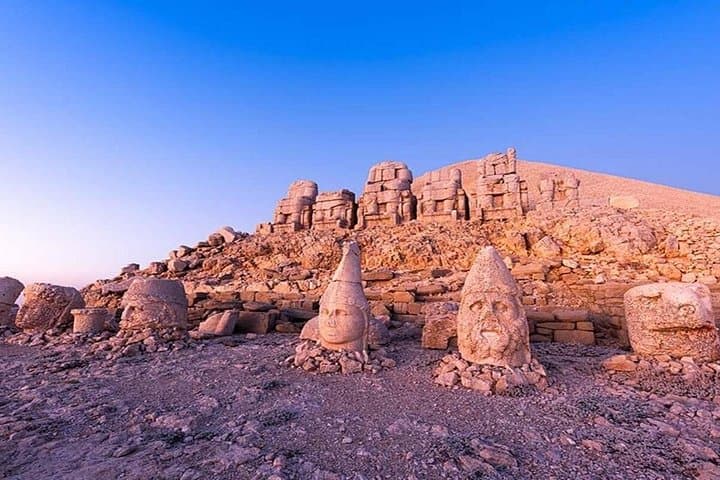
You arrive before dawn, the minivan leaving Cappadocia cutting through Anatolian plains as stars pale. By the time you step onto the gravel at Mount Nemrut's east terrace the air is thin and sharp at roughly 2,150 m; stone heads—some toppled, some intact—catch the first gold of sunrise and the wind seems to push you between east and west.
You arrive before dawn, the minivan leaving Cappadocia cutting through Anatolian plains as stars pale. By the time you step onto the gravel at Mount Nemrut's east terrace the air is thin and sharp at roughly 2,150 m; stone heads—some toppled, some intact—catch the first gold of sunrise and the wind seems to push you between east and west.
This two-night, three-day circuit threads Hellenistic commemoration and Neolithic ritual. Nemrut is the mausoleum of King Antiochos I (1st century BC), where colossal limestone statues—8–10 m bases—surround royal terraces carved into volcanic slopes. Göbekli Tepe, by contrast, rewrites the timeline: ringed pillars and carved animal reliefs from c. 9500–8000 BCE are often called the world's oldest megaliths and sit on a gentle plateau outside Şanlıurfa.
Geology here moves from volcanic cones and limestone heads to the alluvial plains of the Euphrates; culture shifts equally fast from Commagene kingcraft to prehistoric ritual. Expect short but uneven walks—Nemrut's terraces are 0.5–2 km round trips with roughly 150–250 m of ascent from the nearest parking; Göbekli Tepe involves low, controlled paths and raised boardwalks.
Practically: sunrise and sunset at Nemrut are prime but cold—plan for layers, headlamps for early starts, and sturdy boots for loose scree. Museum entrances and lunches are included; vehicle transfers cover long drives between sites so travel windows are the trip's backbone. Stay in Kahta or Adıyaman for shorter transfers and allow a recovery morning after long drives. Follow guide directions, carry water (1–2 L/day), and give yourself time at each site—these places reward slow, attentive walking.