THE ADVENTURE COLLECTIVE® · Independent discovery and booking for outdoor travel

Walk barefoot across Pamukkale’s otherworldly white travertines and explore the ruins of Hierapolis on a focused small‑group day trip. This tour balances natural wonder with Greco‑Roman history and practical tips for making the most of a long but rewarding day.
Walk barefoot across Pamukkale’s otherworldly white travertines and explore the ruins of Hierapolis on a focused small‑group day trip. This tour balances natural wonder with Greco‑Roman history and practical tips for making the most of a long but rewarding day.
You step off the bus into a bright white slope that seems almost unreal—the terraced travertines of Pamukkale gleam like frozen waterfalls, warm water running in thin sheets over calcium deposits that have formed for millennia.
Verified experiences and guided adventures in the surrounding area.
Operated by Puerto Travel Turkey · Pamukkale, Denizli Province
You step off the bus into a bright white slope that seems almost unreal—the terraced travertines of Pamukkale gleam like frozen waterfalls, warm water running in thin sheets over calcium deposits that have formed for millennia.
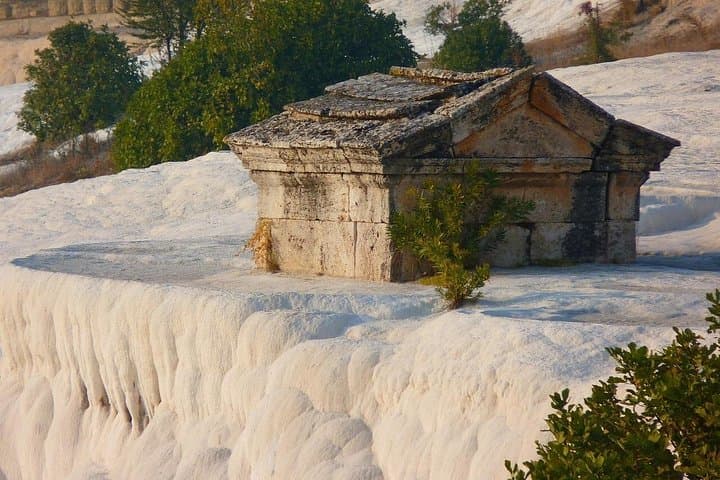
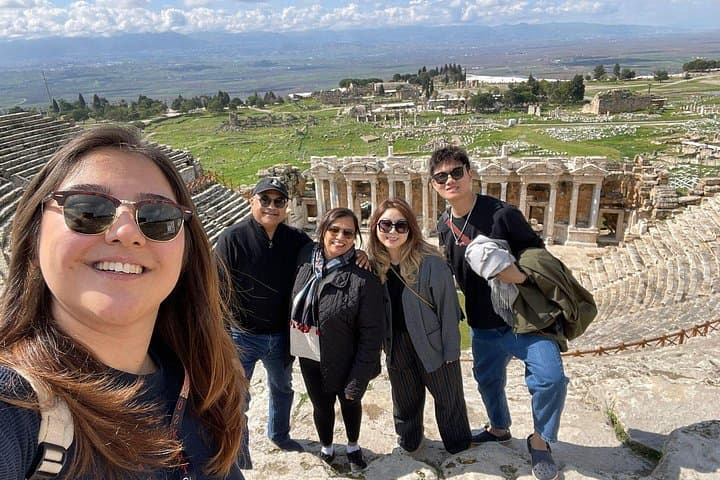
The day moves between geology and history: the terraces are active travertine formations fed by thermal springs, while above them lie the ruins of Hierapolis, a Greco‑Roman spa city whose colonnaded streets, theater and necropolis speak of a place where people came seeking healing. St. Philip’s martyrdom and Roman engineering both leave audible traces in the stones and inscriptions.
Culturally, the site has long been a pilgrimage of health—Ottoman visitors and classical Romans alike prized these waters. Nearby Karahayıt’s red springs offer a striking contrast: iron‑rich pools and quieter bathing options a short drive away. The area is also a birding stop during migrations; herons and storks use the terraces and wetlands as staging points.
Practical guidance: most tours run 8–10 hours roundtrip from Kusadasi or Selçuk, so expect a long day with a 3‑hour drive each way. You’ll be asked to remove shoes on the travertines to protect the carbonate formations—bring a small towel and slip‑on sandals for short walks. Plan to arrive midday for warmer pools or early/late for softer light and fewer crowds. Carry water, sun protection, and modest swimwear if you want to bathe in Cleopatra’s Pool; follow posted rules to keep the terraces intact.
No—site rules require visitors to remove shoes on the travertines to protect the fragile carbonate deposits; bring easy‑off footwear and a small towel.
Entrance fees for Pamukkale and Hierapolis are often separate; Cleopatra’s Pool usually carries an extra charge (check your tour details).
The transfer is about three hours each way depending on traffic and stops, which is why most tours are full‑day excursions (8–10 hours total).
Some transport and viewing areas are wheelchair accessible, but many ruins and the travertine terraces are uneven and not suitable for full wheelchair access—ask the operator about specific accommodations.
Puerto Travel Turkey operates guided outdoor trips and adventures with an emphasis on safety, stewardship, and memorable experiences.
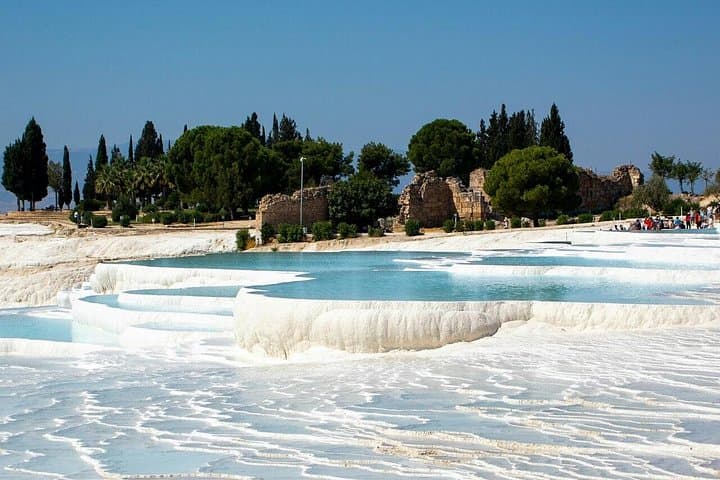
You step off the bus into a bright white slope that seems almost unreal—the terraced travertines of Pamukkale gleam like frozen waterfalls, warm water running in thin sheets over calcium deposits that have formed for millennia.
You step off the bus into a bright white slope that seems almost unreal—the terraced travertines of Pamukkale gleam like frozen waterfalls, warm water running in thin sheets over calcium deposits that have formed for millennia.
The day moves between geology and history: the terraces are active travertine formations fed by thermal springs, while above them lie the ruins of Hierapolis, a Greco‑Roman spa city whose colonnaded streets, theater and necropolis speak of a place where people came seeking healing. St. Philip’s martyrdom and Roman engineering both leave audible traces in the stones and inscriptions.
Culturally, the site has long been a pilgrimage of health—Ottoman visitors and classical Romans alike prized these waters. Nearby Karahayıt’s red springs offer a striking contrast: iron‑rich pools and quieter bathing options a short drive away. The area is also a birding stop during migrations; herons and storks use the terraces and wetlands as staging points.
Practical guidance: most tours run 8–10 hours roundtrip from Kusadasi or Selçuk, so expect a long day with a 3‑hour drive each way. You’ll be asked to remove shoes on the travertines to protect the carbonate formations—bring a small towel and slip‑on sandals for short walks. Plan to arrive midday for warmer pools or early/late for softer light and fewer crowds. Carry water, sun protection, and modest swimwear if you want to bathe in Cleopatra’s Pool; follow posted rules to keep the terraces intact.