THE ADVENTURE COLLECTIVE® · Independent discovery and booking for outdoor travel

Board the 1892 Cruiser Olympia, squeeze through the hatches of the WWII submarine Becuna, and watch traditional boatbuilders at work on the Delaware River. This 1–2 hour museum experience blends naval history, live craft, and riverside perspective.
Board the 1892 Cruiser Olympia, squeeze through the hatches of the WWII submarine Becuna, and watch traditional boatbuilders at work on the Delaware River. This 1–2 hour museum experience blends naval history, live craft, and riverside perspective.
The river pushes up against the pier and the steel hull of Cruiser Olympia cuts a dark silhouette against the Philadelphia skyline—the first sight that sets the tone for a visit to the Independence Seaport Museum. Step from the boardwalk into galleries that map the Delaware River’s working life, then climb the gangway to explore Olympia’s teak decks and descend into the narrow passageways of the WWII submarine Becuna.
Verified experiences and guided adventures in the surrounding area.
Operated by Independence Seaport Museum · Philadelphia, PA
The river pushes up against the pier and the steel hull of Cruiser Olympia cuts a dark silhouette against the Philadelphia skyline—the first sight that sets the tone for a visit to the Independence Seaport Museum. Step from the boardwalk into galleries that map the Delaware River’s working life, then climb the gangway to explore Olympia’s teak decks and descend into the narrow passageways of the WWII submarine Becuna.
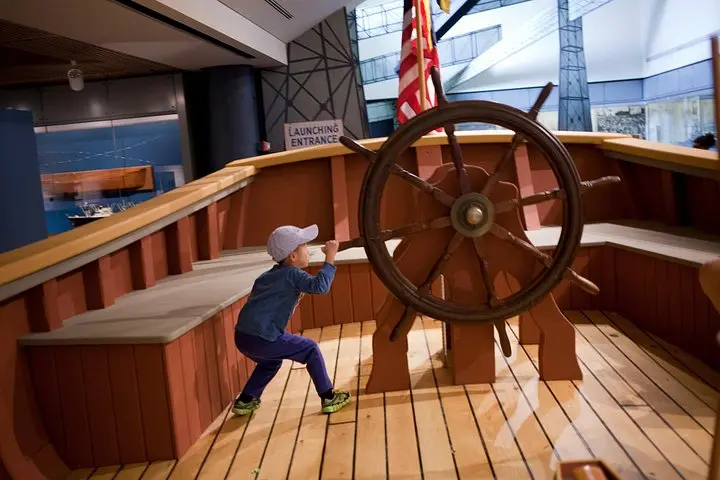
This waterfront complex preserves maritime chapters from 18th‑century gunboats through the Spanish–American War and Cold War patrols. The Olympia, Admiral Dewey’s flagship in 1898, and Becuna offer tactile lessons in ship construction, naval strategy, and the technological shifts that shaped American seapower. Beneath the artifacts, the river’s geology and human geography—silted channels, tidal flows, and Philadelphia’s port infrastructure—explain why this site grew into a shipbuilding hub.
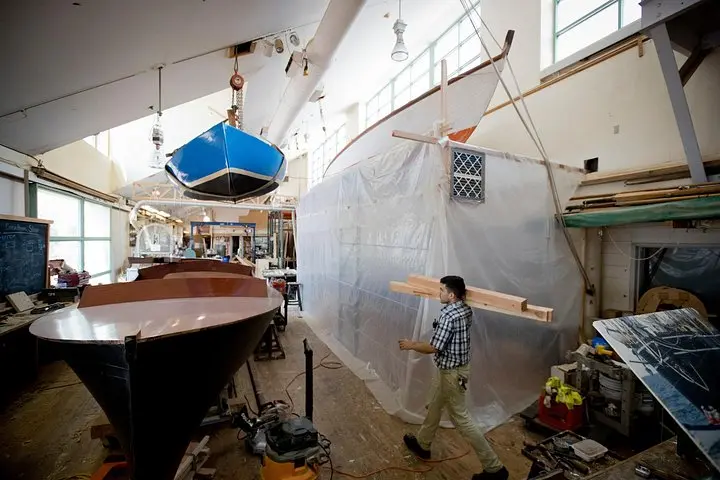
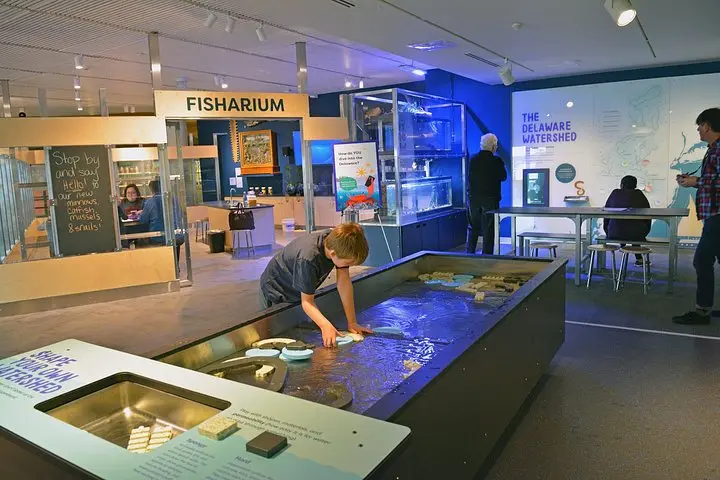
Inside the museum, rotating galleries cover local stories like Titanic Philadelphians and the Boat Gallery, while the Workshop on the Water brings wooden boatbuilding to life; you can often watch craftspeople shaping planks for the schooner Diligence.
Practical notes: allow 1–2 hours, wear sturdy shoes for ladders and hatches, and expect uneven surfaces on the historic vessels (ships are not ADA accessible). Visit in the morning for quieter galleries and better light on deck, and check weather advisories—ships may close under extreme conditions. Bring water, a compact camera, and time to linger by the riverfront for skyline views before or after the tour.
Most visitors spend 60–120 minutes exploring the galleries and boarding the two historic ships; add time if you watch the Boat Shop in action.
The museum building is wheelchair accessible, but the Olympia and Becuna have ladders and narrow passageways and are not ADA accessible.
No—mobile tickets are accepted, but approach the front desk to exchange your confirmation voucher for an admission ticket on arrival.
Yes—children are welcome but must be accompanied by an adult; be mindful of tight spaces and steep ladders on the ships.
Independence Seaport Museum operates guided outdoor trips and adventures with an emphasis on safety, stewardship, and memorable experiences.
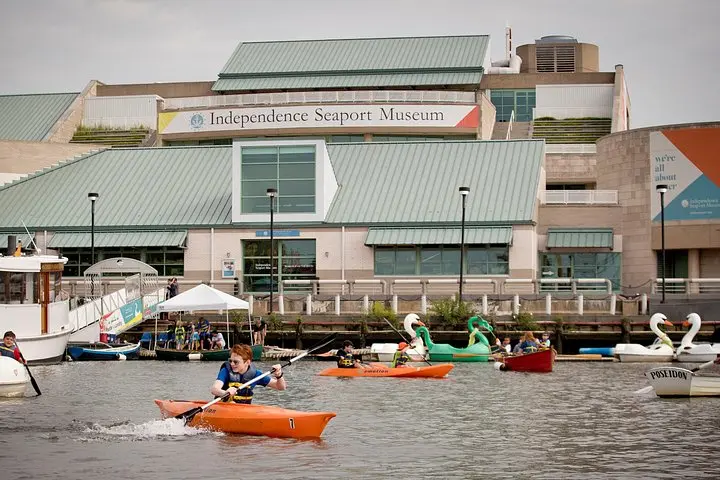
The river pushes up against the pier and the steel hull of Cruiser Olympia cuts a dark silhouette against the Philadelphia skyline—the first sight that sets the tone for a visit to the Independence Seaport Museum. Step from the boardwalk into galleries that map the Delaware River’s working life, then climb the gangway to explore Olympia’s teak decks and descend into the narrow passageways of the WWII submarine Becuna.
The river pushes up against the pier and the steel hull of Cruiser Olympia cuts a dark silhouette against the Philadelphia skyline—the first sight that sets the tone for a visit to the Independence Seaport Museum. Step from the boardwalk into galleries that map the Delaware River’s working life, then climb the gangway to explore Olympia’s teak decks and descend into the narrow passageways of the WWII submarine Becuna.
This waterfront complex preserves maritime chapters from 18th‑century gunboats through the Spanish–American War and Cold War patrols. The Olympia, Admiral Dewey’s flagship in 1898, and Becuna offer tactile lessons in ship construction, naval strategy, and the technological shifts that shaped American seapower. Beneath the artifacts, the river’s geology and human geography—silted channels, tidal flows, and Philadelphia’s port infrastructure—explain why this site grew into a shipbuilding hub.
Inside the museum, rotating galleries cover local stories like Titanic Philadelphians and the Boat Gallery, while the Workshop on the Water brings wooden boatbuilding to life; you can often watch craftspeople shaping planks for the schooner Diligence.
Practical notes: allow 1–2 hours, wear sturdy shoes for ladders and hatches, and expect uneven surfaces on the historic vessels (ships are not ADA accessible). Visit in the morning for quieter galleries and better light on deck, and check weather advisories—ships may close under extreme conditions. Bring water, a compact camera, and time to linger by the riverfront for skyline views before or after the tour.