THE ADVENTURE COLLECTIVE® · Independent discovery and booking for outdoor travel

Paddle the sheltered waters of Tomales Bay from Miller Boat Launch to Hog Island, where seals, rays, and osprey are regular companions. This 3–4 hour guided sea kayak tour combines wildlife viewing, coastal geology, and local oyster-culture history.
Paddle the sheltered waters of Tomales Bay from Miller Boat Launch to Hog Island, where seals, rays, and osprey are regular companions. This 3–4 hour guided sea kayak tour combines wildlife viewing, coastal geology, and local oyster-culture history.
You push off from a narrow ramp at Miller Boat Launch, the water cool against the hull and the first gulls already busy above the reed-fringed shoreline. Tomales Bay opens like a shallow arm of the Pacific — long, tidal, and framed by low dunes and sandstone cliffs. The guide calls cadence, you sweep the blade through glassy water, and seals bob like punctuation marks as you cut toward Hog Island.
Verified experiences and guided adventures in the surrounding area.
Operated by Blue Waters Kayaking · Marshall, California
You push off from a narrow ramp at Miller Boat Launch, the water cool against the hull and the first gulls already busy above the reed-fringed shoreline. Tomales Bay opens like a shallow arm of the Pacific — long, tidal, and framed by low dunes and sandstone cliffs. The guide calls cadence, you sweep the blade through glassy water, and seals bob like punctuation marks as you cut toward Hog Island.
This is a coastline shaped by tectonics and tides. The Point Reyes peninsula rides the San Andreas Fault zone; sandstone outcrops visible from the water are the eroded edges of ancient marine sediments laid down millions of years ago. European settlers later used this protected bay as a safe harbor — and today small oyster farms and the famed Hog Island Oyster Company still work these waters, blending a working coastal culture with protected wilderness.
Wildlife is the main event. Harbor seals haul out on low rocks, river otters hunt the eelgrass, and osprey wheel overhead. In spring and summer you’ll often see bat rays and leopard sharks cruising the shallows; in late year, tule elk graze the northern ridgelines and can sometimes be seen from the water where meadow meets bay. Guides emphasize a quiet approach: kayaks are the ideal platform for low-impact viewing, and seals frequently pop in close enough to inspect paddles and cameras.
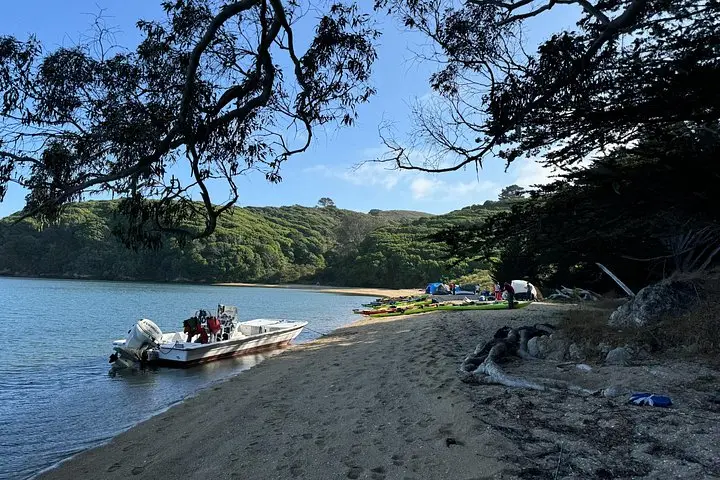
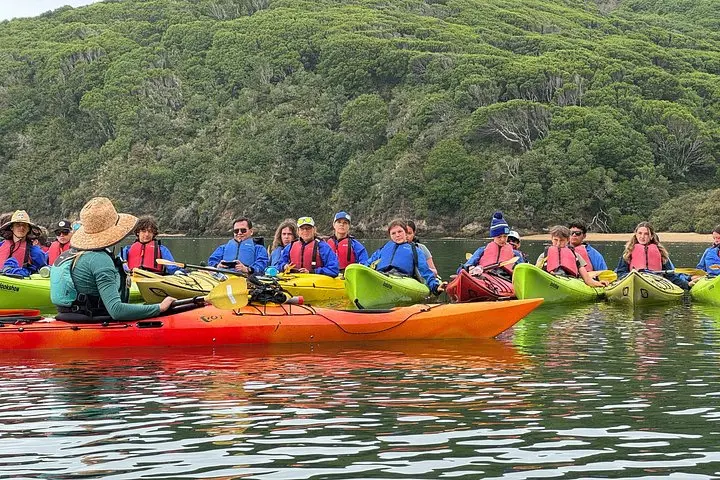
The route moves deliberately — sheltered coves, narrow inlets, and a pass by the sandstone sea caves where rock formations have been cut and shaped by wind and tide. On a typical 3–4 hour outing expect 6–8 miles of paddling with stops to learn about local ecology and to watch shorebirds. Groups are led from Miller Boat Launch next to Nick’s Cove; vans ferry participants and equipment, and guides outfit every paddler with a kayak and PFD.
Practicalities matter: check wind and tide before you go (the bay can close down in a strong northwest wind), layer for wind and spray, and bring at least 1–2 liters of water plus a waterproof bag for essentials. Beginners are welcome but you’ll cover distance and need to maintain steady paddling. Parking is in the dirt lot above the ramp; there’s a post-paddle chance to visit Nick’s Cove for a clam chowder or coffee.
This paddle is equal parts natural history lesson and coastal workout — intimate, educational, and quietly dramatic in its wildlife encounters. For photographers and naturalists the payoff is immediate: animal interactions at eye level, geological details you can’t see from the road, and the slow-motion drama of tides moving through a living bay.
No — beginners are welcome; guides teach basic strokes and safety. You should be comfortable in water and able to paddle for several hours with short breaks.
Typical outings cover roughly 6–8 miles over 3–4 hours including wildlife stops; exact mileage varies with tide, wind, and group pace.
Expect harbor seals, bat rays, leopard sharks, ospreys, river otters, and (from the shore) tule elk among other shorebirds and marine life.
Quick-dry layers, a windproof shell, a hat, and water shoes are ideal; avoid cotton and bring sunscreen and sunglasses with a strap.
The operator lists wheelchair-accessible transportation and facilities but launching kayaks requires mobility; contact the provider to discuss specific needs.
Trips cancel if weather or sea conditions are unsafe; you can get a full refund if canceled at least 24 hours before departure per the operator’s policy.
Blue Waters Kayaking operates guided outdoor trips and adventures with an emphasis on safety, stewardship, and memorable experiences.
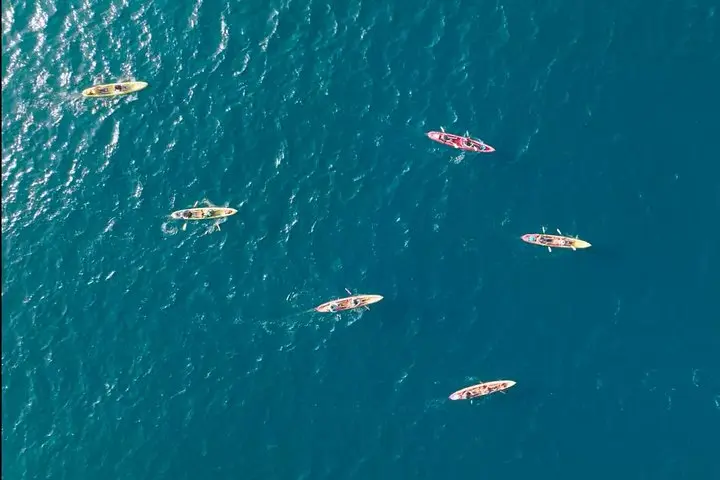
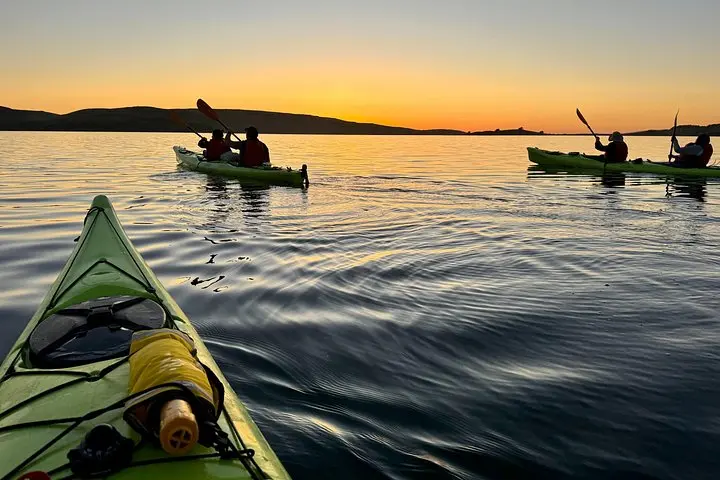
You push off from a narrow ramp at Miller Boat Launch, the water cool against the hull and the first gulls already busy above the reed-fringed shoreline. Tomales Bay opens like a shallow arm of the Pacific — long, tidal, and framed by low dunes and sandstone cliffs. The guide calls cadence, you sweep the blade through glassy water, and seals bob like punctuation marks as you cut toward Hog Island.
You push off from a narrow ramp at Miller Boat Launch, the water cool against the hull and the first gulls already busy above the reed-fringed shoreline. Tomales Bay opens like a shallow arm of the Pacific — long, tidal, and framed by low dunes and sandstone cliffs. The guide calls cadence, you sweep the blade through glassy water, and seals bob like punctuation marks as you cut toward Hog Island.
This is a coastline shaped by tectonics and tides. The Point Reyes peninsula rides the San Andreas Fault zone; sandstone outcrops visible from the water are the eroded edges of ancient marine sediments laid down millions of years ago. European settlers later used this protected bay as a safe harbor — and today small oyster farms and the famed Hog Island Oyster Company still work these waters, blending a working coastal culture with protected wilderness.
Wildlife is the main event. Harbor seals haul out on low rocks, river otters hunt the eelgrass, and osprey wheel overhead. In spring and summer you’ll often see bat rays and leopard sharks cruising the shallows; in late year, tule elk graze the northern ridgelines and can sometimes be seen from the water where meadow meets bay. Guides emphasize a quiet approach: kayaks are the ideal platform for low-impact viewing, and seals frequently pop in close enough to inspect paddles and cameras.
The route moves deliberately — sheltered coves, narrow inlets, and a pass by the sandstone sea caves where rock formations have been cut and shaped by wind and tide. On a typical 3–4 hour outing expect 6–8 miles of paddling with stops to learn about local ecology and to watch shorebirds. Groups are led from Miller Boat Launch next to Nick’s Cove; vans ferry participants and equipment, and guides outfit every paddler with a kayak and PFD.
Practicalities matter: check wind and tide before you go (the bay can close down in a strong northwest wind), layer for wind and spray, and bring at least 1–2 liters of water plus a waterproof bag for essentials. Beginners are welcome but you’ll cover distance and need to maintain steady paddling. Parking is in the dirt lot above the ramp; there’s a post-paddle chance to visit Nick’s Cove for a clam chowder or coffee.
This paddle is equal parts natural history lesson and coastal workout — intimate, educational, and quietly dramatic in its wildlife encounters. For photographers and naturalists the payoff is immediate: animal interactions at eye level, geological details you can’t see from the road, and the slow-motion drama of tides moving through a living bay.