THE ADVENTURE COLLECTIVE® · Independent discovery and booking for outdoor travel

A full-day drive from Negombo delivers you to Polonnaruwa’s stone courts, stupas, and reservoirs—an accessible immersion in Sri Lanka’s medieval capital. This guide outlines what you’ll see, why it matters, and how to plan your day for comfort and insight.
A full-day drive from Negombo delivers you to Polonnaruwa’s stone courts, stupas, and reservoirs—an accessible immersion in Sri Lanka’s medieval capital. This guide outlines what you’ll see, why it matters, and how to plan your day for comfort and insight.
You arrive before the heat of the day, the vehicle easing off the highway and into a landscape of low tank reservoirs and scrub woodland; the air carries dust and the citrus-sweet scent of seasonal fruit vendors who dot the road. At the gate of the ancient city, carved stone faces and broad laterite platforms invite you to step from the modern world into a twelfth-century capital where kings engineered water and stone.
Verified experiences and guided adventures in the surrounding area.
Operated by Apple Vacations Pvt Ltd · Polonnaruwa, North Central Province
You arrive before the heat of the day, the vehicle easing off the highway and into a landscape of low tank reservoirs and scrub woodland; the air carries dust and the citrus-sweet scent of seasonal fruit vendors who dot the road. At the gate of the ancient city, carved stone faces and broad laterite platforms invite you to step from the modern world into a twelfth-century capital where kings engineered water and stone.
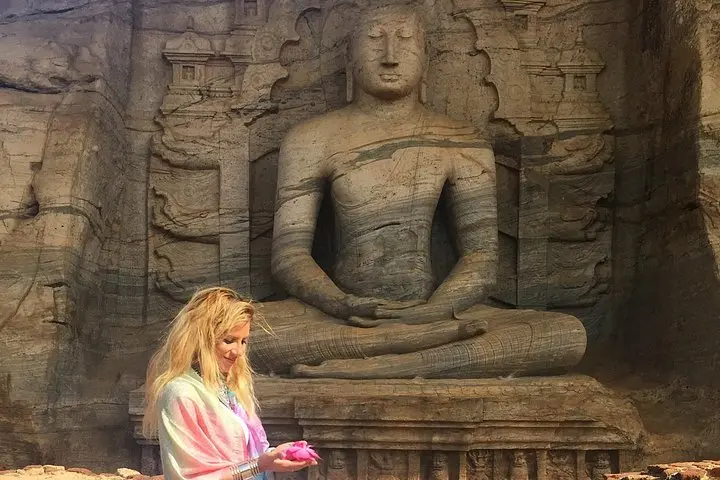
Polonnaruwa rose to prominence under Parakramabahu I (12th century) and today its ruins—royal palace fragments, vatadages, and the Gal Vihara’s carved Buddhas—offer a clear line through Sri Lanka’s medieval polity, hydraulic engineering, and Buddhist monastic life. Geologically the zone sits on limestone and ancient metamorphic bedrock; the great reservoirs (wewas) changed how people farmed and moved here, and they still shape the horizon.
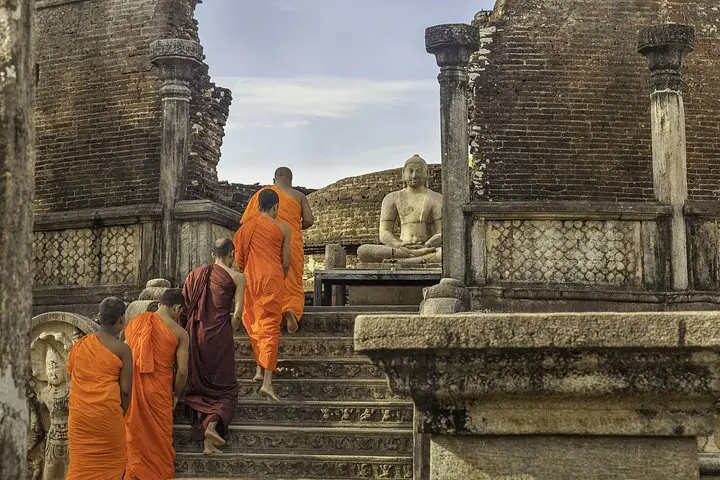
Culturally, expect a calm, reverent pace: remove footwear at temple precincts and cover shoulders and knees. Vendors sell crisp jackfruit and mango slices—simple, vivid flavors that cut through the day.
Practical guidance: wear sturdy walking shoes for uneven stone and soft sand, carry 1–2 liters of water, and bring sun protection; sites are exposed and shade is limited. Plan your visit in the morning or late afternoon to avoid midday heat and to catch long shadows that make the carvings read like relief maps. Keep to marked paths to protect fragile masonry, and budget several hours to move between Dalada Maluwa, Rankoth Vehera, and Gal Vihara without rushing. A guided walk adds historical context and points out inscriptions and irrigation works that a solo stroll can miss.
The drive is roughly 170–190 km depending on route and takes about 3–4 hours each way; traffic and stops can extend travel time.
This tour’s itinerary lists visits to key sites but does not include admissions—check with the operator for ticket details and current government site fees.
Yes—most tours include bottled water and seasonal fruit; longer tours may stop at local restaurants for Sri Lankan rice-and-curry options.
Dress modestly: cover shoulders and knees, remove footwear at temple precincts, and avoid hats inside sacred areas.
Apple Vacations Pvt Ltd operates guided outdoor trips and adventures with an emphasis on safety, stewardship, and memorable experiences.
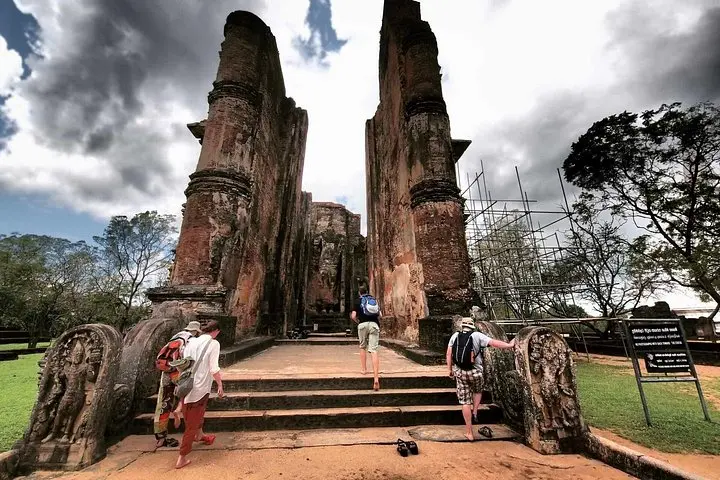
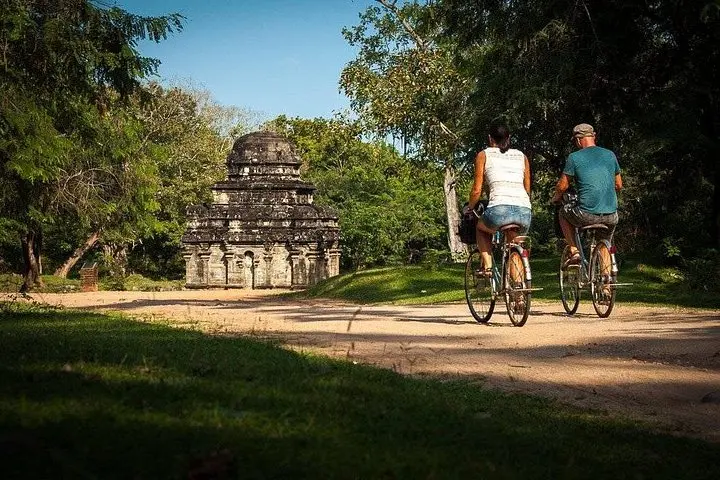
You arrive before the heat of the day, the vehicle easing off the highway and into a landscape of low tank reservoirs and scrub woodland; the air carries dust and the citrus-sweet scent of seasonal fruit vendors who dot the road. At the gate of the ancient city, carved stone faces and broad laterite platforms invite you to step from the modern world into a twelfth-century capital where kings engineered water and stone.
You arrive before the heat of the day, the vehicle easing off the highway and into a landscape of low tank reservoirs and scrub woodland; the air carries dust and the citrus-sweet scent of seasonal fruit vendors who dot the road. At the gate of the ancient city, carved stone faces and broad laterite platforms invite you to step from the modern world into a twelfth-century capital where kings engineered water and stone.
Polonnaruwa rose to prominence under Parakramabahu I (12th century) and today its ruins—royal palace fragments, vatadages, and the Gal Vihara’s carved Buddhas—offer a clear line through Sri Lanka’s medieval polity, hydraulic engineering, and Buddhist monastic life. Geologically the zone sits on limestone and ancient metamorphic bedrock; the great reservoirs (wewas) changed how people farmed and moved here, and they still shape the horizon.
Culturally, expect a calm, reverent pace: remove footwear at temple precincts and cover shoulders and knees. Vendors sell crisp jackfruit and mango slices—simple, vivid flavors that cut through the day.
Practical guidance: wear sturdy walking shoes for uneven stone and soft sand, carry 1–2 liters of water, and bring sun protection; sites are exposed and shade is limited. Plan your visit in the morning or late afternoon to avoid midday heat and to catch long shadows that make the carvings read like relief maps. Keep to marked paths to protect fragile masonry, and budget several hours to move between Dalada Maluwa, Rankoth Vehera, and Gal Vihara without rushing. A guided walk adds historical context and points out inscriptions and irrigation works that a solo stroll can miss.