THE ADVENTURE COLLECTIVE® · Independent discovery and booking for outdoor travel

Walk from Manzanillo through dense Caribbean rainforest to secret beaches at Punta Mona in the Gandoca‑Manzanillo Wildlife Refuge. This 5‑hour guided hike combines wildlife viewing, coastal geology, and an abandoned eco‑village for an offbeat jungle‑to‑sea experience.
Walk from Manzanillo through dense Caribbean rainforest to secret beaches at Punta Mona in the Gandoca‑Manzanillo Wildlife Refuge. This 5‑hour guided hike combines wildlife viewing, coastal geology, and an abandoned eco‑village for an offbeat jungle‑to‑sea experience.
The trail opens under a ceiling of broad-leaved trees; humidity presses at your skin and the Caribbean breathes salt and green. Footsteps sink into soft loam as howler monkeys call overhead and the surf hisses distant invitation. This is Punta Mona and the Manzanillo stretch of the Gandoca‑Manzanillo Wildlife Refuge—where jungle rivers push toward a coastline of untouched sand.
Verified experiences and guided adventures in the surrounding area.
Operated by Yara Caribe Tours · Manzanillo, Limón
The trail opens under a ceiling of broad-leaved trees; humidity presses at your skin and the Caribbean breathes salt and green. Footsteps sink into soft loam as howler monkeys call overhead and the surf hisses distant invitation. This is Punta Mona and the Manzanillo stretch of the Gandoca‑Manzanillo Wildlife Refuge—where jungle rivers push toward a coastline of untouched sand.
The refuge was created to protect lowland rainforest, mangroves and nesting beaches that supported coastal communities and local indigenous groups. Geologically the coast is a mix of alluvial plains and sandstone outcrops, worn by Caribbean swells into small coves and caves—places that fed pirate lore and now shelter nesting turtles. Local culture here mixes Afro‑Caribbean and Bribri influences; roadside fruit stalls and coconut oil still mark daily life.
On the walk expect varied terrain: shaded singletrack, muddy beach approaches, and occasional rock scrambles to viewpoints. Wildlife moves with a calm giddiness—sloths linger in the canopy, toucans flash color, and crabs scuttle near the tide line. You’ll pass an abandoned eco‑village and a small cave with stories rather than graffiti, then finish on a quiet beach where the sea seems to reassert its rules.
Practical guide: this is a moderate, roughly 5‑hour outing with short, steep sections and slick surfaces after rain. Wear grippy trail shoes, bring 2 liters of water, insect repellent and a light rain layer. Start early to avoid mid‑day heat and give wildlife the best chance to appear. Respect nesting zones and follow your guide’s route to protect fragile dunes and mangroves.
Moderate—about 5 hours with some uneven, muddy and short steep sections; a moderate fitness level is recommended.
Common sightings include sloths, howler and capuchin monkeys, toucans and coastal crabs; sightings are never guaranteed.
Most travelers stay in Puerto Viejo or nearby Manzanillo; public transport and local taxis can reach the refuge entrance—confirm pickup details with your operator.
Guiding, local snacks (fresh fruit), and park fees are typically included—confirm specifics at booking.
Yara Caribe Tours operates guided outdoor trips and adventures with an emphasis on safety, stewardship, and memorable experiences.
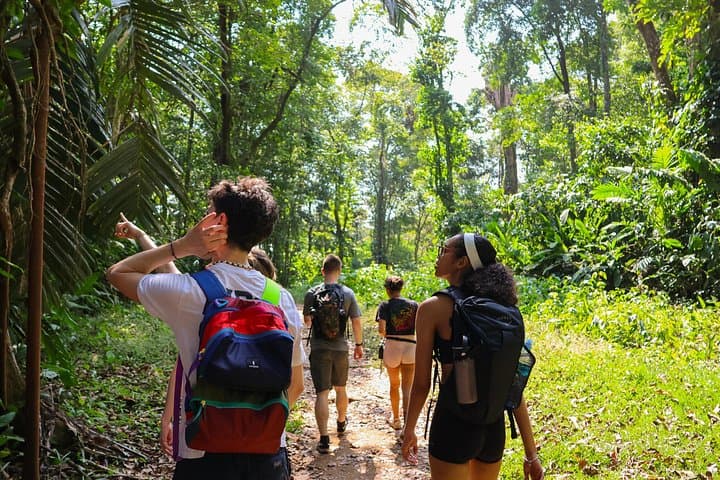


The trail opens under a ceiling of broad-leaved trees; humidity presses at your skin and the Caribbean breathes salt and green. Footsteps sink into soft loam as howler monkeys call overhead and the surf hisses distant invitation. This is Punta Mona and the Manzanillo stretch of the Gandoca‑Manzanillo Wildlife Refuge—where jungle rivers push toward a coastline of untouched sand.
The trail opens under a ceiling of broad-leaved trees; humidity presses at your skin and the Caribbean breathes salt and green. Footsteps sink into soft loam as howler monkeys call overhead and the surf hisses distant invitation. This is Punta Mona and the Manzanillo stretch of the Gandoca‑Manzanillo Wildlife Refuge—where jungle rivers push toward a coastline of untouched sand.
The refuge was created to protect lowland rainforest, mangroves and nesting beaches that supported coastal communities and local indigenous groups. Geologically the coast is a mix of alluvial plains and sandstone outcrops, worn by Caribbean swells into small coves and caves—places that fed pirate lore and now shelter nesting turtles. Local culture here mixes Afro‑Caribbean and Bribri influences; roadside fruit stalls and coconut oil still mark daily life.
On the walk expect varied terrain: shaded singletrack, muddy beach approaches, and occasional rock scrambles to viewpoints. Wildlife moves with a calm giddiness—sloths linger in the canopy, toucans flash color, and crabs scuttle near the tide line. You’ll pass an abandoned eco‑village and a small cave with stories rather than graffiti, then finish on a quiet beach where the sea seems to reassert its rules.
Practical guide: this is a moderate, roughly 5‑hour outing with short, steep sections and slick surfaces after rain. Wear grippy trail shoes, bring 2 liters of water, insect repellent and a light rain layer. Start early to avoid mid‑day heat and give wildlife the best chance to appear. Respect nesting zones and follow your guide’s route to protect fragile dunes and mangroves.