THE ADVENTURE COLLECTIVE® · Independent discovery and booking for outdoor travel

Walk through Sarajevo’s Olympic legacy: ruined bobsleigh curves, commanding mountain viewpoints, and the Olympic Museum. This half-day tour pairs history and landscape with easy walking and private transport.
Walk through Sarajevo’s Olympic legacy: ruined bobsleigh curves, commanding mountain viewpoints, and the Olympic Museum. This half-day tour pairs history and landscape with easy walking and private transport.
From a ridge on Trebević the damaged bobsleigh track cuts a stark, concrete curve through forest — a quiet, angular relic that still seems to dare the wind. Below, Sarajevo’s red roofs and the Miljacka River fold into a valley where mountains lean in, forests breathing around the city. The half-day loop moves from the Olympic Museum into the ghosts and panoramas of Trebević, then climbs toward the ski jumps on Igman and a view across Bjelasnica, the highest Olympic peak in Bosnia and Herzegovina.
Verified experiences and guided adventures in the surrounding area.
Operated by Torus Tours · Sarajevo, Sarajevo Canton
From a ridge on Trebević the damaged bobsleigh track cuts a stark, concrete curve through forest — a quiet, angular relic that still seems to dare the wind. Below, Sarajevo’s red roofs and the Miljacka River fold into a valley where mountains lean in, forests breathing around the city. The half-day loop moves from the Olympic Museum into the ghosts and panoramas of Trebević, then climbs toward the ski jumps on Igman and a view across Bjelasnica, the highest Olympic peak in Bosnia and Herzegovina.
The route threads recent history and alpine geology: the 1984 Winter Olympics left infrastructure shaped by late 20th-century design, while the Bosnian War scarred tracks and villages, leaving evocative layers to interpret on-site. The surrounding Dinaric ridges are karst-affected, with steep, grass-and-scree slopes on higher approaches and mixed beech-fir stands lower down. Sarajevo’s multicultural city life — Ottoman bazaars, Austro-Hungarian façades — contrasts with the stark military damage still visible at certain Olympic sites.
Expect short walks, viewpoints, and a museum stop; the tour is narrative-driven rather than strenuous. Practical notes: bring a windproof layer for exposed ridgelines, closed-toe shoes for uneven ground, and allow time for photos and reflection at war-damaged sites. Weather can shift fast in the mountains, so schedule morning slots for clearer light. The tour is suitable for most fitness levels, and transportation between points is provided, making it a compact way to understand how sport, conflict, and landscape intersect around Sarajevo.
Yes — the tour’s inclusions list the Olympic Museum entrance fee as provided.
Access involves short walks and some uneven ground; people with limited mobility should contact the operator about exact pickup points and viewpoints.
The tour operator may cancel for safety or insufficient travelers; standard cancellation gives a full refund if you cancel at least 24 hours prior.
Pickup points are generally arranged; confirm the pickup point and time when booking, as the tour uses private transport and shared groups have set meeting locations.
Torus Tours operates guided outdoor trips and adventures with an emphasis on safety, stewardship, and memorable experiences.
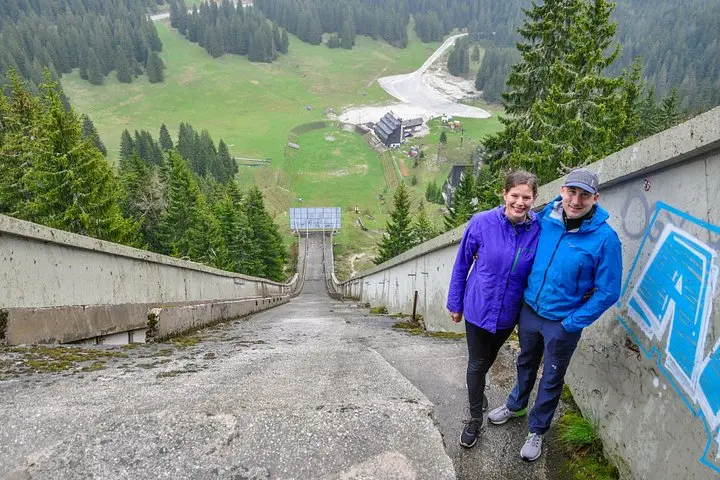
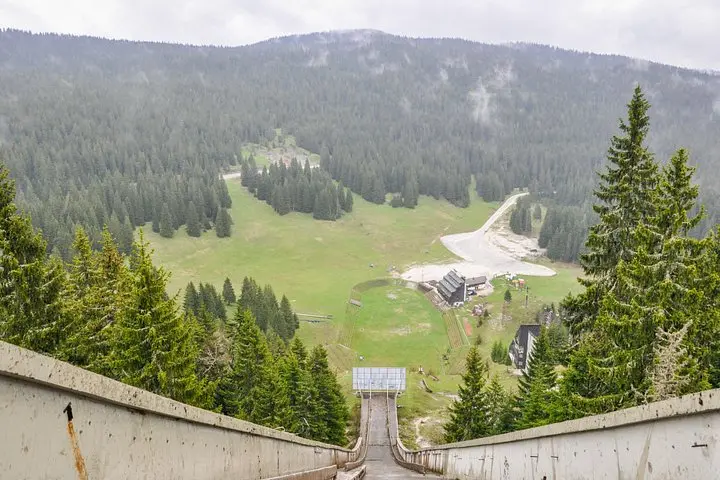
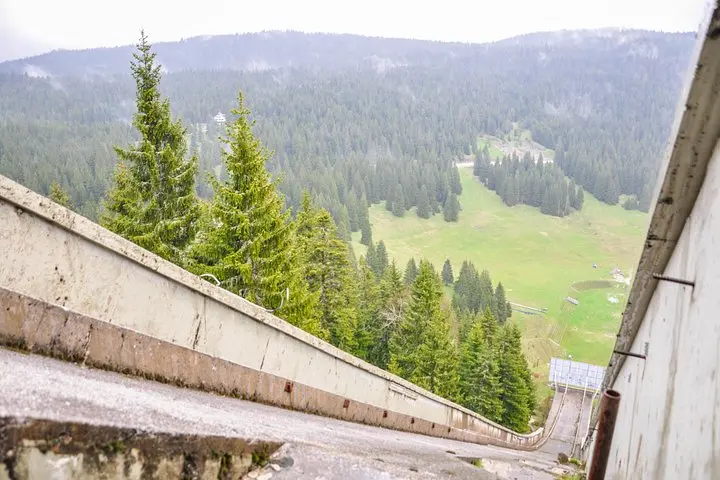
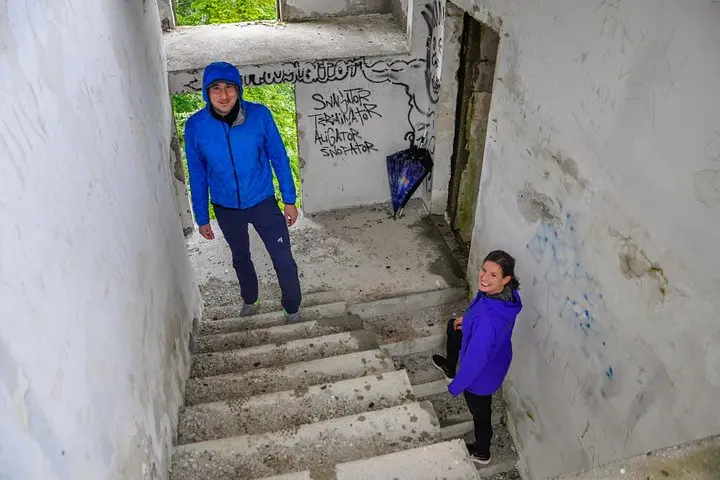
From a ridge on Trebević the damaged bobsleigh track cuts a stark, concrete curve through forest — a quiet, angular relic that still seems to dare the wind. Below, Sarajevo’s red roofs and the Miljacka River fold into a valley where mountains lean in, forests breathing around the city. The half-day loop moves from the Olympic Museum into the ghosts and panoramas of Trebević, then climbs toward the ski jumps on Igman and a view across Bjelasnica, the highest Olympic peak in Bosnia and Herzegovina.
From a ridge on Trebević the damaged bobsleigh track cuts a stark, concrete curve through forest — a quiet, angular relic that still seems to dare the wind. Below, Sarajevo’s red roofs and the Miljacka River fold into a valley where mountains lean in, forests breathing around the city. The half-day loop moves from the Olympic Museum into the ghosts and panoramas of Trebević, then climbs toward the ski jumps on Igman and a view across Bjelasnica, the highest Olympic peak in Bosnia and Herzegovina.
The route threads recent history and alpine geology: the 1984 Winter Olympics left infrastructure shaped by late 20th-century design, while the Bosnian War scarred tracks and villages, leaving evocative layers to interpret on-site. The surrounding Dinaric ridges are karst-affected, with steep, grass-and-scree slopes on higher approaches and mixed beech-fir stands lower down. Sarajevo’s multicultural city life — Ottoman bazaars, Austro-Hungarian façades — contrasts with the stark military damage still visible at certain Olympic sites.
Expect short walks, viewpoints, and a museum stop; the tour is narrative-driven rather than strenuous. Practical notes: bring a windproof layer for exposed ridgelines, closed-toe shoes for uneven ground, and allow time for photos and reflection at war-damaged sites. Weather can shift fast in the mountains, so schedule morning slots for clearer light. The tour is suitable for most fitness levels, and transportation between points is provided, making it a compact way to understand how sport, conflict, and landscape intersect around Sarajevo.