THE ADVENTURE COLLECTIVE® · Independent discovery and booking for outdoor travel

Walk centuries in two hours on a private guided tour through Syracuse’s Archaeological Park of Neapolis. From quarry caves and the Ear of Dionysius to a vast Greek theater and Roman amphitheater, this route pairs geology with layered history.
Walk centuries in two hours on a private guided tour through Syracuse’s Archaeological Park of Neapolis. From quarry caves and the Ear of Dionysius to a vast Greek theater and Roman amphitheater, this route pairs geology with layered history.
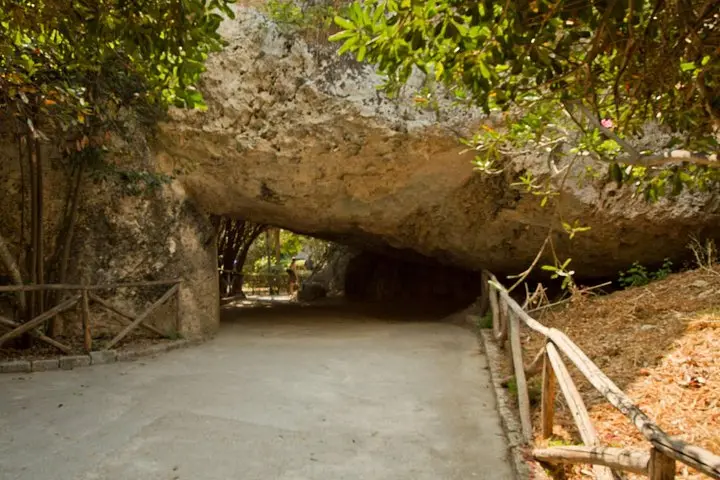
You step through an iron gate and the stone breathes history: sun-bleached tiers of a Hellenic theater curve beneath you, the harbor chiseling light into the distant water. The Archaeological Park of Neapolis in Syracuse opens like a chapter of the ancient Mediterranean — carved rock, cavernous quarries and the uncanny acoustics of the Ear of Dionysius.
Verified experiences and guided adventures in the surrounding area.
Operated by Empeeria · Syracuse, Sicily
You step through an iron gate and the stone breathes history: sun-bleached tiers of a Hellenic theater curve beneath you, the harbor chiseling light into the distant water. The Archaeological Park of Neapolis in Syracuse opens like a chapter of the ancient Mediterranean — carved rock, cavernous quarries and the uncanny acoustics of the Ear of Dionysius.
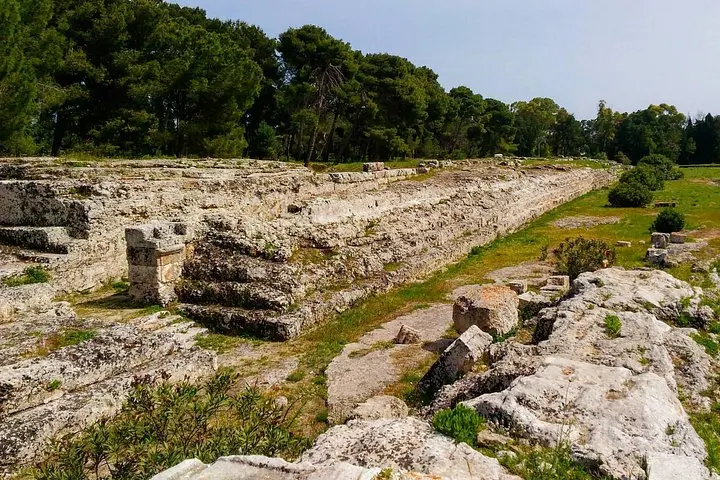
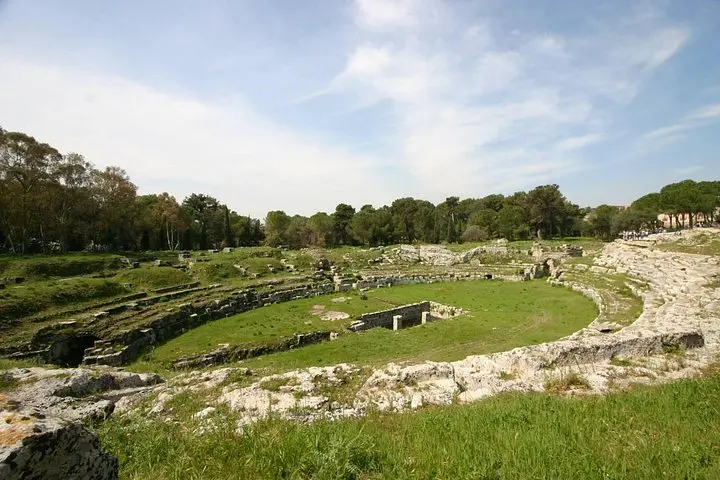
Founded in the eighth century BCE by Greek settlers, Syracuse later folded Roman engineering into its urban fabric; here the geology is raw limestone and sandstone, quarried for centuries to build temples and city walls. The Latomie are more than extraction sites — narrow passages, small caves and water-worn benches that once held prisoners and stonecutters. The Ear of Dionysius, a man-made cavity with amplified echoes, frames stories of tyranny and escape, while the Roman Amphitheatre reveals the later civic tastes for spectacle.
Local culture leans practical: guides point out mason marks, quarry techniques and the continuity from Greek theater to modern performance. The Park sits minutes from Ortigia, making a combined itinerary easy.
Practical guidance: the private two-hour tour moves at a steady walking pace over uneven rock and steps; comfortable shoes and sun protection are essential. Expect stairs at the theater and gravel paths in the Latomie. Tickets and museum admissions are typically paid on-site unless prearranged. Arrive 10 minutes early to meet your licensed guide; mornings and late afternoons offer cooler light and thinner crowds. Respect ropes and signage — fragile stone keeps its stories when visitors do.
No — admission is typically not included. Visitors generally pay entrance fees at the park unless the booking explicitly states otherwise.
Some areas are stroller accessible as noted, but many sections include steps and uneven surfaces; contact the operator if you need specific accessibility accommodations.
Licensed guides commonly work in English and Italian; confirm your preferred language at booking to ensure availability.
This tour does not guarantee skip-the-line access, so arriving early helps avoid queues during peak season.
Empeeria operates guided outdoor trips and adventures with an emphasis on safety, stewardship, and memorable experiences.
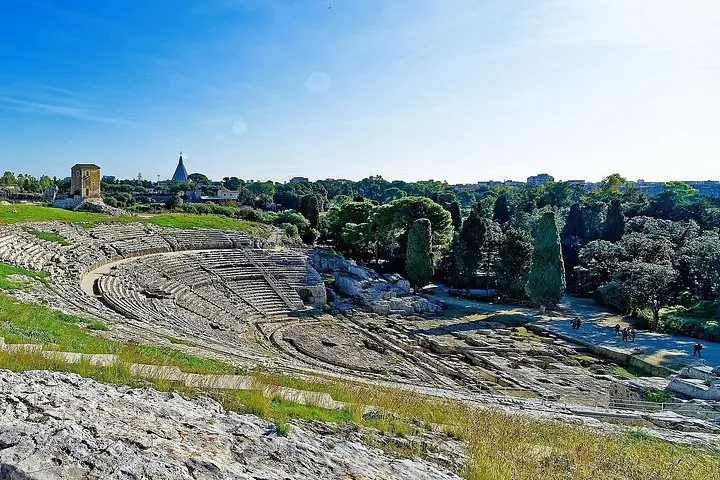
You step through an iron gate and the stone breathes history: sun-bleached tiers of a Hellenic theater curve beneath you, the harbor chiseling light into the distant water. The Archaeological Park of Neapolis in Syracuse opens like a chapter of the ancient Mediterranean — carved rock, cavernous quarries and the uncanny acoustics of the Ear of Dionysius.
You step through an iron gate and the stone breathes history: sun-bleached tiers of a Hellenic theater curve beneath you, the harbor chiseling light into the distant water. The Archaeological Park of Neapolis in Syracuse opens like a chapter of the ancient Mediterranean — carved rock, cavernous quarries and the uncanny acoustics of the Ear of Dionysius.
Founded in the eighth century BCE by Greek settlers, Syracuse later folded Roman engineering into its urban fabric; here the geology is raw limestone and sandstone, quarried for centuries to build temples and city walls. The Latomie are more than extraction sites — narrow passages, small caves and water-worn benches that once held prisoners and stonecutters. The Ear of Dionysius, a man-made cavity with amplified echoes, frames stories of tyranny and escape, while the Roman Amphitheatre reveals the later civic tastes for spectacle.
Local culture leans practical: guides point out mason marks, quarry techniques and the continuity from Greek theater to modern performance. The Park sits minutes from Ortigia, making a combined itinerary easy.
Practical guidance: the private two-hour tour moves at a steady walking pace over uneven rock and steps; comfortable shoes and sun protection are essential. Expect stairs at the theater and gravel paths in the Latomie. Tickets and museum admissions are typically paid on-site unless prearranged. Arrive 10 minutes early to meet your licensed guide; mornings and late afternoons offer cooler light and thinner crowds. Respect ropes and signage — fragile stone keeps its stories when visitors do.