THE ADVENTURE COLLECTIVE® · Independent discovery and booking for outdoor travel

Step into rock-cut history on a concise half-day tour from Bhubaneswar to the Khandagiri and Udayagiri caves. This guided visit pairs archaeological context with practical advice—ideal for travelers who want culture, concise logistics, and strong photo opportunities.
Step into rock-cut history on a concise half-day tour from Bhubaneswar to the Khandagiri and Udayagiri caves. This guided visit pairs archaeological context with practical advice—ideal for travelers who want culture, concise logistics, and strong photo opportunities.
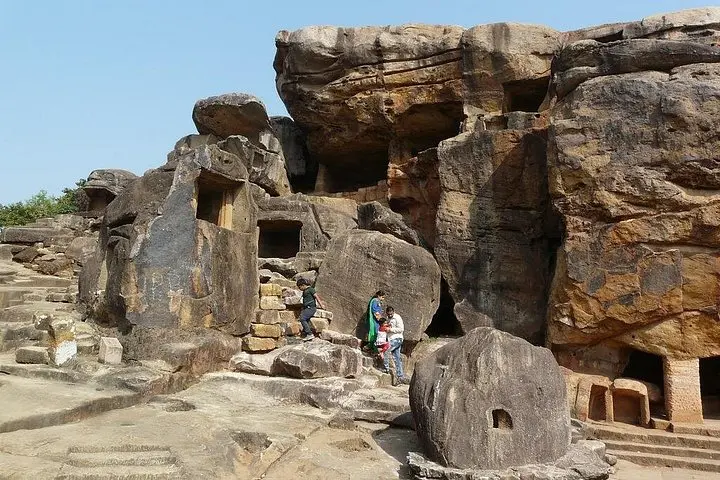
You step out of the air-conditioned car and the city hum recedes—stone and sunlight take over. The twin ridges of Khandagiri and Udayagiri rise not as alpine peaks but as sculpted escarpments, their weathered faces cut with rows of small cells, doorways, and reliefs. Inside the cool throat of a gumpha, the air seems to hold a certain steady silence, as if centuries of meditation have left an imprint. The guide's voice echoes softly against rock that once sheltered Jain monks.
Verified experiences and guided adventures in the surrounding area.
Operated by SITA World Tours · Bhubaneswar, Odisha
You step out of the air-conditioned car and the city hum recedes—stone and sunlight take over. The twin ridges of Khandagiri and Udayagiri rise not as alpine peaks but as sculpted escarpments, their weathered faces cut with rows of small cells, doorways, and reliefs. Inside the cool throat of a gumpha, the air seems to hold a certain steady silence, as if centuries of meditation have left an imprint. The guide's voice echoes softly against rock that once sheltered Jain monks.
The caves date to the reign of King Kharavela (1st century BCE), a powerful ruler of the Mahameghavahana dynasty who left inscriptions recording conquest and public works. He sponsored these rock-cut dwellings—practical, austerely plain cells for ascetics—and panels that turn the mountain into a chronicle: royal processions, hunting scenes and everyday life carved with a precise hand. Geologically the hills are part of the Eastern Ghat fringe—sandstone and laterite worn into ledges that allowed artisans to hew multi-tiered shelters with verandahs and ornate facades.
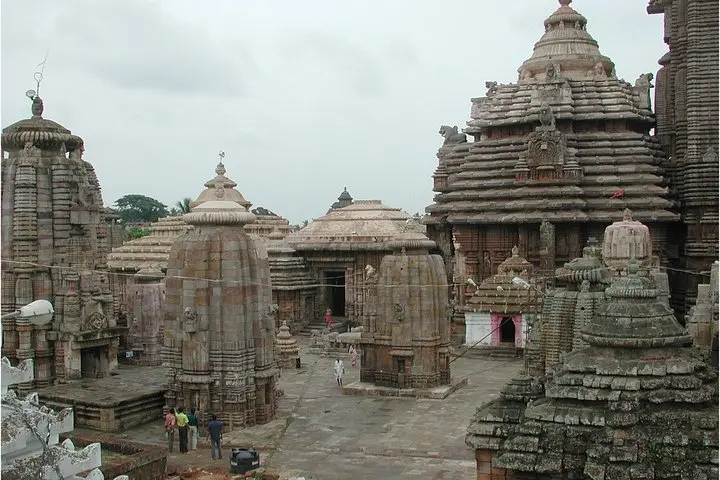
Culture threads through the site: the caves are living monuments of Jain devotional practice and later Hindu continuities. When you climb to the small 18th-century Jain temple at the summit, you look out across flat plains where rice paddies and suburban sprawl converge—a reminder that these ancient sanctuaries still hold a spiritual line into the present.
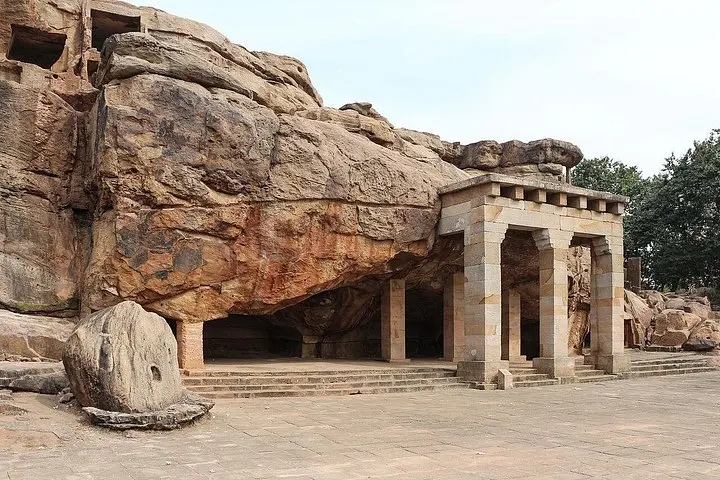
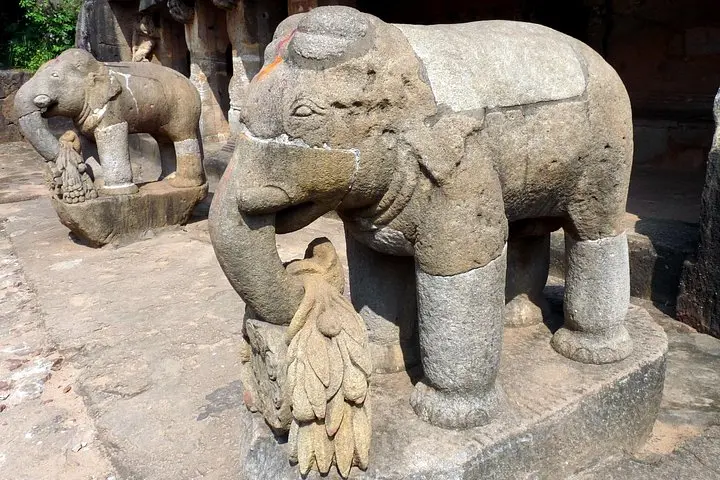
The tour moves at a purposeful pace: Cave 1 (Rani Gumpha) with its restored pillars, Chota Hathi Gumpha with carved elephants, and the snake motifs of Ananta Gumpha on Khandagiri. Your guide decodes iconography—the nandipada, srivatsa, scenes of musicians—and points out restoration work where modern conservation meets age-old stone.
Practical guidance: allow two to three hours for the round-trip tour with pick-up from Bhubaneswar; surfaces are uneven and there are stone steps and narrow passages. Wear supportive shoes and bring water—the shade is intermittent and Odisha sun gets hot, especially April to June. Expect small crowds at the more famous caves; arriving earlier in the morning usually means quieter viewing and softer light for photography.
For travelers interested in context, combine this visit with a stop at the nearby Archaeological Museum in Bhubaneswar, or linger at the hilltop temple to watch local worship practices. Respect the site: no climbing on carved reliefs, and keep plastic waste out of the site’s drains and gullies. The caves are compact, rich with detail and quietly persuasive—places where rock remembers human stories and continues to invite examination.
The tour runs approximately 2–3 hours including round-trip transport from central Bhubaneswar.
Yes—admission to the caves is included in the booking, along with bottled water and snacks.
The tour is partially wheelchair accessible, but many caves have steps and narrow passages—travelers with limited mobility should check specific access points with the operator.
Photography for personal use is generally allowed; avoid using tripods or flash in sensitive areas and respect signage prohibiting it where posted.
A private English-speaking guide is included to explain iconography, history and local context.
Smart-casual dress is requested; wear comfortable, modest clothing and closed-toe shoes for walking on stone steps.
SITA World Tours operates guided outdoor trips and adventures with an emphasis on safety, stewardship, and memorable experiences.
You step out of the air-conditioned car and the city hum recedes—stone and sunlight take over. The twin ridges of Khandagiri and Udayagiri rise not as alpine peaks but as sculpted escarpments, their weathered faces cut with rows of small cells, doorways, and reliefs. Inside the cool throat of a gumpha, the air seems to hold a certain steady silence, as if centuries of meditation have left an imprint. The guide's voice echoes softly against rock that once sheltered Jain monks.
You step out of the air-conditioned car and the city hum recedes—stone and sunlight take over. The twin ridges of Khandagiri and Udayagiri rise not as alpine peaks but as sculpted escarpments, their weathered faces cut with rows of small cells, doorways, and reliefs. Inside the cool throat of a gumpha, the air seems to hold a certain steady silence, as if centuries of meditation have left an imprint. The guide's voice echoes softly against rock that once sheltered Jain monks.
The caves date to the reign of King Kharavela (1st century BCE), a powerful ruler of the Mahameghavahana dynasty who left inscriptions recording conquest and public works. He sponsored these rock-cut dwellings—practical, austerely plain cells for ascetics—and panels that turn the mountain into a chronicle: royal processions, hunting scenes and everyday life carved with a precise hand. Geologically the hills are part of the Eastern Ghat fringe—sandstone and laterite worn into ledges that allowed artisans to hew multi-tiered shelters with verandahs and ornate facades.
Culture threads through the site: the caves are living monuments of Jain devotional practice and later Hindu continuities. When you climb to the small 18th-century Jain temple at the summit, you look out across flat plains where rice paddies and suburban sprawl converge—a reminder that these ancient sanctuaries still hold a spiritual line into the present.
The tour moves at a purposeful pace: Cave 1 (Rani Gumpha) with its restored pillars, Chota Hathi Gumpha with carved elephants, and the snake motifs of Ananta Gumpha on Khandagiri. Your guide decodes iconography—the nandipada, srivatsa, scenes of musicians—and points out restoration work where modern conservation meets age-old stone.
Practical guidance: allow two to three hours for the round-trip tour with pick-up from Bhubaneswar; surfaces are uneven and there are stone steps and narrow passages. Wear supportive shoes and bring water—the shade is intermittent and Odisha sun gets hot, especially April to June. Expect small crowds at the more famous caves; arriving earlier in the morning usually means quieter viewing and softer light for photography.
For travelers interested in context, combine this visit with a stop at the nearby Archaeological Museum in Bhubaneswar, or linger at the hilltop temple to watch local worship practices. Respect the site: no climbing on carved reliefs, and keep plastic waste out of the site’s drains and gullies. The caves are compact, rich with detail and quietly persuasive—places where rock remembers human stories and continues to invite examination.