THE ADVENTURE COLLECTIVE® · Independent discovery and booking for outdoor travel

Walk among the remaining marble columns of the Temple of Olympian Zeus with a multilingual audio guide. This self-paced ticket skips the line and layers myth, architecture, and Roman-era completion into a clear, walkable experience.
Walk among the remaining marble columns of the Temple of Olympian Zeus with a multilingual audio guide. This self-paced ticket skips the line and layers myth, architecture, and Roman-era completion into a clear, walkable experience.
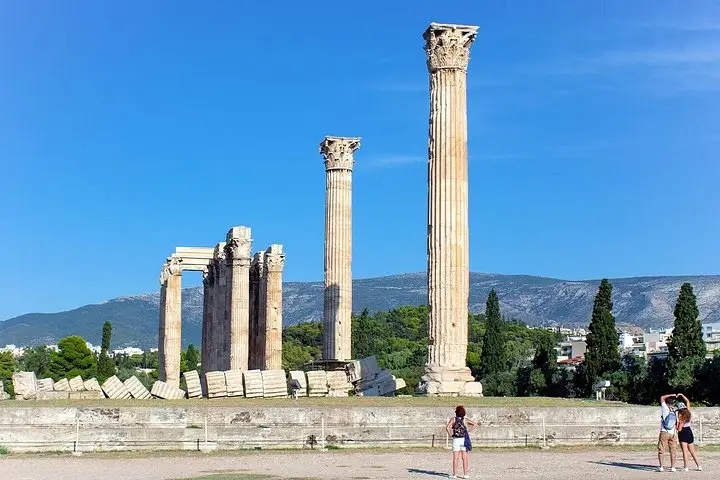
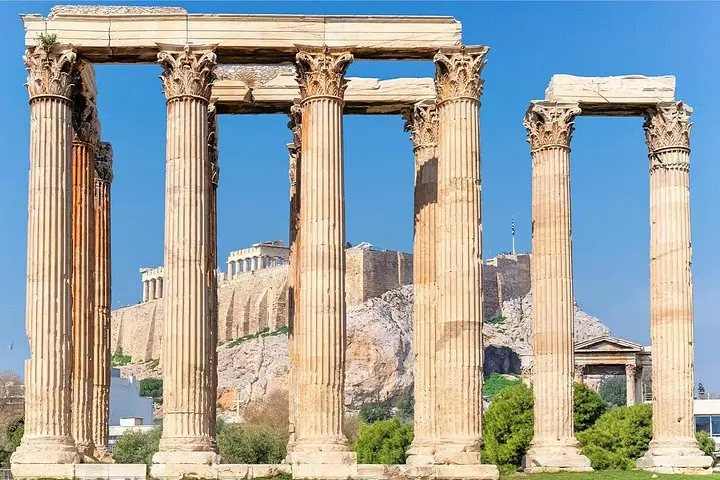
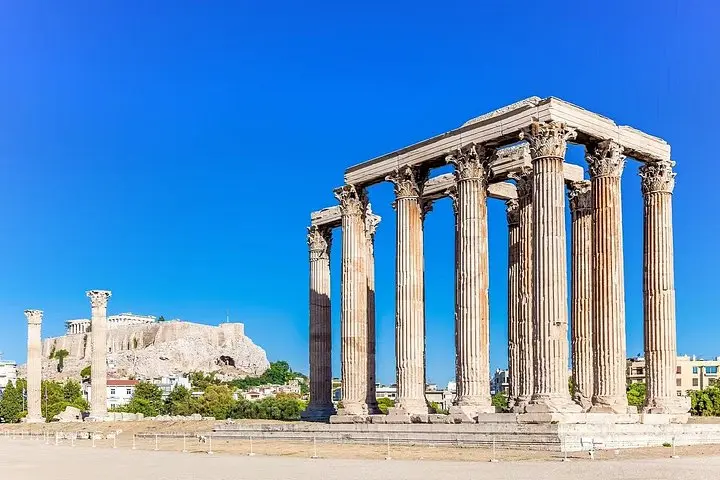
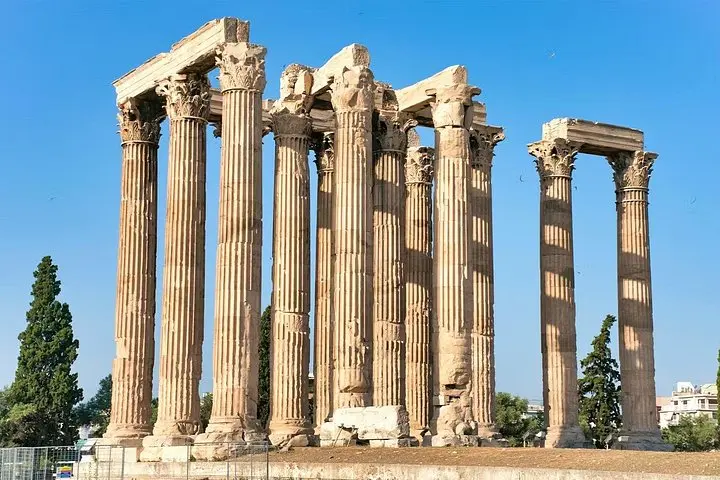
Stand beneath columns that still measure the ambition of empires. The Temple of Olympian Zeus—Olympieion to locals—rises beside modern Athens, its surviving marble pillars catching sunlight while the city hums around them. You arrive on foot along stone-paved promenades, the city’s limestone and tuff underfoot giving way to the temple’s worn marble plinths.
Verified experiences and guided adventures in the surrounding area.
Operated by My Travelons Ltd · Athens, Attica
Stand beneath columns that still measure the ambition of empires. The Temple of Olympian Zeus—Olympieion to locals—rises beside modern Athens, its surviving marble pillars catching sunlight while the city hums around them. You arrive on foot along stone-paved promenades, the city’s limestone and tuff underfoot giving way to the temple’s worn marble plinths.
Built over centuries from the 6th century BCE and finished under Hadrian in the 2nd century CE, the site maps imperial desire onto classical form: colossal columns, wide podiums, and the footprint of a statue once said to match the scale of gods. The geology is simple but revealing—imported Pentelic and Hymettus marble set against urban soils and shallow bedrock—so expect uneven surfaces and the occasional exposed joint.
Culturally, the Olympieion sits at an intersection: adjacent to the National Garden, minutes from the Acropolis and Syntagma, it shares the city’s layered stories of democracy, empire, and modern reinvention. Local insights: morning light flatters the eastern façade; olive and plane trees nearby add shade and the persistent scent of city green.
Practical guidance: your audio guide layers context over the ruins—mythic narratives, construction phases, and imperial politics—letting you pace the experience for 1–4 hours. Wear supportive shoes for marble and cobbles, bring water and sun protection, and plan to combine this stop with nearby sites for a full half-day of Athens archaeology. Public transit and short walks connect everything; tickets let you skip lines and read the stones at your own speed.
Most visitors spend 45–90 minutes on site; with the audio guide and nearby museums, plan 2–4 hours for a fuller visit.
Yes—common offerings include English, Spanish, German, Italian, French, and Chinese; check your booking for available languages.
The temple complex has paved areas and some ramps, but uneven marble and steps can limit full accessibility—contact local services for specific assistance.
Select options often include entry to multiple sites; check the booking to add nearby attractions like the Roman Agora or Hadrian’s Library.
My Travelons Ltd operates guided outdoor trips and adventures with an emphasis on safety, stewardship, and memorable experiences.
Stand beneath columns that still measure the ambition of empires. The Temple of Olympian Zeus—Olympieion to locals—rises beside modern Athens, its surviving marble pillars catching sunlight while the city hums around them. You arrive on foot along stone-paved promenades, the city’s limestone and tuff underfoot giving way to the temple’s worn marble plinths.
Stand beneath columns that still measure the ambition of empires. The Temple of Olympian Zeus—Olympieion to locals—rises beside modern Athens, its surviving marble pillars catching sunlight while the city hums around them. You arrive on foot along stone-paved promenades, the city’s limestone and tuff underfoot giving way to the temple’s worn marble plinths.
Built over centuries from the 6th century BCE and finished under Hadrian in the 2nd century CE, the site maps imperial desire onto classical form: colossal columns, wide podiums, and the footprint of a statue once said to match the scale of gods. The geology is simple but revealing—imported Pentelic and Hymettus marble set against urban soils and shallow bedrock—so expect uneven surfaces and the occasional exposed joint.
Culturally, the Olympieion sits at an intersection: adjacent to the National Garden, minutes from the Acropolis and Syntagma, it shares the city’s layered stories of democracy, empire, and modern reinvention. Local insights: morning light flatters the eastern façade; olive and plane trees nearby add shade and the persistent scent of city green.
Practical guidance: your audio guide layers context over the ruins—mythic narratives, construction phases, and imperial politics—letting you pace the experience for 1–4 hours. Wear supportive shoes for marble and cobbles, bring water and sun protection, and plan to combine this stop with nearby sites for a full half-day of Athens archaeology. Public transit and short walks connect everything; tickets let you skip lines and read the stones at your own speed.