THE ADVENTURE COLLECTIVE® · Independent discovery and booking for outdoor travel

Swim three distinct cenotes on a half-day itinerary from Playa del Carmen with pickup included. Expect cave light, cool freshwater, a respectful Mayan ceremony and small-group guiding.
Swim three distinct cenotes on a half-day itinerary from Playa del Carmen with pickup included. Expect cave light, cool freshwater, a respectful Mayan ceremony and small-group guiding.
The first splash hits colder than the air—light fractures through a cavern mouth and the water seems to pull attention downward, inviting a slow, deliberate stroke. A half-day on this Riviera Maya route moves between three cenotes, each shaped by limestone, time and underground rivers. One opens like a collapsed roof with sunlight pooling on emerald water; another hangs in a shaded cavern threaded with stalactites; the third is a wide, forest-ringed sink where the surface reflects palms and sky.
Verified experiences and guided adventures in the surrounding area.
Operated by Quality Tours Riviera Maya · Playa del Carmen, Quintana Roo
The first splash hits colder than the air—light fractures through a cavern mouth and the water seems to pull attention downward, inviting a slow, deliberate stroke. A half-day on this Riviera Maya route moves between three cenotes, each shaped by limestone, time and underground rivers. One opens like a collapsed roof with sunlight pooling on emerald water; another hangs in a shaded cavern threaded with stalactites; the third is a wide, forest-ringed sink where the surface reflects palms and sky.
Geologically these cenotes are sinkholes into the Yucatán’s porous limestone, where millennia of rain carved passages and connected aquifers. Culturally, cenotes were life sources for the Maya—freshwater wells and sites of ritual—so guides often explain both scientific and ancestral significance before a small, respectful ceremony led by a local host.
Expect clear water, cool temperatures (around 24–26°C), and short swims between observation points. Guides provide context on local flora—mangroves and ceiba roots that lean toward the water—and point out formations sculpted by slow flows through soluble rock. The group moves at an accessible pace, with time to swim, photograph and listen during the ceremony.
Practical notes: wear water shoes, biodegradable sunscreen and a quick-dry suit; bring a dry bag for phones. Pickup from Playa del Carmen or nearby hotels simplifies logistics; the tour lasts roughly four hours and includes light snacks. Because cenotes are part of a delicate aquifer, follow rules about no lotions and minimal disturbance to wildlife—this keeps the caves clean for the next visitor and the community that depends on them.
Yes—listed cenotes on guided tours are monitored and safe for swimmers, but you should be comfortable in open-water pools and follow guide instructions.
The ceremony is presented as a cultural and symbolic experience led by a local host; participation is optional and not for formal religious use.
Bring swimwear, biodegradable sunscreen, a towel, water shoes, a dry bag for electronics and any required medications.
Yes—shared air-conditioned transportation is included from nearby hotels or designated meeting points in the Riviera Maya area.
Quality Tours Riviera Maya operates guided outdoor trips and adventures with an emphasis on safety, stewardship, and memorable experiences.
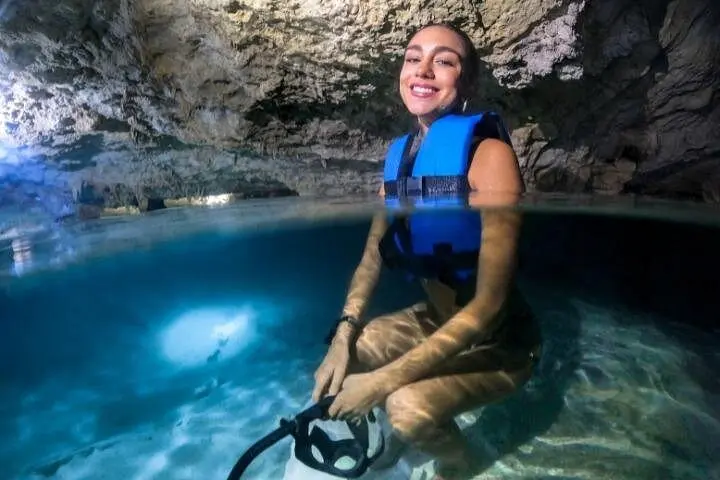
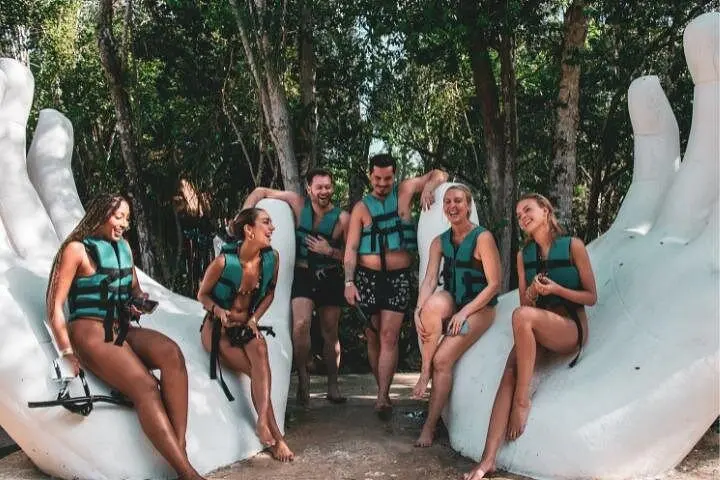
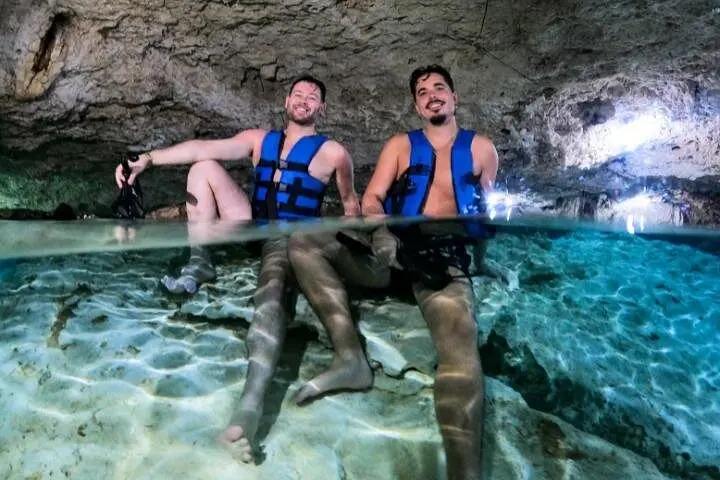
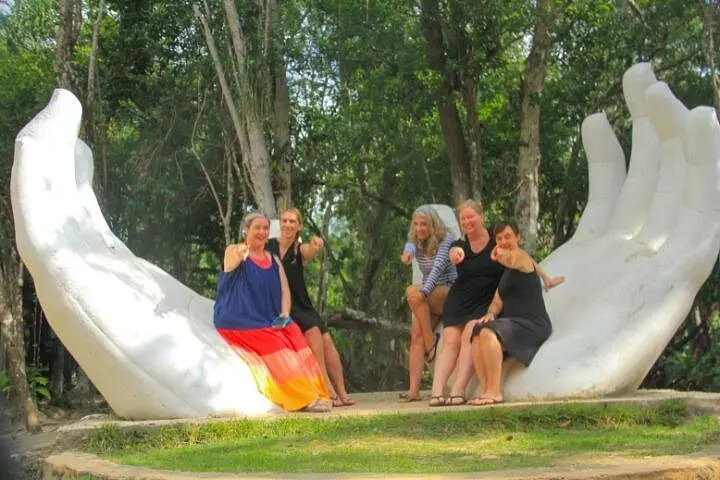
The first splash hits colder than the air—light fractures through a cavern mouth and the water seems to pull attention downward, inviting a slow, deliberate stroke. A half-day on this Riviera Maya route moves between three cenotes, each shaped by limestone, time and underground rivers. One opens like a collapsed roof with sunlight pooling on emerald water; another hangs in a shaded cavern threaded with stalactites; the third is a wide, forest-ringed sink where the surface reflects palms and sky.
The first splash hits colder than the air—light fractures through a cavern mouth and the water seems to pull attention downward, inviting a slow, deliberate stroke. A half-day on this Riviera Maya route moves between three cenotes, each shaped by limestone, time and underground rivers. One opens like a collapsed roof with sunlight pooling on emerald water; another hangs in a shaded cavern threaded with stalactites; the third is a wide, forest-ringed sink where the surface reflects palms and sky.
Geologically these cenotes are sinkholes into the Yucatán’s porous limestone, where millennia of rain carved passages and connected aquifers. Culturally, cenotes were life sources for the Maya—freshwater wells and sites of ritual—so guides often explain both scientific and ancestral significance before a small, respectful ceremony led by a local host.
Expect clear water, cool temperatures (around 24–26°C), and short swims between observation points. Guides provide context on local flora—mangroves and ceiba roots that lean toward the water—and point out formations sculpted by slow flows through soluble rock. The group moves at an accessible pace, with time to swim, photograph and listen during the ceremony.
Practical notes: wear water shoes, biodegradable sunscreen and a quick-dry suit; bring a dry bag for phones. Pickup from Playa del Carmen or nearby hotels simplifies logistics; the tour lasts roughly four hours and includes light snacks. Because cenotes are part of a delicate aquifer, follow rules about no lotions and minimal disturbance to wildlife—this keeps the caves clean for the next visitor and the community that depends on them.