THE ADVENTURE COLLECTIVE® · Independent discovery and booking for outdoor travel

Trace coastal temples, climb an inland pyramid and swim in a dual cenote on a full-day tour that pairs Tulum’s seaside archaeology with Coba’s jungle ruins. Practical transfers, a certified guide and a Mayan chocolate workshop make it a compact cultural immersion.
Trace coastal temples, climb an inland pyramid and swim in a dual cenote on a full-day tour that pairs Tulum’s seaside archaeology with Coba’s jungle ruins. Practical transfers, a certified guide and a Mayan chocolate workshop make it a compact cultural immersion.
The day opens with salt air and jungle light — you follow a coast road away from Playa del Carmen toward low, scrubby karst and the stone shoulders of two ancient cities. In Tulum the cliff-top ruins look out over the Caribbean, waves daring the base of temples that once marked a busy Maya trading port. The guide’s voice is steady, pointing out defensive walls, sea-facing temples and the ways maritime trade shaped this late Postclassic settlement.
Verified experiences and guided adventures in the surrounding area.
Operated by Mayab Travel Tours · Tulum, Quintana Roo
The day opens with salt air and jungle light — you follow a coast road away from Playa del Carmen toward low, scrubby karst and the stone shoulders of two ancient cities. In Tulum the cliff-top ruins look out over the Caribbean, waves daring the base of temples that once marked a busy Maya trading port. The guide’s voice is steady, pointing out defensive walls, sea-facing temples and the ways maritime trade shaped this late Postclassic settlement.
Later the road swings inland; the limestone flattens into forest and sacbeob — ancient raised causeways — that led to Coba. Here the canopy presses close and the Nohoch Mul pyramid rises like an old stairway for the bold; its stone steps still hum with human history.
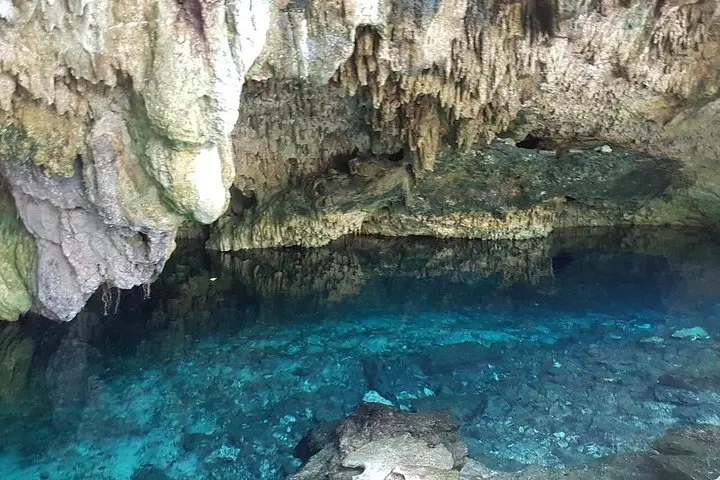
Between ruins you’ll visit Kuxtal, a dual cenote with one chamber kept pristine and another prepared for swimmers. Cenotes are sinkholes into the Yucatán’s groundwater — clear, cool, and fragile — their water sloshing and reflecting light like a thinking surface.
Cultural moments thread the day: a melipona bee village and a chocolate workshop that tie contemporary community life to millennia-old practices. Practicalities are straightforward — expect a full 10–12 hour day with shuttle transfers, certified guides, entrance fees included, and a buffet lunch. Bring reef-safe sunscreen, a quick-dry towel, comfortable walking shoes for uneven ruins, and a reusable water bottle. Time your visit for morning light at Tulum and earlier arrival at Coba if you plan to climb Nohoch Mul; afternoons can be hot and, in summer, showery. This is a day that maps archaeology, geology and living culture into one accessible circuit.
Yes — entrance fees to the archaeological zones and access to Kuxtal cenote are included as listed in the itinerary.
Climbing policies vary; when allowed, climbing Nohoch Mul is part of the visit but can be closed for safety — your guide will advise on the day of travel.
The cenote has shallow entry areas but no lifeguard; non-swimmers should use caution, wear a life vest if offered, and stay in shallow sections.
The tour includes air-conditioned transfers from specified pickup points; the itinerary notes wheelchair and stroller accessibility for portions, but ruins can be uneven and may limit full access.
Mayab Travel Tours operates guided outdoor trips and adventures with an emphasis on safety, stewardship, and memorable experiences.
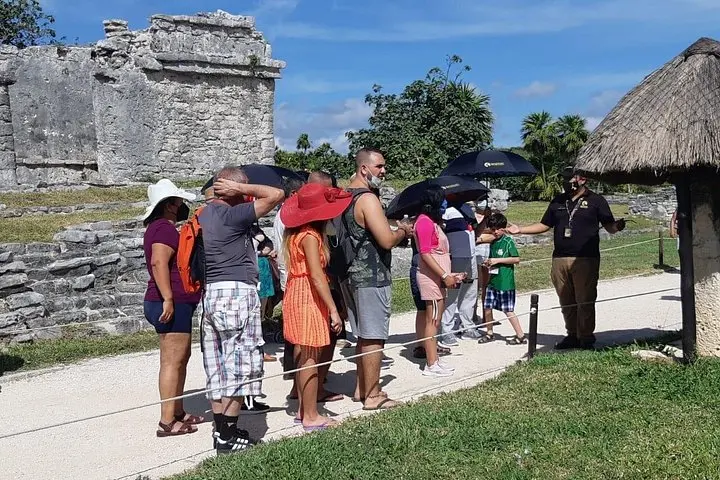
The day opens with salt air and jungle light — you follow a coast road away from Playa del Carmen toward low, scrubby karst and the stone shoulders of two ancient cities. In Tulum the cliff-top ruins look out over the Caribbean, waves daring the base of temples that once marked a busy Maya trading port. The guide’s voice is steady, pointing out defensive walls, sea-facing temples and the ways maritime trade shaped this late Postclassic settlement.
The day opens with salt air and jungle light — you follow a coast road away from Playa del Carmen toward low, scrubby karst and the stone shoulders of two ancient cities. In Tulum the cliff-top ruins look out over the Caribbean, waves daring the base of temples that once marked a busy Maya trading port. The guide’s voice is steady, pointing out defensive walls, sea-facing temples and the ways maritime trade shaped this late Postclassic settlement.
Later the road swings inland; the limestone flattens into forest and sacbeob — ancient raised causeways — that led to Coba. Here the canopy presses close and the Nohoch Mul pyramid rises like an old stairway for the bold; its stone steps still hum with human history.
Between ruins you’ll visit Kuxtal, a dual cenote with one chamber kept pristine and another prepared for swimmers. Cenotes are sinkholes into the Yucatán’s groundwater — clear, cool, and fragile — their water sloshing and reflecting light like a thinking surface.
Cultural moments thread the day: a melipona bee village and a chocolate workshop that tie contemporary community life to millennia-old practices. Practicalities are straightforward — expect a full 10–12 hour day with shuttle transfers, certified guides, entrance fees included, and a buffet lunch. Bring reef-safe sunscreen, a quick-dry towel, comfortable walking shoes for uneven ruins, and a reusable water bottle. Time your visit for morning light at Tulum and earlier arrival at Coba if you plan to climb Nohoch Mul; afternoons can be hot and, in summer, showery. This is a day that maps archaeology, geology and living culture into one accessible circuit.