THE ADVENTURE COLLECTIVE® · Independent discovery and booking for outdoor travel

Spend a day exploring three distinct historical layers of northern Tunisia: Roman Oudhna, Andalusian Testour, and the superbly preserved Roman town of Dougga. This private, eight-hour tour combines gentle walking with rich archaeological context and door-to-door transport from Tunis.
Spend a day exploring three distinct historical layers of northern Tunisia: Roman Oudhna, Andalusian Testour, and the superbly preserved Roman town of Dougga. This private, eight-hour tour combines gentle walking with rich archaeological context and door-to-door transport from Tunis.
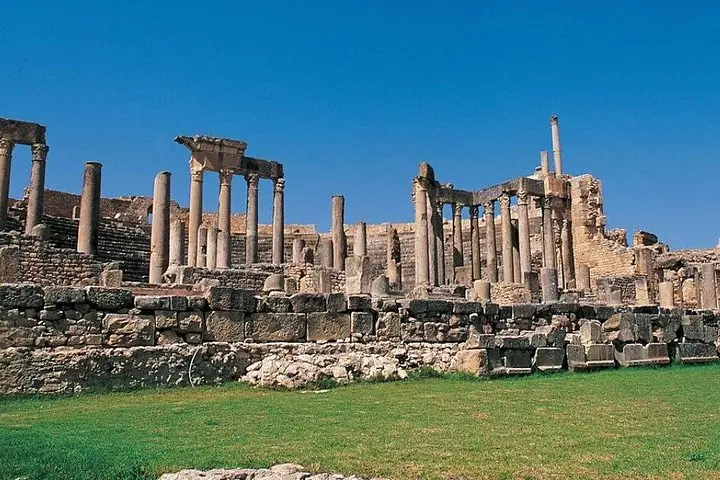
You step from the air-conditioned van into light that presses against the stone — at Oudhna the amphitheater’s outline throws a hard shadow across cracked mosaic floors while distant olive trees hum in the breeze.
Verified experiences and guided adventures in the surrounding area.
Operated by TUNISIVISION · Dougga, Béja Governorate
You step from the air-conditioned van into light that presses against the stone — at Oudhna the amphitheater’s outline throws a hard shadow across cracked mosaic floors while distant olive trees hum in the breeze.
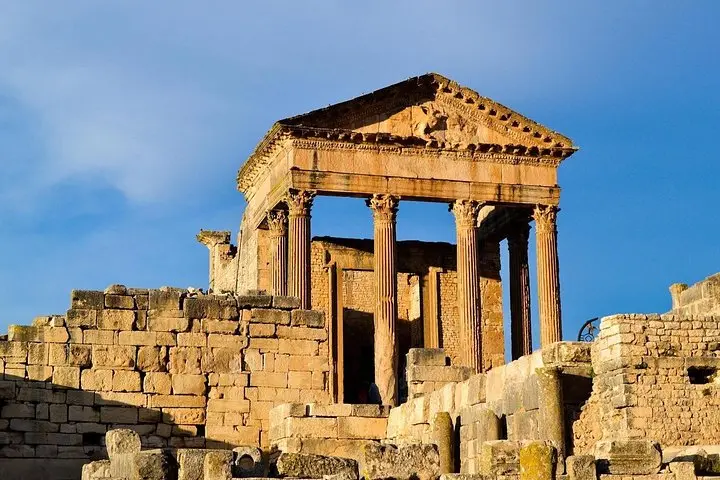
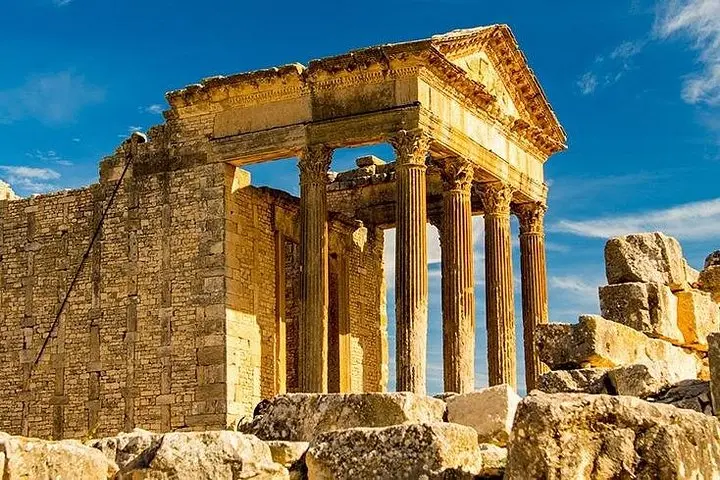
The day moves like a field guide: Oudhna first, where Roman columns and baths reveal urban life on the southern edge of the empire; Testour next, a small town shaped by 17th-century Andalusian builders and a mosque with a clock face that reads in Hebrew numerals; and finally Dougga, the UNESCO-protected ‘‘small Roman town’’ with a theater, capitol, and temples carved into rolling limestone.
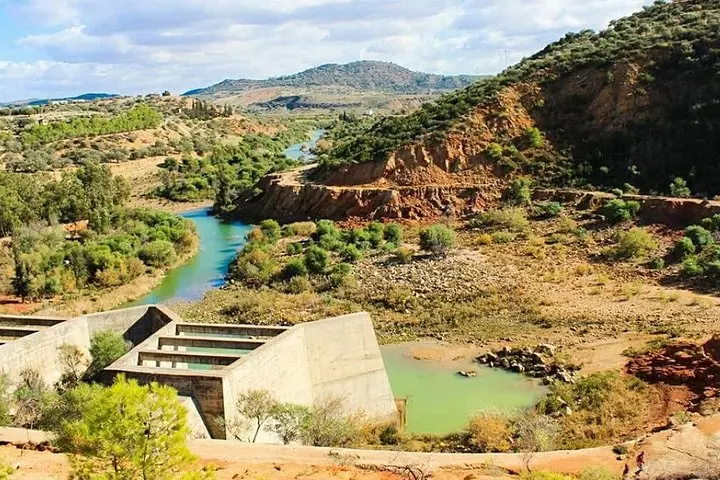
Geology here is limestone plateau and red clay; ruins sit on terraces and low escarpments, so expect short stair climbs and exposed, uneven paving. The cultural layers are visible — Punic and Berber foundations under Roman facades, and Andalusian planning in Testour’s narrow streets.
Practically: this is an eight-hour private tour with door-to-door transport from Tunis, modest walking distances at each site but intermittent elevation and uneven surfaces. Wear grippy shoes, sun protection, and bring water and small change for on-site fees or snacks. Morning light is best for Dougga’s mosaics and cooler temperatures; late afternoon returns through farmland that smells of thyme and olive.
For travelers who want history without the crowds, a private guide translates inscriptions and points out conservation work — and makes the ruins feel like a lived-in landscape rather than a museum.
This private tour runs about eight hours and visits Oudhna (Uthina), Testour, and Dougga with guided time at each site.
Moderate fitness is required; short walks and uneven surfaces may be challenging for very young children or those with mobility issues.
Admission to archaeological sites such as Oudhna and Dougga is typically included as noted by the operator, but confirm at booking and carry small cash for incidental fees.
Yes — a private guide usually allocates time for photos and interpretation at major ruins, and can tailor pacing to the group.
TUNISIVISION operates guided outdoor trips and adventures with an emphasis on safety, stewardship, and memorable experiences.
You step from the air-conditioned van into light that presses against the stone — at Oudhna the amphitheater’s outline throws a hard shadow across cracked mosaic floors while distant olive trees hum in the breeze.
You step from the air-conditioned van into light that presses against the stone — at Oudhna the amphitheater’s outline throws a hard shadow across cracked mosaic floors while distant olive trees hum in the breeze.
The day moves like a field guide: Oudhna first, where Roman columns and baths reveal urban life on the southern edge of the empire; Testour next, a small town shaped by 17th-century Andalusian builders and a mosque with a clock face that reads in Hebrew numerals; and finally Dougga, the UNESCO-protected ‘‘small Roman town’’ with a theater, capitol, and temples carved into rolling limestone.
Geology here is limestone plateau and red clay; ruins sit on terraces and low escarpments, so expect short stair climbs and exposed, uneven paving. The cultural layers are visible — Punic and Berber foundations under Roman facades, and Andalusian planning in Testour’s narrow streets.
Practically: this is an eight-hour private tour with door-to-door transport from Tunis, modest walking distances at each site but intermittent elevation and uneven surfaces. Wear grippy shoes, sun protection, and bring water and small change for on-site fees or snacks. Morning light is best for Dougga’s mosaics and cooler temperatures; late afternoon returns through farmland that smells of thyme and olive.
For travelers who want history without the crowds, a private guide translates inscriptions and points out conservation work — and makes the ruins feel like a lived-in landscape rather than a museum.