THE ADVENTURE COLLECTIVE® · Independent discovery and booking for outdoor travel

Discover the Shaw neighborhood’s tucked‑away alleyways on a 90–120 minute guided walk that stitches together hidden histories, street art and adaptive reuse. Perfect for history buffs and curious city walkers looking for a different D.C. perspective.
Discover the Shaw neighborhood’s tucked‑away alleyways on a 90–120 minute guided walk that stitches together hidden histories, street art and adaptive reuse. Perfect for history buffs and curious city walkers looking for a different D.C. perspective.
You step off M Street and into a narrow ribbon of shade where brick walls press close and history leans in to be heard. The alleyways of Shaw are compact stages—garages, painted doors, late‑19th‑century façades—where stories of labor, refuge and neighborhood life unfold in the space between larger streets. Guides lead a small group at an easy pace, pausing at murals, former stables and a popular local coffee stop to stitch together the alleyways’ past and present.
Verified experiences and guided adventures in the surrounding area.
Operated by Off the Mall Tours · Washington, District of Columbia
You step off M Street and into a narrow ribbon of shade where brick walls press close and history leans in to be heard. The alleyways of Shaw are compact stages—garages, painted doors, late‑19th‑century façades—where stories of labor, refuge and neighborhood life unfold in the space between larger streets. Guides lead a small group at an easy pace, pausing at murals, former stables and a popular local coffee stop to stitch together the alleyways’ past and present.
These passageways are an artifact of city planning and social history: once informal housing and discreet refuges for escaped enslaved people and low‑income residents, they later became targets of sanitation campaigns and urban renewal. Blagden Alley and Naylor Court survive as one of the best‑preserved examples, where adaptive reuse turned service buildings into galleries, cafés and painted garage doors.
Geologically, the area sits on the flat Potomac lowlands; the story is urban rather than tectonic—changes driven by policy, migration and design. Culturally, Shaw has been a center of African American music, business and community life; the alleyways reflect that continuity and change.
Practically: the tour lasts about 90–120 minutes, covers less than a mile of mostly paved, even surfaces, and includes a midway stop at La Colombe Coffee. Wear sturdy walking shoes, bring a water bottle and arrive by Metro or bus—street parking is limited. The route is wheelchair accessible and suitable for most fitness levels. Expect close quarters, a calm pace, and plenty of photographic details—doorway plaques, murals and the weathered grain of old brick that keep the neighborhood’s stories visible.
The guided tour runs about 90–120 minutes and covers under a mile of mostly paved, even surfaces with frequent stops.
Yes—surfaces and routes are generally accessible, but some alley sections are narrow; contact the operator for specific arrangements.
Yes—the itinerary includes a short stop at La Colombe Coffee; you can buy takeaway drinks during the break.
Yes—this is suitable for older children and families; the small group size and calm pace make it easy to manage with kids.
Off the Mall Tours operates guided outdoor trips and adventures with an emphasis on safety, stewardship, and memorable experiences.
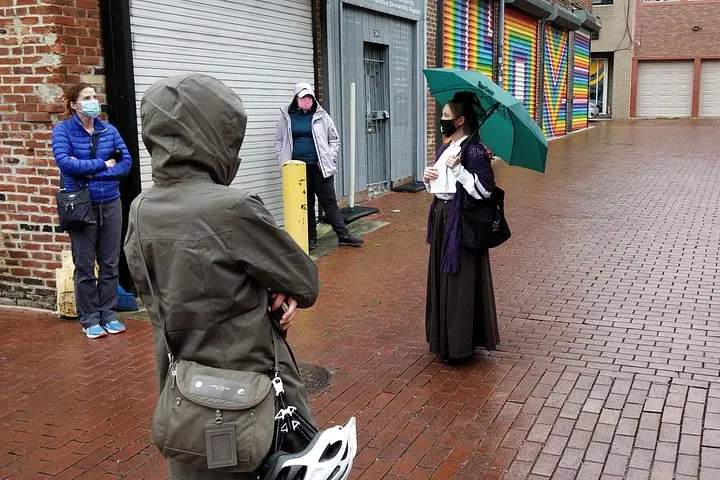

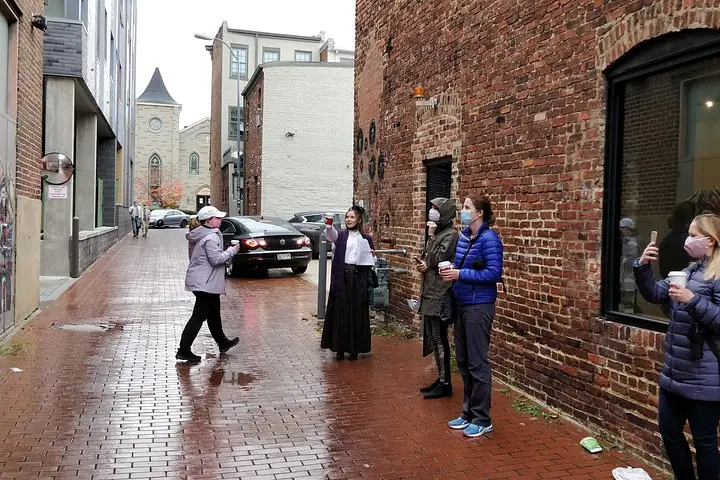
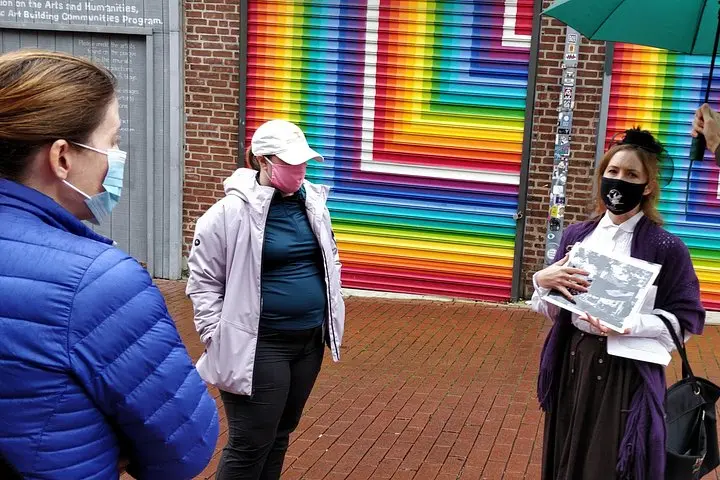
You step off M Street and into a narrow ribbon of shade where brick walls press close and history leans in to be heard. The alleyways of Shaw are compact stages—garages, painted doors, late‑19th‑century façades—where stories of labor, refuge and neighborhood life unfold in the space between larger streets. Guides lead a small group at an easy pace, pausing at murals, former stables and a popular local coffee stop to stitch together the alleyways’ past and present.
You step off M Street and into a narrow ribbon of shade where brick walls press close and history leans in to be heard. The alleyways of Shaw are compact stages—garages, painted doors, late‑19th‑century façades—where stories of labor, refuge and neighborhood life unfold in the space between larger streets. Guides lead a small group at an easy pace, pausing at murals, former stables and a popular local coffee stop to stitch together the alleyways’ past and present.
These passageways are an artifact of city planning and social history: once informal housing and discreet refuges for escaped enslaved people and low‑income residents, they later became targets of sanitation campaigns and urban renewal. Blagden Alley and Naylor Court survive as one of the best‑preserved examples, where adaptive reuse turned service buildings into galleries, cafés and painted garage doors.
Geologically, the area sits on the flat Potomac lowlands; the story is urban rather than tectonic—changes driven by policy, migration and design. Culturally, Shaw has been a center of African American music, business and community life; the alleyways reflect that continuity and change.
Practically: the tour lasts about 90–120 minutes, covers less than a mile of mostly paved, even surfaces, and includes a midway stop at La Colombe Coffee. Wear sturdy walking shoes, bring a water bottle and arrive by Metro or bus—street parking is limited. The route is wheelchair accessible and suitable for most fitness levels. Expect close quarters, a calm pace, and plenty of photographic details—doorway plaques, murals and the weathered grain of old brick that keep the neighborhood’s stories visible.