THE ADVENTURE COLLECTIVE® · Independent discovery and booking for outdoor travel

A full‑day journey through jungle, cold streams and cavern passages leads to a remote Mayan ceremonial chamber — complete with pottery, obsidian, and the famed Crystal Maiden. This adventure blends serious hiking with archaeological wonder.
A full‑day journey through jungle, cold streams and cavern passages leads to a remote Mayan ceremonial chamber — complete with pottery, obsidian, and the famed Crystal Maiden. This adventure blends serious hiking with archaeological wonder.
You arrive at the ranger post with the jungle already working around you: humidity clings to your shirt, a chorus of distant howler monkeys punctuates the morning, and the trail ahead disappears beneath a canopy of ceiba and mahogany.
Verified experiences and guided adventures in the surrounding area.
Operated by UNTAME BELIZE · San Ignacio, Cayo District
You arrive at the ranger post with the jungle already working around you: humidity clings to your shirt, a chorus of distant howler monkeys punctuates the morning, and the trail ahead disappears beneath a canopy of ceiba and mahogany.
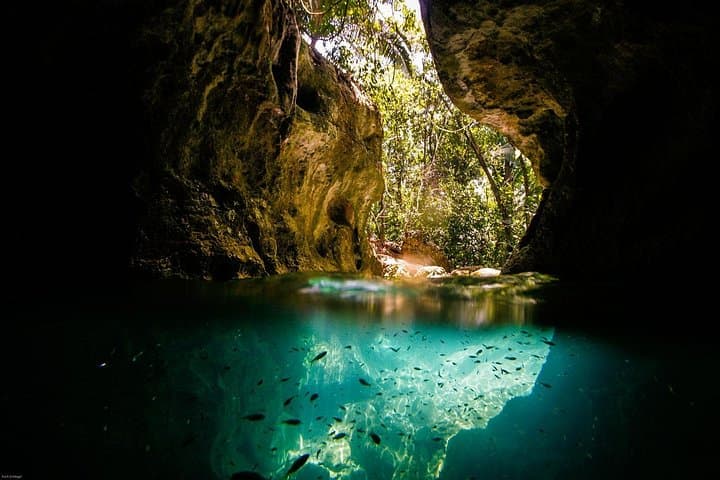
The approach is honest — about a 45‑minute jungle hike of roughly 2 km (1.2 miles) with intermittent stream crossings and a steady but moderate climb. Three cold, clear jungle streams dare you with slippery rocks before the trail opens to a spring-fed pool that marks the cave mouth; here you strip down, wade, and use the guide’s rope to swim the short span into darkness.
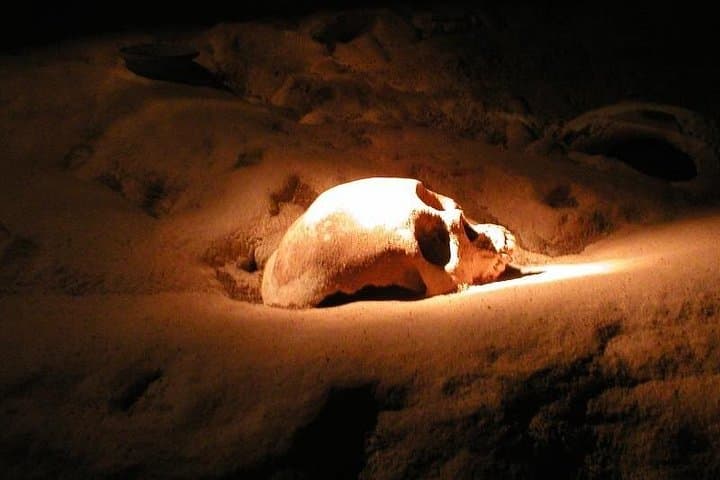
Once inside, the world changes: calcite formations hang like icicles and rise like ancient columns, water tapping a steady rhythm overhead. You wade and stoop through knee to chest-high water, occasionally climbing wet rock and squeezing through tunnels until you reach the ceremonial chamber deep in the cave. There, dim light from helmet lamps reveals pottery shards, obsidian tools, offering bowls — and the skeleton known as the Crystal Maiden, her calcified bones glazed in mineral deposits that sparkle under torchlight.
This is both an archaeological site and a sacred place. The Maya used Actun Tunichil Muknal for rites and offerings; many artifacts and human remains remain in situ, giving a rare, intimate glimpse into ritual life nearly a millennium ago. Geologically, the cave is a classic limestone karst system: groundwater carving passages through soluble rock, depositing calcite in slow, brilliant layers that create the glossy “crystal” effect on bones and ceramics.
Local guides — often Belizean Maya or Mestizo — narrate history, point out fragile features, and enforce strict rules: no touching artifacts, no food inside, and no flash photography. Group sizes are kept small and the experience is physically demanding; the operator limits tours and requires a high level of fitness.
Practicalities: expect a full‑day outing (9–10 hours door-to-door with travel), three to four hours cave exploration, and a return jungle hike followed by a picnic lunch. Wear closed‑toe water shoes with grip, bring neoprene socks or quick‑dry socks, carry 1–2 liters of water, and pack a change of clothes and a dry bag. Be prepared for slippery terrain and cool, damp conditions inside the cave; temperatures drop noticeably away from the humid surface.
Timing matters: mornings are cooler and have lighter visitor traffic; during the rainy season (June–November) stream crossings are higher and more challenging. Respect the site: stay with your guide, follow preservation rules, and expect a memorable blend of raw jungle, geological theater, and layered human history.
Very—expect uneven jungle trails, multiple stream crossings, a short swim at the cave entrance, and several hours of wading and low scrambling inside the cave; operators advise a high level of fitness.
Flash photography is prohibited in the cave to protect artifacts; most operators allow photos with helmet lights and without flash in designated areas.
Policies vary by operator, but because of the physically demanding and sensitive nature of the site, younger children are often discouraged; check ages and restrictions when booking.
Yes—ATM is a ceremonial site with human remains. Respect rules: no touching artifacts or bones and follow your guide’s instructions at all times.
Tours may be canceled in heavy rain for safety; stream levels rise quickly causing hazardous conditions — operators typically notify guests if they cancel.
Bring personal water and energy snacks for the hike; the tour includes bottled water and a picnic lunch after the cave, but you’ll want hydration on the approach.
UNTAME BELIZE operates guided outdoor trips and adventures with an emphasis on safety, stewardship, and memorable experiences.
You arrive at the ranger post with the jungle already working around you: humidity clings to your shirt, a chorus of distant howler monkeys punctuates the morning, and the trail ahead disappears beneath a canopy of ceiba and mahogany.
You arrive at the ranger post with the jungle already working around you: humidity clings to your shirt, a chorus of distant howler monkeys punctuates the morning, and the trail ahead disappears beneath a canopy of ceiba and mahogany.
The approach is honest — about a 45‑minute jungle hike of roughly 2 km (1.2 miles) with intermittent stream crossings and a steady but moderate climb. Three cold, clear jungle streams dare you with slippery rocks before the trail opens to a spring-fed pool that marks the cave mouth; here you strip down, wade, and use the guide’s rope to swim the short span into darkness.
Once inside, the world changes: calcite formations hang like icicles and rise like ancient columns, water tapping a steady rhythm overhead. You wade and stoop through knee to chest-high water, occasionally climbing wet rock and squeezing through tunnels until you reach the ceremonial chamber deep in the cave. There, dim light from helmet lamps reveals pottery shards, obsidian tools, offering bowls — and the skeleton known as the Crystal Maiden, her calcified bones glazed in mineral deposits that sparkle under torchlight.
This is both an archaeological site and a sacred place. The Maya used Actun Tunichil Muknal for rites and offerings; many artifacts and human remains remain in situ, giving a rare, intimate glimpse into ritual life nearly a millennium ago. Geologically, the cave is a classic limestone karst system: groundwater carving passages through soluble rock, depositing calcite in slow, brilliant layers that create the glossy “crystal” effect on bones and ceramics.
Local guides — often Belizean Maya or Mestizo — narrate history, point out fragile features, and enforce strict rules: no touching artifacts, no food inside, and no flash photography. Group sizes are kept small and the experience is physically demanding; the operator limits tours and requires a high level of fitness.
Practicalities: expect a full‑day outing (9–10 hours door-to-door with travel), three to four hours cave exploration, and a return jungle hike followed by a picnic lunch. Wear closed‑toe water shoes with grip, bring neoprene socks or quick‑dry socks, carry 1–2 liters of water, and pack a change of clothes and a dry bag. Be prepared for slippery terrain and cool, damp conditions inside the cave; temperatures drop noticeably away from the humid surface.
Timing matters: mornings are cooler and have lighter visitor traffic; during the rainy season (June–November) stream crossings are higher and more challenging. Respect the site: stay with your guide, follow preservation rules, and expect a memorable blend of raw jungle, geological theater, and layered human history.