THE ADVENTURE COLLECTIVE® · Independent discovery and booking for outdoor travel

Spend a day moving through Angkor’s greatest monuments—from the reflective pools of Angkor Wat to the jungle-wrapped galleries of Ta Prohm—culminating in a sunset at Phnom Bakheng. This guided route pairs big-picture history with practical tips for a long, rewarding day.
Spend a day moving through Angkor’s greatest monuments—from the reflective pools of Angkor Wat to the jungle-wrapped galleries of Ta Prohm—culminating in a sunset at Phnom Bakheng. This guided route pairs big-picture history with practical tips for a long, rewarding day.
Dawn breaks over broad laterite causeways and low jungle canopy as a small convoy uncoils toward Angkor’s core. The day tour moves in measured stages: the reflecting pools of Angkor Wat, the enigmatic faces of Bayon, the tree-entangled galleries of Ta Prohm, and the stepped terraces and temple-mountains that once ordered an empire.
Verified experiences and guided adventures in the surrounding area.
Operated by Opatrip.com Cambodia · Siem Reap, Siem Reap Province
Dawn breaks over broad laterite causeways and low jungle canopy as a small convoy uncoils toward Angkor’s core. The day tour moves in measured stages: the reflecting pools of Angkor Wat, the enigmatic faces of Bayon, the tree-entangled galleries of Ta Prohm, and the stepped terraces and temple-mountains that once ordered an empire.
Angkor is both a monumental archive and a living landscape. Constructed between the 9th and 13th centuries by Khmer rulers, its sandstone and laterite architecture records religious shifts from Hinduism to Theravada Buddhism. Geology matters here—the soft sandstone holds fine bas-relief while the seasonal Tonle Sap basin has shaped settlement and rice agriculture for centuries.
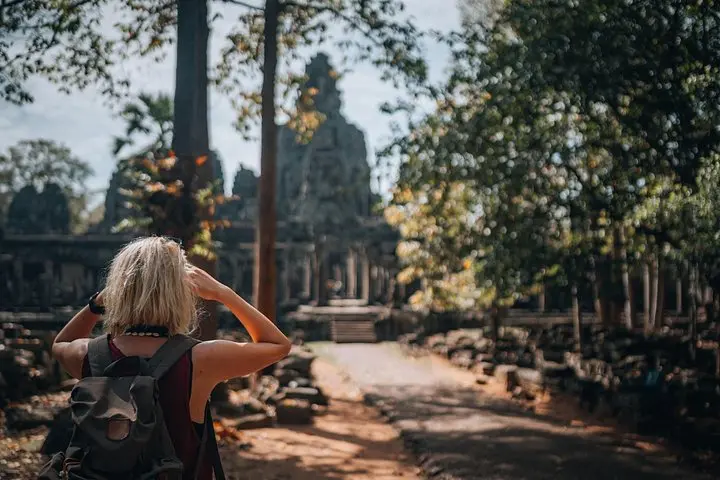
Culture remains present: saffron-robed monks pass, vendors sell lotus blossoms, and local guides translate mythic panels into human stories. The jungle asserts itself too; strangler figs and silk-cotton trees pry through masonry, giving Ta Prohm its famous, cinematic look.
Practically, expect a long but gentle day: roughly nine hours with multiple short walks on uneven stone, stairs, and shaded trails. Start early to beat the heat and crowds, carry water and sun protection, and respect temple dress codes—shoulders and knees covered in many sites. Photography windows shift through the day as light grazes bas-reliefs and towers.
This tour suits history-minded travelers who can handle a full day on foot, want a curated route through Angkor’s highlights, and aim to end with a sunset panorama from Phnom Bakheng—a final, wide-angle view of a landscape shaped by stone, water, and time.
Yes. Entry to the Angkor Archaeological Park requires an official Angkor pass (1-day, 3-day, or 7-day) purchased at the park ticket center near Siem Reap.
It’s a long day but not highly technical—expect multiple short walks, stairs, and uneven ground; anyone who can walk several hours at a moderate pace should manage well.
Sunrise at Angkor Wat is best in the dry season (Nov–Feb) for clearer skies; sunset views from Phnom Bakheng are popular year-round but can be crowded—arrive early to secure space.
This tour typically includes a professional local guide and round-trip transportation from central Siem Reap hotels, but confirm details with the operator before booking.
Opatrip.com Cambodia operates guided outdoor trips and adventures with an emphasis on safety, stewardship, and memorable experiences.
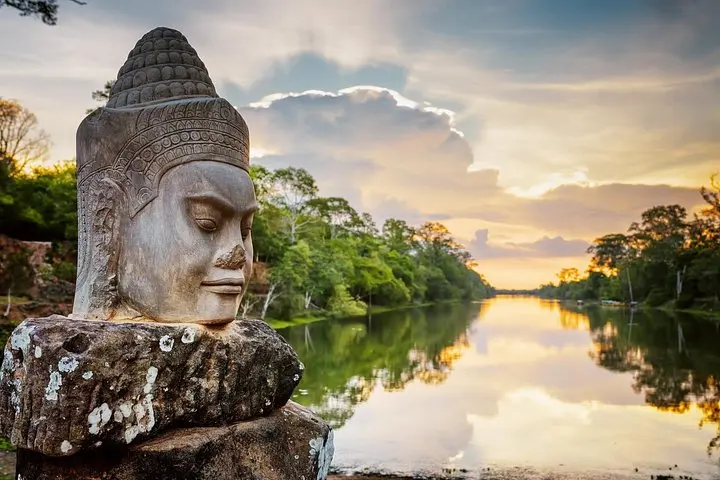
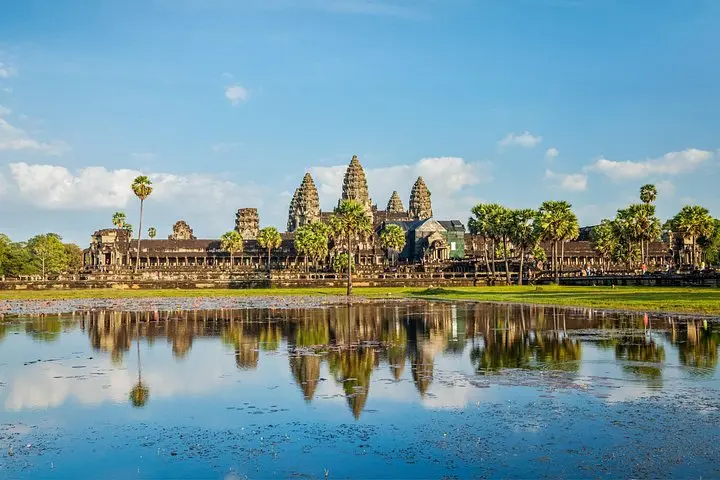

Dawn breaks over broad laterite causeways and low jungle canopy as a small convoy uncoils toward Angkor’s core. The day tour moves in measured stages: the reflecting pools of Angkor Wat, the enigmatic faces of Bayon, the tree-entangled galleries of Ta Prohm, and the stepped terraces and temple-mountains that once ordered an empire.
Dawn breaks over broad laterite causeways and low jungle canopy as a small convoy uncoils toward Angkor’s core. The day tour moves in measured stages: the reflecting pools of Angkor Wat, the enigmatic faces of Bayon, the tree-entangled galleries of Ta Prohm, and the stepped terraces and temple-mountains that once ordered an empire.
Angkor is both a monumental archive and a living landscape. Constructed between the 9th and 13th centuries by Khmer rulers, its sandstone and laterite architecture records religious shifts from Hinduism to Theravada Buddhism. Geology matters here—the soft sandstone holds fine bas-relief while the seasonal Tonle Sap basin has shaped settlement and rice agriculture for centuries.
Culture remains present: saffron-robed monks pass, vendors sell lotus blossoms, and local guides translate mythic panels into human stories. The jungle asserts itself too; strangler figs and silk-cotton trees pry through masonry, giving Ta Prohm its famous, cinematic look.
Practically, expect a long but gentle day: roughly nine hours with multiple short walks on uneven stone, stairs, and shaded trails. Start early to beat the heat and crowds, carry water and sun protection, and respect temple dress codes—shoulders and knees covered in many sites. Photography windows shift through the day as light grazes bas-reliefs and towers.
This tour suits history-minded travelers who can handle a full day on foot, want a curated route through Angkor’s highlights, and aim to end with a sunset panorama from Phnom Bakheng—a final, wide-angle view of a landscape shaped by stone, water, and time.