THE ADVENTURE COLLECTIVE® · Independent discovery and booking for outdoor travel

Spend a full day walking among Sri Lanka’s earliest Buddhist monuments on a private tour from Sigiriya. Visit colossal stupas, the Sri Maha Bodhi, meditation caves and the Aukana Buddha with an English‑speaking chauffeur‑guide.
Spend a full day walking among Sri Lanka’s earliest Buddhist monuments on a private tour from Sigiriya. Visit colossal stupas, the Sri Maha Bodhi, meditation caves and the Aukana Buddha with an English‑speaking chauffeur‑guide.
You step out of the air‑conditioned vehicle into a wide, sunlit plain punctuated by white stupas and ancient brick platforms — Anuradhapura’s ruins open like a city paused in time. The tour moves at a deliberate pace: large dagobas rise and fall against the sky, the Sri Maha Bodhi peepal tree holds a recorded history in its trunk, and quiet meditation caves invite a slower breath.
Verified experiences and guided adventures in the surrounding area.
Operated by Lakpura LLC · Anuradhapura, North Central Province
You step out of the air‑conditioned vehicle into a wide, sunlit plain punctuated by white stupas and ancient brick platforms — Anuradhapura’s ruins open like a city paused in time. The tour moves at a deliberate pace: large dagobas rise and fall against the sky, the Sri Maha Bodhi peepal tree holds a recorded history in its trunk, and quiet meditation caves invite a slower breath.
Anuradhapura was the capital of Sri Lanka’s earliest major kingdom and remains one of the island’s most important archaeological preserves. Many monuments date from the 3rd century BCE through the first millennium CE; stupas such as Jetavanarama and Ruwanwelisaya reflect large-scale brick engineering, while the Sri Maha Bodhi is a living transplant tied directly to the Buddha’s enlightenment narrative. Geologically the region sits in the island’s dry zone — broad, flat plains with shallow soils that helped preserve ancient brick structures but also expose them to seasonal weathering.
Culturally the site is active: monks maintain shrines, pilgrims perform circumambulations, and small local vendors sell devotional offerings. Visitors should approach with modest dress and the awareness that many monuments are living religious sites, not just ruins.
Practical guidance: the private day tour is about nine hours of mixed driving and walking; wear comfortable closed shoes for uneven temple terraces, bring sun protection and modest clothing that covers shoulders and knees, and keep a refillable bottle handy (your booking includes 1 L of water). Expect gentle walking with several stairs; allow time for photos, quiet reflection and short guided explanations of each monument’s historical context.
The private tour runs about nine hours and typically includes hotel pickup/drop‑off, an English‑speaking chauffeur‑guide, air‑conditioned transport and a 1‑liter water bottle per person.
Confirm at booking — many Viator private tours do not include archaeological site entry fees; bring local currency for admissions if required.
Yes; the pace is moderate with breaks. Note there are stairs and uneven surfaces that may be challenging for limited mobility.
Wear clothing that covers shoulders and knees; remove shoes and hats within shrine compounds and follow signage or guide instructions.
Lakpura LLC operates guided outdoor trips and adventures with an emphasis on safety, stewardship, and memorable experiences.
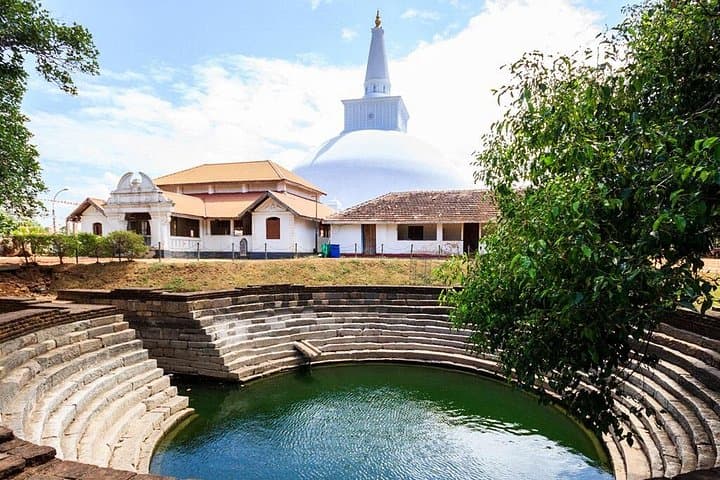
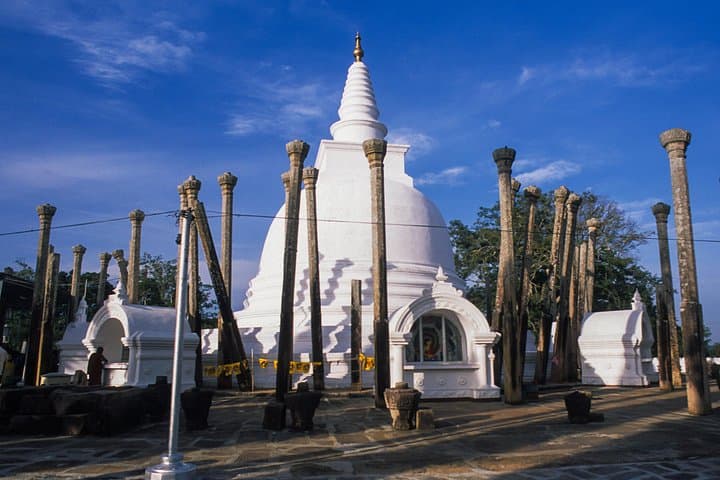
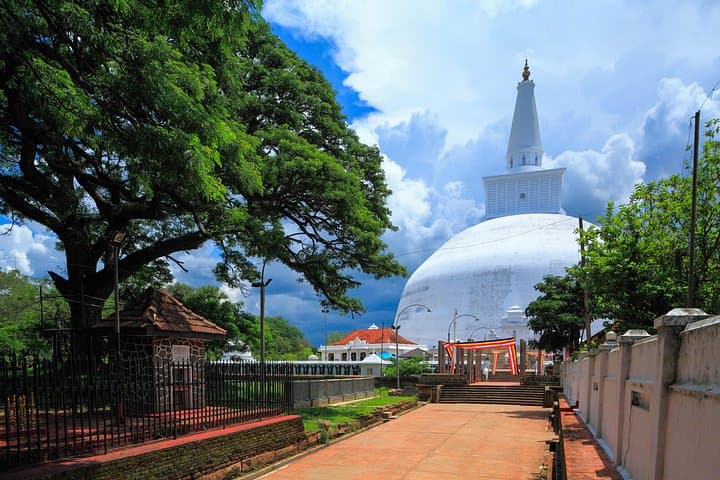
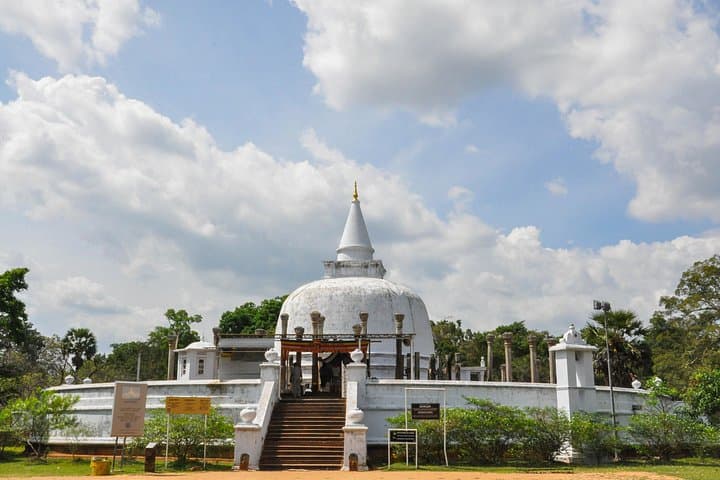
You step out of the air‑conditioned vehicle into a wide, sunlit plain punctuated by white stupas and ancient brick platforms — Anuradhapura’s ruins open like a city paused in time. The tour moves at a deliberate pace: large dagobas rise and fall against the sky, the Sri Maha Bodhi peepal tree holds a recorded history in its trunk, and quiet meditation caves invite a slower breath.
You step out of the air‑conditioned vehicle into a wide, sunlit plain punctuated by white stupas and ancient brick platforms — Anuradhapura’s ruins open like a city paused in time. The tour moves at a deliberate pace: large dagobas rise and fall against the sky, the Sri Maha Bodhi peepal tree holds a recorded history in its trunk, and quiet meditation caves invite a slower breath.
Anuradhapura was the capital of Sri Lanka’s earliest major kingdom and remains one of the island’s most important archaeological preserves. Many monuments date from the 3rd century BCE through the first millennium CE; stupas such as Jetavanarama and Ruwanwelisaya reflect large-scale brick engineering, while the Sri Maha Bodhi is a living transplant tied directly to the Buddha’s enlightenment narrative. Geologically the region sits in the island’s dry zone — broad, flat plains with shallow soils that helped preserve ancient brick structures but also expose them to seasonal weathering.
Culturally the site is active: monks maintain shrines, pilgrims perform circumambulations, and small local vendors sell devotional offerings. Visitors should approach with modest dress and the awareness that many monuments are living religious sites, not just ruins.
Practical guidance: the private day tour is about nine hours of mixed driving and walking; wear comfortable closed shoes for uneven temple terraces, bring sun protection and modest clothing that covers shoulders and knees, and keep a refillable bottle handy (your booking includes 1 L of water). Expect gentle walking with several stairs; allow time for photos, quiet reflection and short guided explanations of each monument’s historical context.