THE ADVENTURE COLLECTIVE® · Independent discovery and booking for outdoor travel

Walk the marble streets of Dougga and stand in a theatre built two millennia ago. This day trip delivers UNESCO-listed ruins, sweeping views, and a practical plan for making the most of your visit.
Walk the marble streets of Dougga and stand in a theatre built two millennia ago. This day trip delivers UNESCO-listed ruins, sweeping views, and a practical plan for making the most of your visit.
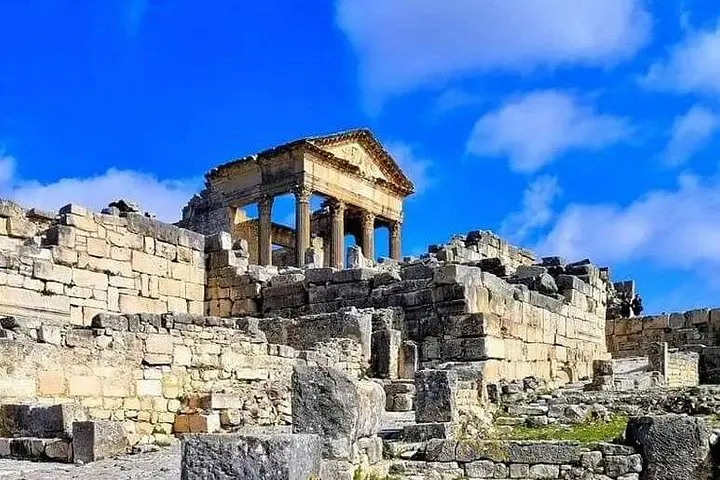
You step off the minivan into a wind that seems to read the inscriptions on the stones—dry, warm, and carrying a faint scent of olive groves. The ruins of Dougga sit on a high ridge, terraces of pale rock and cracked mosaics rolling away to a wide plain; the theatre faces the valley like an audience ready to remember.
Verified experiences and guided adventures in the surrounding area.
Operated by Tunez-Monumental · Testour, Béja Governorate
You step off the minivan into a wind that seems to read the inscriptions on the stones—dry, warm, and carrying a faint scent of olive groves. The ruins of Dougga sit on a high ridge, terraces of pale rock and cracked mosaics rolling away to a wide plain; the theatre faces the valley like an audience ready to remember.
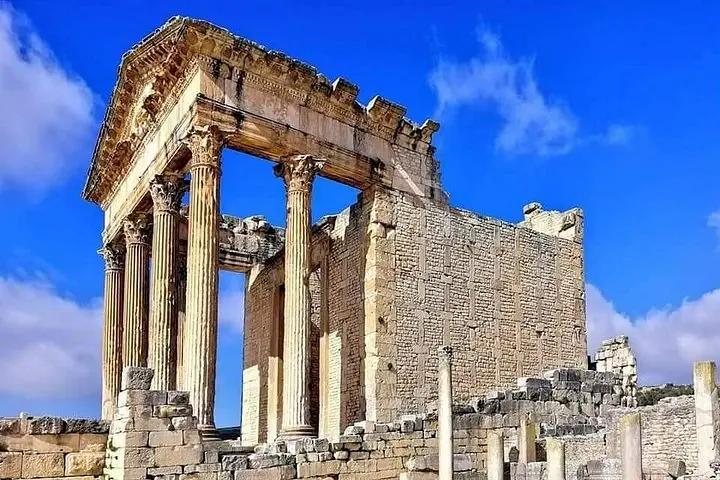
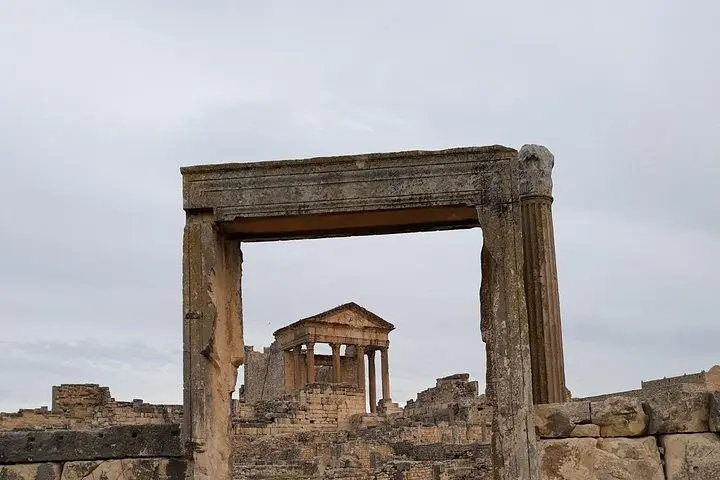
Originally a Berber settlement that flourished under Roman rule, Dougga (Thugga) preserves the urban logic of an ancient city: a forum, temples to Jupiter, Juno and Minerva, public baths, and a theatre whose tiers still hold the shell of sound. The site’s limestone geology carves sharp lines into façades and gives panoramic views across Béja countryside, where small farm tracks and olive orchards mark a landscape long tended by successive cultures.
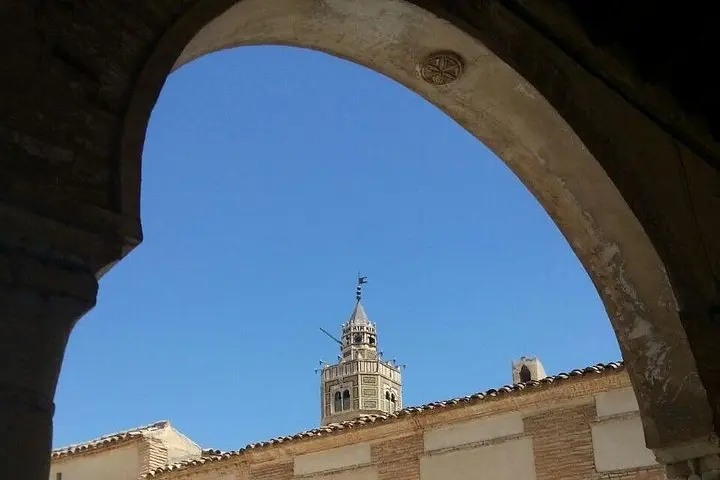
Local life still hums nearby in Testour’s Andalusian-influenced streets—a reminder that Dougga sits at a cultural crossroads between indigenous Berber traditions and Mediterranean empires.
Practical guide: expect several hours of walking on uneven stone, steps and loose gravel—sturdy shoes and sun protection are essential. Bring water, a hat, and a light layer for wind; mornings are cooler, late afternoon casts the best light for mosaics and photos. Admission is managed on-site (often included with guided tours); allow time to climb to elevated viewpoints for the full sweep of the landscape. Respect barriers and mosaics: many surfaces are fragile and conservation is active. A day trip to Dougga pairs straightforward logistics with the tactile thrill of walking through a Roman town almost intact—history here is concrete underfoot and horizon-wide above.
Plan on 3–4 hours on-site to explore the main monuments and viewpoints; a full day including transfers and a stop in Testour is typical.
Many private and day-trip tours include entrance; confirm at booking. Independent visitors can purchase tickets at the site.
The site contains uneven surfaces and stairs; access is limited in parts, though some flat areas are reachable—contact tour operators ahead for specifics.
Photography for personal use is allowed. Drone rules vary—check local regulations and site restrictions before flying.
Tunez-Monumental operates guided outdoor trips and adventures with an emphasis on safety, stewardship, and memorable experiences.
You step off the minivan into a wind that seems to read the inscriptions on the stones—dry, warm, and carrying a faint scent of olive groves. The ruins of Dougga sit on a high ridge, terraces of pale rock and cracked mosaics rolling away to a wide plain; the theatre faces the valley like an audience ready to remember.
You step off the minivan into a wind that seems to read the inscriptions on the stones—dry, warm, and carrying a faint scent of olive groves. The ruins of Dougga sit on a high ridge, terraces of pale rock and cracked mosaics rolling away to a wide plain; the theatre faces the valley like an audience ready to remember.
Originally a Berber settlement that flourished under Roman rule, Dougga (Thugga) preserves the urban logic of an ancient city: a forum, temples to Jupiter, Juno and Minerva, public baths, and a theatre whose tiers still hold the shell of sound. The site’s limestone geology carves sharp lines into façades and gives panoramic views across Béja countryside, where small farm tracks and olive orchards mark a landscape long tended by successive cultures.
Local life still hums nearby in Testour’s Andalusian-influenced streets—a reminder that Dougga sits at a cultural crossroads between indigenous Berber traditions and Mediterranean empires.
Practical guide: expect several hours of walking on uneven stone, steps and loose gravel—sturdy shoes and sun protection are essential. Bring water, a hat, and a light layer for wind; mornings are cooler, late afternoon casts the best light for mosaics and photos. Admission is managed on-site (often included with guided tours); allow time to climb to elevated viewpoints for the full sweep of the landscape. Respect barriers and mosaics: many surfaces are fragile and conservation is active. A day trip to Dougga pairs straightforward logistics with the tactile thrill of walking through a Roman town almost intact—history here is concrete underfoot and horizon-wide above.