THE ADVENTURE COLLECTIVE® · Independent discovery and booking for outdoor travel

Descend into cool limestone chambers and stand beside an underground lake on a day trip from Montego Bay. This practical guide explains what you’ll see, why the caves matter, and how to prepare for the hike and grotto tour.
Descend into cool limestone chambers and stand beside an underground lake on a day trip from Montego Bay. This practical guide explains what you’ll see, why the caves matter, and how to prepare for the hike and grotto tour.
You step off the air-conditioned van and feel the temperature drop—the cave mouth exhales cool, damp air that seems to hold its own weather. Inside, a narrow labyrinth of limestone spreads out: ceiling pockets puncture the darkness, bands of mineral color stripe the walls, and thin ropes of stalactites hang above a mirror-still subterranean lake.
Verified experiences and guided adventures in the surrounding area.
Operated by Trevor HudlinTours · Discovery Bay, Saint Ann Parish
You step off the air-conditioned van and feel the temperature drop—the cave mouth exhales cool, damp air that seems to hold its own weather. Inside, a narrow labyrinth of limestone spreads out: ceiling pockets puncture the darkness, bands of mineral color stripe the walls, and thin ropes of stalactites hang above a mirror-still subterranean lake.
Geology here is immediate: the Green Grotto system is roughly 1,525 meters of passages and about 12 meters deep in places, carved over millennia by seawater and freshwater percolation. Guides point out flowstone ribs, solution pits and the Grotto Lake, an underground pool that collects dripwater and draws curious bat colonies.
Culturally the site sits on layers of human story. Indigenous Taino peoples used coastal caves for shelter and ritual; later colonial-era groups and local communities referenced the caves as hiding places and fresh-water sources. The site today balances tourism with local livelihoods—guides often come from nearby towns and share folklore while explaining natural processes.
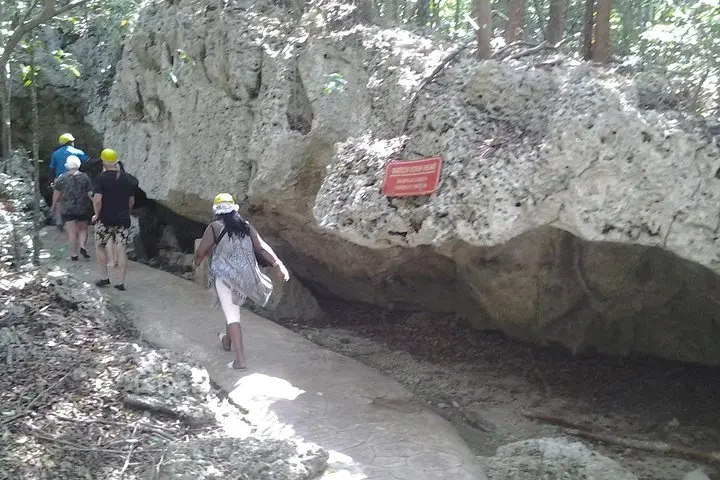
Practically: the cave tour itself usually runs about 45–60 minutes with the full excursion from Montego Bay lasting up to five hours including transport. Paths are uneven and wet—sturdy, closed-toe shoes and a light jacket are sensible. Photography is allowed but use steady hands and avoid flash blasts that disturb bats. Be mindful of low ceilings and follow your guide: formations are fragile and human oils accelerate decay. Visit in the morning for smaller crowds and more time to study the lake and chambers without rush.
The guided cave portion is typically 45–60 minutes, while the whole excursion from Montego Bay (including transport) can take up to five hours.
Paths include uneven surfaces and short stair sections; the site is not fully wheelchair-accessible and those with serious mobility restrictions should consult the operator ahead of booking.
Yes—several bat species roost in the caves and small aquatic life may be visible in the Grotto Lake; guides will point them out while advising on minimal disturbance.
Photography is generally allowed; avoid flash near bat roosts and use steady, low-light techniques to protect wildlife and preserve visitor experience.
Trevor HudlinTours operates guided outdoor trips and adventures with an emphasis on safety, stewardship, and memorable experiences.
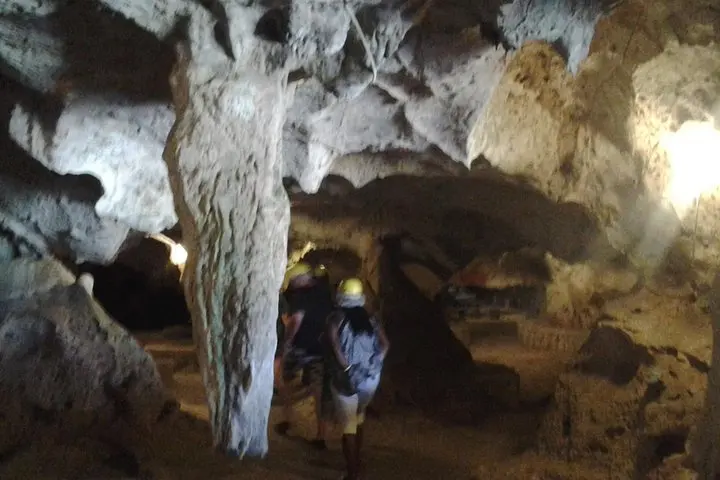
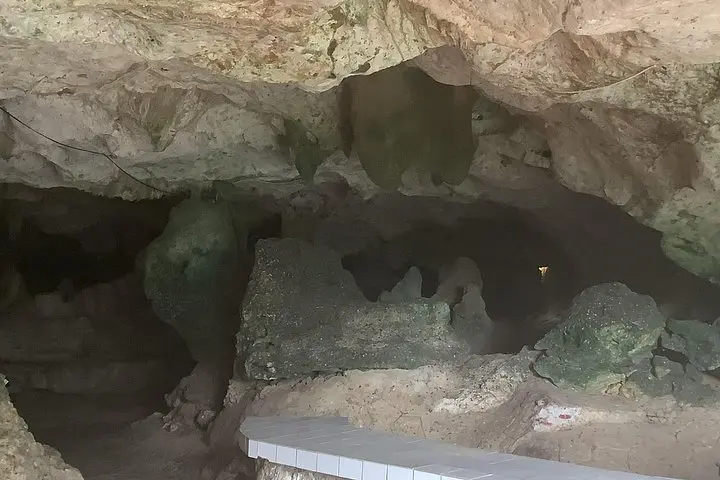
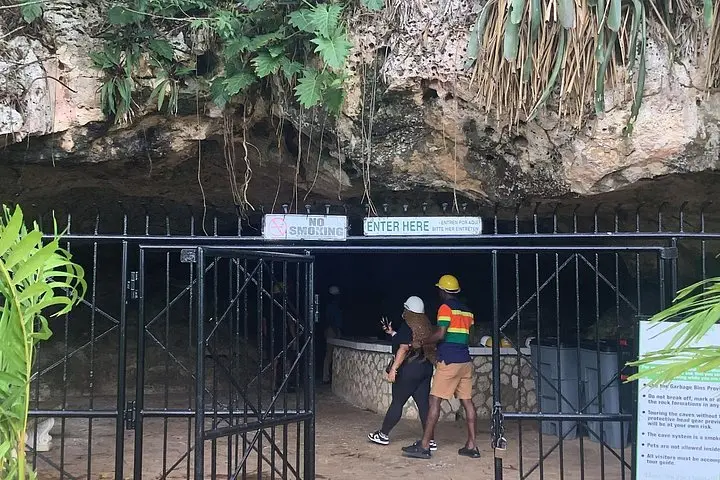
You step off the air-conditioned van and feel the temperature drop—the cave mouth exhales cool, damp air that seems to hold its own weather. Inside, a narrow labyrinth of limestone spreads out: ceiling pockets puncture the darkness, bands of mineral color stripe the walls, and thin ropes of stalactites hang above a mirror-still subterranean lake.
You step off the air-conditioned van and feel the temperature drop—the cave mouth exhales cool, damp air that seems to hold its own weather. Inside, a narrow labyrinth of limestone spreads out: ceiling pockets puncture the darkness, bands of mineral color stripe the walls, and thin ropes of stalactites hang above a mirror-still subterranean lake.
Geology here is immediate: the Green Grotto system is roughly 1,525 meters of passages and about 12 meters deep in places, carved over millennia by seawater and freshwater percolation. Guides point out flowstone ribs, solution pits and the Grotto Lake, an underground pool that collects dripwater and draws curious bat colonies.
Culturally the site sits on layers of human story. Indigenous Taino peoples used coastal caves for shelter and ritual; later colonial-era groups and local communities referenced the caves as hiding places and fresh-water sources. The site today balances tourism with local livelihoods—guides often come from nearby towns and share folklore while explaining natural processes.
Practically: the cave tour itself usually runs about 45–60 minutes with the full excursion from Montego Bay lasting up to five hours including transport. Paths are uneven and wet—sturdy, closed-toe shoes and a light jacket are sensible. Photography is allowed but use steady hands and avoid flash blasts that disturb bats. Be mindful of low ceilings and follow your guide: formations are fragile and human oils accelerate decay. Visit in the morning for smaller crowds and more time to study the lake and chambers without rush.