THE ADVENTURE COLLECTIVE® · Independent discovery and booking for outdoor travel

Board a flat‑bottom boat and glide through flooded forests and stilted streets at Kompong Phluk. This half‑day tour offers close‑up views of life shaped by Tonle Sap’s dramatic seasonal rise and fall.
Board a flat‑bottom boat and glide through flooded forests and stilted streets at Kompong Phluk. This half‑day tour offers close‑up views of life shaped by Tonle Sap’s dramatic seasonal rise and fall.
You step from the tuk‑tuk onto a wooden jetty and the lake breathes around you — lapping at flat‑bottom boats and the stilts that hold an entire village above the waterline.
Verified experiences and guided adventures in the surrounding area.
Operated by Tara River Boat Company · Siem Reap, Siem Reap Province
You step from the tuk‑tuk onto a wooden jetty and the lake breathes around you — lapping at flat‑bottom boats and the stilts that hold an entire village above the waterline.
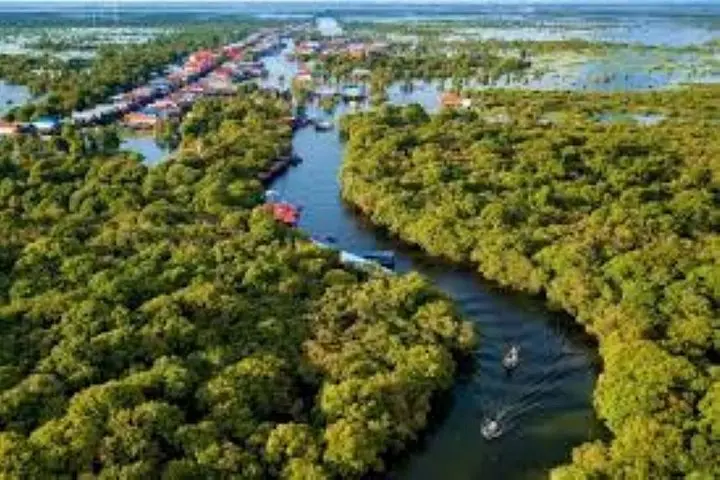
Kompong Phluk sits at Tonle Sap’s eastern fringe, where seasonal floods shape life and architecture. Houses rise on wooden stilts up to 10–12 meters to match the monsoon swell; narrow canals become streets for boats when water levels push inland. Geologically, the Tonle Sap is an inland floodplain that expands dramatically during the rainy season, reversing flow from the Mekong and creating Cambodia’s largest freshwater lake. Culturally, villages here are deeply tied to fishing, net‑mending and small boatbuilding — you’ll see workshops, a monks’ training pergola, and daily routines adapted to the lake.
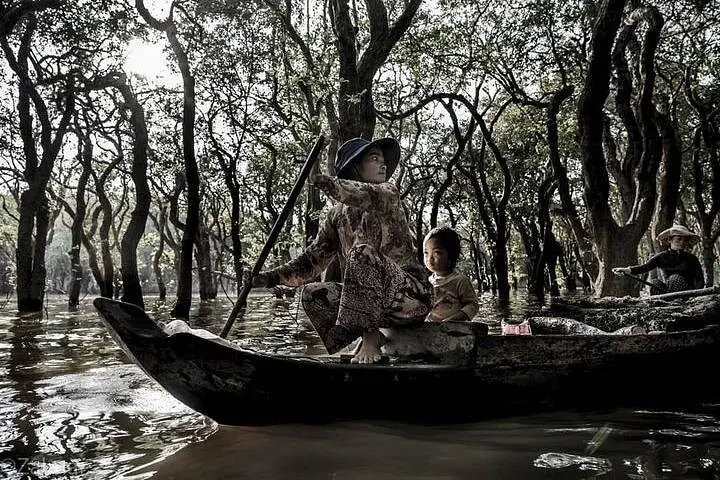
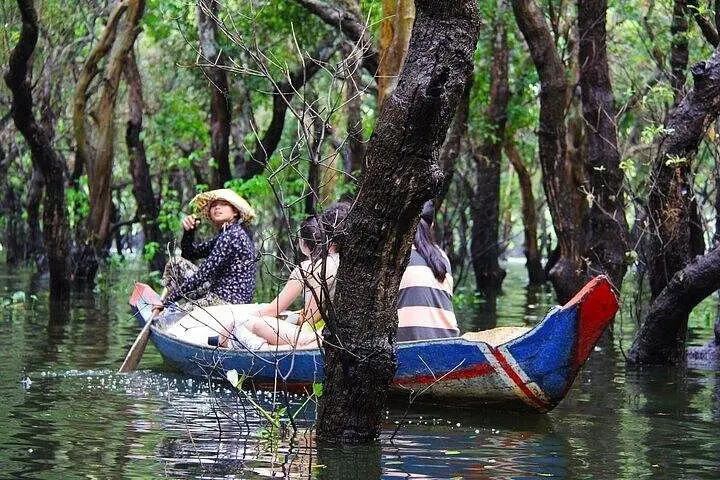
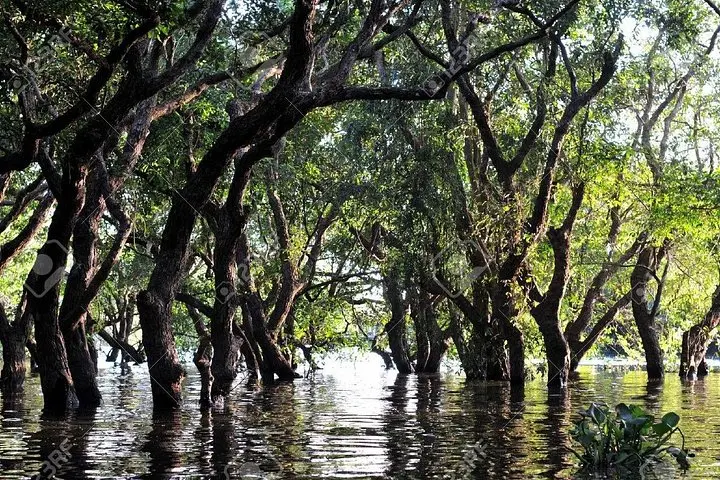
On this half‑day cruise a local Tara Lake guide navigates flooded forest tunnels and the wide-open lake beyond, explaining seasonal rhythms and pointing out floating homes and birdlife. The trip blends quiet observation with practical context: why houses are raised, how fisheries operate, and how communities manage transport and schooling.
Practical notes: boats are flat‑bottomed for low draft; expect some wobble and sun exposure. Wear quick‑dry clothing, sun protection, and bring a small daypack for camera and water. Morning light is best for photos and cooler temperatures; afternoons can be hot and windier on the open lake. This is an accessible, low‑impact way to see life on Tonle Sap and leave the temple crowds behind.
The tour is approximately 4.5 hours (half day) including transport from Siem Reap and the boat sections on Tonle Sap.
Yes — boats are operated by local professionals and flat‑bottomed for stability, but children should always be accompanied and wear life jackets when provided.
Yes — the tour includes a light fruit lunch and bottled water as part of the package.
Navigation depends on seasonal water levels; guides use shallow‑draft boats to reach flooded forests when conditions allow, and walkways when waters are lower.
Tara River Boat Company operates guided outdoor trips and adventures with an emphasis on safety, stewardship, and memorable experiences.
You step from the tuk‑tuk onto a wooden jetty and the lake breathes around you — lapping at flat‑bottom boats and the stilts that hold an entire village above the waterline.
You step from the tuk‑tuk onto a wooden jetty and the lake breathes around you — lapping at flat‑bottom boats and the stilts that hold an entire village above the waterline.
Kompong Phluk sits at Tonle Sap’s eastern fringe, where seasonal floods shape life and architecture. Houses rise on wooden stilts up to 10–12 meters to match the monsoon swell; narrow canals become streets for boats when water levels push inland. Geologically, the Tonle Sap is an inland floodplain that expands dramatically during the rainy season, reversing flow from the Mekong and creating Cambodia’s largest freshwater lake. Culturally, villages here are deeply tied to fishing, net‑mending and small boatbuilding — you’ll see workshops, a monks’ training pergola, and daily routines adapted to the lake.
On this half‑day cruise a local Tara Lake guide navigates flooded forest tunnels and the wide-open lake beyond, explaining seasonal rhythms and pointing out floating homes and birdlife. The trip blends quiet observation with practical context: why houses are raised, how fisheries operate, and how communities manage transport and schooling.
Practical notes: boats are flat‑bottomed for low draft; expect some wobble and sun exposure. Wear quick‑dry clothing, sun protection, and bring a small daypack for camera and water. Morning light is best for photos and cooler temperatures; afternoons can be hot and windier on the open lake. This is an accessible, low‑impact way to see life on Tonle Sap and leave the temple crowds behind.