THE ADVENTURE COLLECTIVE® · Independent discovery and booking for outdoor travel

Travelers heading to Croatia’s Dalmatian coast can escape to Krka National Park for a day of hiking, waterfalls, and cultural discovery. This tour blends nature trails with historic mills and local flavors, unveiling one of the country’s most dynamic natural reserves.
Travelers heading to Croatia’s Dalmatian coast can escape to Krka National Park for a day of hiking, waterfalls, and cultural discovery. This tour blends nature trails with historic mills and local flavors, unveiling one of the country’s most dynamic natural reserves.
Driving along Croatia’s sunlit motorway, the journey to Krka National Park unfolds like an introduction to the Dalmatian coast’s natural and cultural wealth. Before reaching the park, the ethno-agro park Stella Croatica offers a brief pause in time—here, traditional Dalmatian crafts and organic products come alive. Walking through this recreated village setting, the scents of handmade delicacies and the sight of old wooden tools connect visitors to a heritage rooted in the land.
Verified experiences and guided adventures in the surrounding area.
Operated by Gulliver Travel · Krka National Park, Šibenik-Knin County
Driving along Croatia’s sunlit motorway, the journey to Krka National Park unfolds like an introduction to the Dalmatian coast’s natural and cultural wealth. Before reaching the park, the ethno-agro park Stella Croatica offers a brief pause in time—here, traditional Dalmatian crafts and organic products come alive. Walking through this recreated village setting, the scents of handmade delicacies and the sight of old wooden tools connect visitors to a heritage rooted in the land.
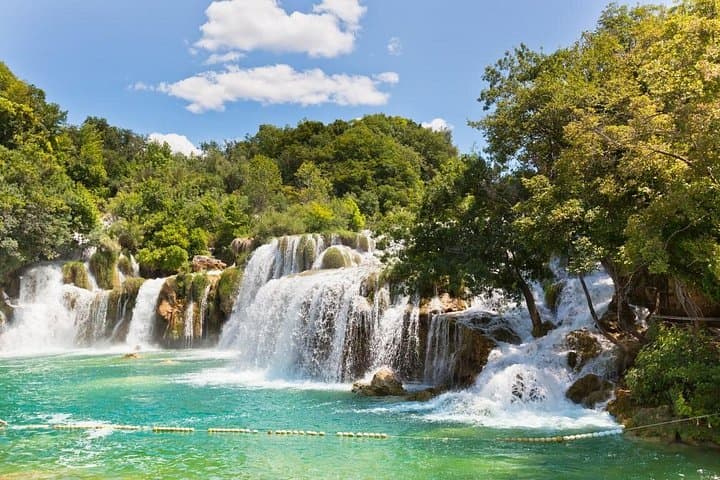
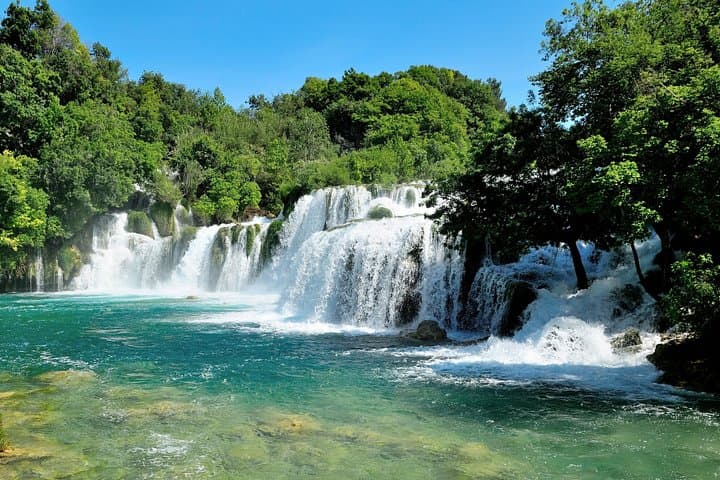
Continuing toward Krka, the river grows louder, daring you to follow its course. The Krka River carves through unspoiled forests and limestone cliffs, shaping a series of pools and streams that culminate in the spectacle of Skradinski Buk. This cascade of 17 waterfalls spills into natural pools, inviting exploration along its wooden trails that stretch around and above the falls, weaving visitors through the landscape with varying elevations and vantage points.
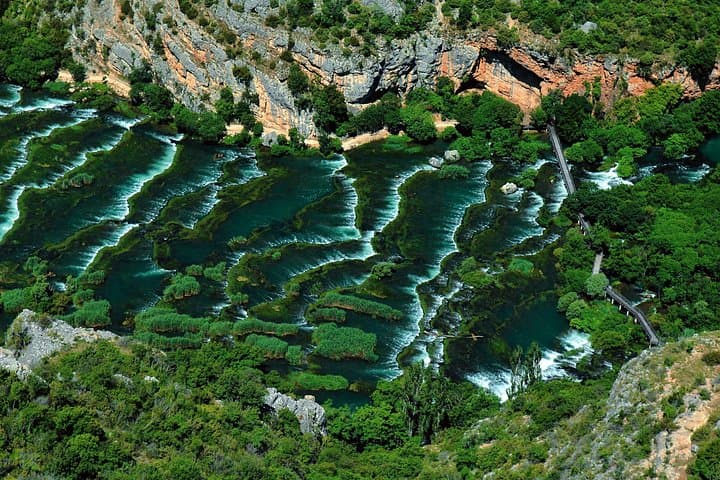
The geology here is a story told in layers—tufa formations continuously shaped by the mineral-rich water, crafting the unique travertine terraces that make this park exceptional. Historical remnants pepper the area: centuries-old mills harnessing water power, and etnographic collections preserving local crafts, all tracing human interaction with this watershed.
Birdsong punctuates the air, with herons and nightingales making brief appearances among the lush vegetation. Wildlife in Krka isn’t merely observed but experienced as an active participant in the park’s ecosystem.
Practical considerations shape the day: the tour lasts about eight hours, making comfortable walking shoes essential for the wooden pathways and uneven terrain. While swimming is prohibited to protect the fragile environment, time spent wandering these trails is rewarded with both solitude and scenic viewpoints. Hotel pickup from Makarska and surrounding areas eases access, while a professional guide enriches understanding of the park’s natural and cultural fabric.
To make the most of your visit, come prepared with layered clothing as the coastal climate varies from crisp mornings to warm afternoons. Bringing water and a camera is important—sunlight catches on the water’s surfaces and mineral cliffs, creating photographic moments from dawn’s soft glow to late afternoon.
Krka National Park is not only an immersion into Croatia’s vibrant eco-landscape but also a lens into historic lifeways sustained by water’s constant push forward. Each curve of the river and every cascade offers a blend of adventure and reflection for travelers ready to explore beyond the coast’s popularity.
No, swimming is currently prohibited to protect the park’s delicate ecosystems and preserve natural habitats.
Late spring to early autumn offers the best weather and fully flowing waterfalls with comfortable temperatures.
Yes, professional guides accompany tours providing detailed local insights and historical context.
Approximately 7 to 8 hours, including stops at Stella Croatica and exploring the main waterfall areas.
Yes, hotel pickup and drop-off are offered from Makarska and nearby accommodation options.
Yes, the main visitor areas have restrooms and food outlets, but they may be limited in more remote sections.
Gulliver Travel operates guided outdoor trips and adventures with an emphasis on safety, stewardship, and memorable experiences.

Driving along Croatia’s sunlit motorway, the journey to Krka National Park unfolds like an introduction to the Dalmatian coast’s natural and cultural wealth. Before reaching the park, the ethno-agro park Stella Croatica offers a brief pause in time—here, traditional Dalmatian crafts and organic products come alive. Walking through this recreated village setting, the scents of handmade delicacies and the sight of old wooden tools connect visitors to a heritage rooted in the land.
Driving along Croatia’s sunlit motorway, the journey to Krka National Park unfolds like an introduction to the Dalmatian coast’s natural and cultural wealth. Before reaching the park, the ethno-agro park Stella Croatica offers a brief pause in time—here, traditional Dalmatian crafts and organic products come alive. Walking through this recreated village setting, the scents of handmade delicacies and the sight of old wooden tools connect visitors to a heritage rooted in the land.
Continuing toward Krka, the river grows louder, daring you to follow its course. The Krka River carves through unspoiled forests and limestone cliffs, shaping a series of pools and streams that culminate in the spectacle of Skradinski Buk. This cascade of 17 waterfalls spills into natural pools, inviting exploration along its wooden trails that stretch around and above the falls, weaving visitors through the landscape with varying elevations and vantage points.
The geology here is a story told in layers—tufa formations continuously shaped by the mineral-rich water, crafting the unique travertine terraces that make this park exceptional. Historical remnants pepper the area: centuries-old mills harnessing water power, and etnographic collections preserving local crafts, all tracing human interaction with this watershed.
Birdsong punctuates the air, with herons and nightingales making brief appearances among the lush vegetation. Wildlife in Krka isn’t merely observed but experienced as an active participant in the park’s ecosystem.
Practical considerations shape the day: the tour lasts about eight hours, making comfortable walking shoes essential for the wooden pathways and uneven terrain. While swimming is prohibited to protect the fragile environment, time spent wandering these trails is rewarded with both solitude and scenic viewpoints. Hotel pickup from Makarska and surrounding areas eases access, while a professional guide enriches understanding of the park’s natural and cultural fabric.
To make the most of your visit, come prepared with layered clothing as the coastal climate varies from crisp mornings to warm afternoons. Bringing water and a camera is important—sunlight catches on the water’s surfaces and mineral cliffs, creating photographic moments from dawn’s soft glow to late afternoon.
Krka National Park is not only an immersion into Croatia’s vibrant eco-landscape but also a lens into historic lifeways sustained by water’s constant push forward. Each curve of the river and every cascade offers a blend of adventure and reflection for travelers ready to explore beyond the coast’s popularity.