THE ADVENTURE COLLECTIVE® · Independent discovery and booking for outdoor travel

Walk through carved rock, centuries of ritual, and the monolithic St. George on a full-day guided tour of Lalibela’s eleven rock-hewn churches. This practical guide explains what you’ll see, how the churches were made, and how to plan the day.
Walk through carved rock, centuries of ritual, and the monolithic St. George on a full-day guided tour of Lalibela’s eleven rock-hewn churches. This practical guide explains what you’ll see, how the churches were made, and how to plan the day.
You arrive beneath a low, raw sky and the town’s red volcanic stone seems to hold its breath. Paths cut into compacted tuff lead you toward windows and portals sunk into the earth; shafts of light pick out carved crosses and worn steps. The air carries the low chant of prayer and the cool echo of interiors that were hewn from living rock.
Verified experiences and guided adventures in the surrounding area.
Operated by Enkutatash Ethiopia Tour & Travel · Lalibela, Amhara Region
You arrive beneath a low, raw sky and the town’s red volcanic stone seems to hold its breath. Paths cut into compacted tuff lead you toward windows and portals sunk into the earth; shafts of light pick out carved crosses and worn steps. The air carries the low chant of prayer and the cool echo of interiors that were hewn from living rock.
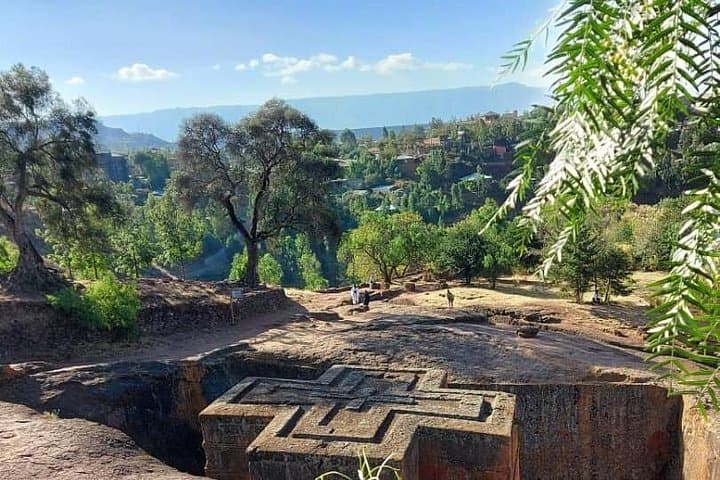
Lalibela’s eleven churches date largely to the 12th–13th centuries, commissioned during King Lalibela’s reign as an earthly New Jerusalem. Geologically they are carved from welded tuff — a relatively soft volcanic deposit that allowed medieval masons to sculpt interiors, crypts and tunnels by hand. The complex divides into northwestern and southeastern clusters, each with distinct profiles: some are monolithic volumes cut from the top down, St. George (Bet Giyorgis) famously shaped like a cross.
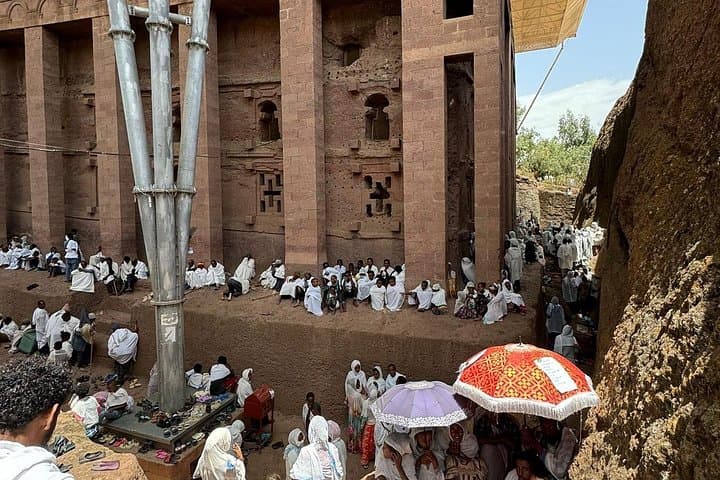
Culturally these churches remain active centers of Ethiopian Orthodox worship; early-morning services and liturgical music are common and deeply atmospheric. Local guides connect architectural detail with liturgy and legend, explaining how drainage channels, prayer pits and covered walkways functioned for medieval ritual life.
Practical guidance: plan a full day (7–8 hours) to move slowly between clusters, allow time for the St. George complex and a midday rest. Expect uneven stone, narrow steps and dim interiors — bring solid shoes, a headlamp or good phone light, and modest clothing that covers shoulders and knees. Hydrate and carry small bills for entrance or donations; start early to avoid the strongest sun and larger tour groups. Respect active services: photograph discreetly and follow your guide’s directions inside sanctified spaces.
The private day tour typically runs 7–8 hours and covers the northwestern and southeastern clusters, including St. George and the most ornate exterior-carved churches.
Yes; many churches host regular Ethiopian Orthodox services. Visitors should be quiet and respectful; guides will advise when photography is inappropriate.
Access is limited—there are many stairs, narrow passages and uneven rock surfaces; visitors with mobility issues may find parts of the site difficult to reach.
A guide adds historical context and helps navigate the complex layout; while independent visits are possible, many visitors prefer guided tours for logistics and cultural interpretation.
Enkutatash Ethiopia Tour & Travel operates guided outdoor trips and adventures with an emphasis on safety, stewardship, and memorable experiences.

You arrive beneath a low, raw sky and the town’s red volcanic stone seems to hold its breath. Paths cut into compacted tuff lead you toward windows and portals sunk into the earth; shafts of light pick out carved crosses and worn steps. The air carries the low chant of prayer and the cool echo of interiors that were hewn from living rock.
You arrive beneath a low, raw sky and the town’s red volcanic stone seems to hold its breath. Paths cut into compacted tuff lead you toward windows and portals sunk into the earth; shafts of light pick out carved crosses and worn steps. The air carries the low chant of prayer and the cool echo of interiors that were hewn from living rock.
Lalibela’s eleven churches date largely to the 12th–13th centuries, commissioned during King Lalibela’s reign as an earthly New Jerusalem. Geologically they are carved from welded tuff — a relatively soft volcanic deposit that allowed medieval masons to sculpt interiors, crypts and tunnels by hand. The complex divides into northwestern and southeastern clusters, each with distinct profiles: some are monolithic volumes cut from the top down, St. George (Bet Giyorgis) famously shaped like a cross.
Culturally these churches remain active centers of Ethiopian Orthodox worship; early-morning services and liturgical music are common and deeply atmospheric. Local guides connect architectural detail with liturgy and legend, explaining how drainage channels, prayer pits and covered walkways functioned for medieval ritual life.
Practical guidance: plan a full day (7–8 hours) to move slowly between clusters, allow time for the St. George complex and a midday rest. Expect uneven stone, narrow steps and dim interiors — bring solid shoes, a headlamp or good phone light, and modest clothing that covers shoulders and knees. Hydrate and carry small bills for entrance or donations; start early to avoid the strongest sun and larger tour groups. Respect active services: photograph discreetly and follow your guide’s directions inside sanctified spaces.