THE ADVENTURE COLLECTIVE® · Independent discovery and booking for outdoor travel

Walk into rock and centuries at Lalibela: a focused one-day tour that pairs guided visits to the 900-year-old monolithic churches with local village stops and a traditional Ethiopian coffee ceremony. Practical details and cultural etiquette make this a manageable, memorable introduction to northern Ethiopia.
Walk into rock and centuries at Lalibela: a focused one-day tour that pairs guided visits to the 900-year-old monolithic churches with local village stops and a traditional Ethiopian coffee ceremony. Practical details and cultural etiquette make this a manageable, memorable introduction to northern Ethiopia.
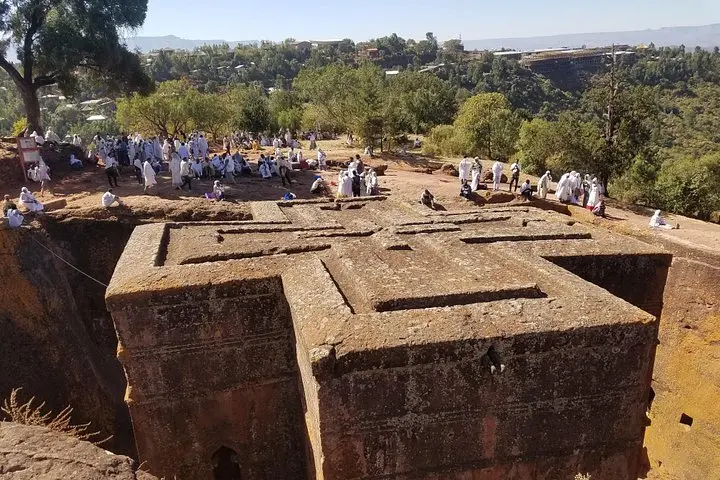
A low sun slides across the flat-topped roofs of Lalibela as a guide leads you down narrow alleys toward a church carved from the living rock. The path narrows, stone gives way to chiseled steps and then to a chamber hewn from a single volcanic block — a place where light and shadow map nine hundred years of ritual.
Verified experiences and guided adventures in the surrounding area.
Operated by ShebaLand Tour · Lalibela, Amhara
A low sun slides across the flat-topped roofs of Lalibela as a guide leads you down narrow alleys toward a church carved from the living rock. The path narrows, stone gives way to chiseled steps and then to a chamber hewn from a single volcanic block — a place where light and shadow map nine hundred years of ritual.
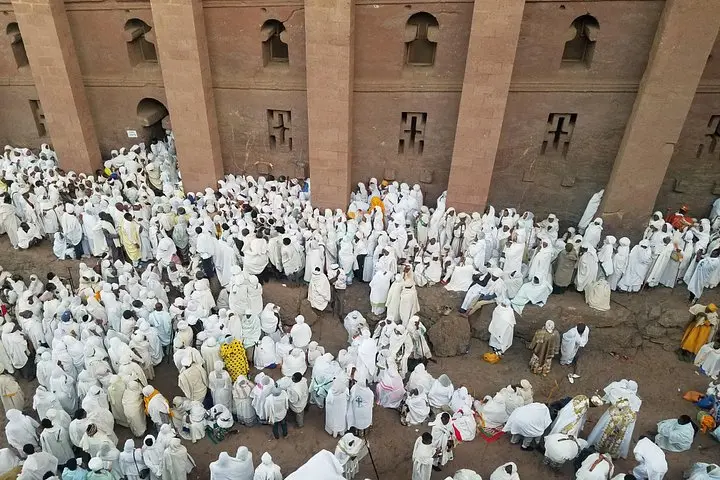
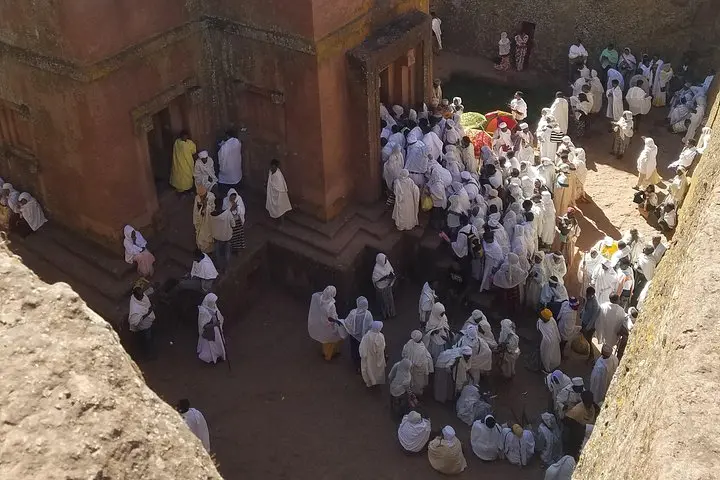
Lalibela occupies a volcanic plateau in northern Ethiopia and its eleven monolithic churches date to the 12th–13th centuries, attributed to King Lalibela. Geologically, the town sits on relatively soft, compacted volcanic tuff that allowed medieval masons to sculpt entire buildings downward from the surface. Culturally the site remains an active center of Ethiopian Orthodox worship; bells call worshippers and priests still tend the altars. The tour often threads in nearby farmland and traditional villages and concludes with a street-side Ethiopian coffee ceremony — a local ritual offering a short, social pause in the day.
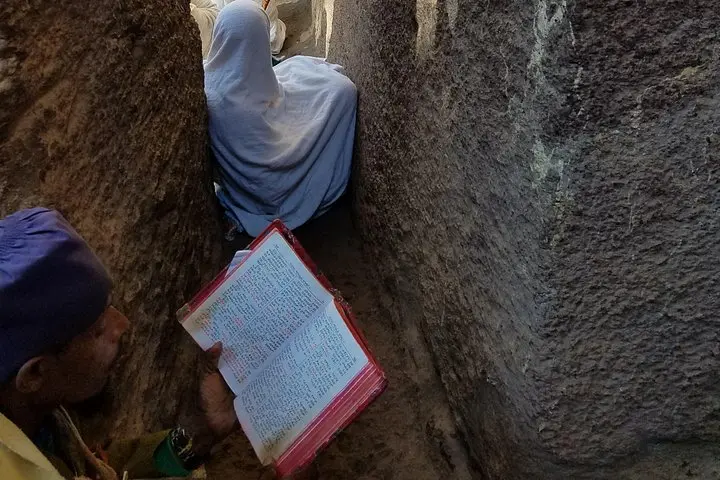
Practically, expect uneven steps, low doorways and tight corridors; modest dress is required out of respect. The one-day shared tour runs roughly 3–5 hours, includes hotel pickup, a local guide, bottled water and a cup of aromatic coffee, but entrance fees to the churches are usually paid separately at the site. Morning light is best for photography and cooler walking. Carry water, wear sturdy closed-toe shoes, and leave extra time to explore alleys and village viewpoints — the stone keeps secrets under your feet and the landscape invites a slow, respectful curiosity.
Most guided tours include pickup and guiding but entrance tickets to the Lalibela churches are commonly paid separately at the site—bring cash for admissions.
The standard shared tour runs approximately 3–5 hours depending on pickup location and time spent at each church and village stop.
Photography rules vary by church and event; exterior and general site photos are generally fine, but always ask before photographing services, priests or worshippers.
No; the rock-cut churches involve steps, narrow passages and uneven terrain, making access difficult for wheelchairs and limited-mobility visitors.
ShebaLand Tour operates guided outdoor trips and adventures with an emphasis on safety, stewardship, and memorable experiences.
A low sun slides across the flat-topped roofs of Lalibela as a guide leads you down narrow alleys toward a church carved from the living rock. The path narrows, stone gives way to chiseled steps and then to a chamber hewn from a single volcanic block — a place where light and shadow map nine hundred years of ritual.
A low sun slides across the flat-topped roofs of Lalibela as a guide leads you down narrow alleys toward a church carved from the living rock. The path narrows, stone gives way to chiseled steps and then to a chamber hewn from a single volcanic block — a place where light and shadow map nine hundred years of ritual.
Lalibela occupies a volcanic plateau in northern Ethiopia and its eleven monolithic churches date to the 12th–13th centuries, attributed to King Lalibela. Geologically, the town sits on relatively soft, compacted volcanic tuff that allowed medieval masons to sculpt entire buildings downward from the surface. Culturally the site remains an active center of Ethiopian Orthodox worship; bells call worshippers and priests still tend the altars. The tour often threads in nearby farmland and traditional villages and concludes with a street-side Ethiopian coffee ceremony — a local ritual offering a short, social pause in the day.
Practically, expect uneven steps, low doorways and tight corridors; modest dress is required out of respect. The one-day shared tour runs roughly 3–5 hours, includes hotel pickup, a local guide, bottled water and a cup of aromatic coffee, but entrance fees to the churches are usually paid separately at the site. Morning light is best for photography and cooler walking. Carry water, wear sturdy closed-toe shoes, and leave extra time to explore alleys and village viewpoints — the stone keeps secrets under your feet and the landscape invites a slow, respectful curiosity.