THE ADVENTURE COLLECTIVE® · Independent discovery and booking for outdoor travel

Set off from Hoi An for a full-day exploration of My Son Sanctuary—an intimate, sheltered valley of Cham towers, temple ruins, and hands-on village experiences. This tour combines site interpretation, a local lunch, and a river return to Hoi An.
Set off from Hoi An for a full-day exploration of My Son Sanctuary—an intimate, sheltered valley of Cham towers, temple ruins, and hands-on village experiences. This tour combines site interpretation, a local lunch, and a river return to Hoi An.
The coach slips away from Hoi An before dawn and the river air moves in like an invitation—rice paddies stretch open, a motorized boat bobs at a sleepy quay, and the valley where My Son sits begins to reveal its brick towers through morning haze.
Verified experiences and guided adventures in the surrounding area.
Operated by Local Tours PU LUONG · Hoi An, Quang Nam
The coach slips away from Hoi An before dawn and the river air moves in like an invitation—rice paddies stretch open, a motorized boat bobs at a sleepy quay, and the valley where My Son sits begins to reveal its brick towers through morning haze.
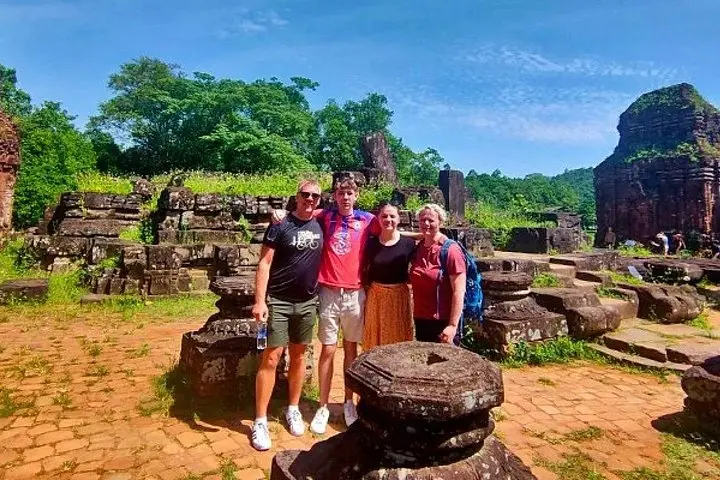
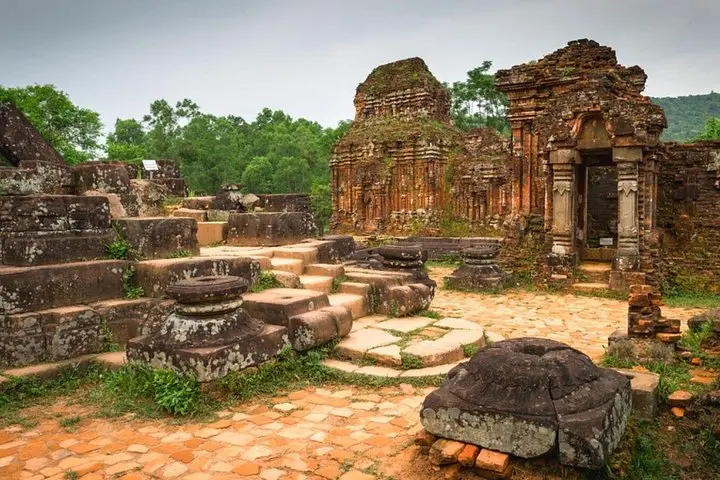
My Son was the religious heart of the Champa kingdom from roughly the 4th through 14th centuries. Brick towers dedicated to Shiva and funerary structures rise from a sheltered basin of low hills, their baked-clay courses and stone lintels bearing Sanskrit and Cham motifs. Geologically the site occupies a small alluvial plain ringed by weathered volcanic and sedimentary hills; that shelter concentrated settlement and ritual here for centuries.
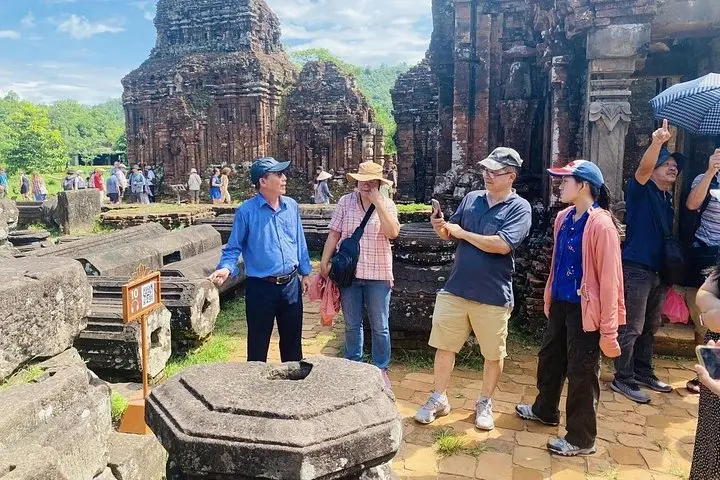
Culturally, visiting My Son is as much about listening as looking—guides explain Champa cosmology, trade links across the South China Sea, and wartime damage that led to later conservation and UNESCO recognition. The day tour typically pairs the ruins with hands-on local experiences: learning to make rice paper and sharing a family-style lunch, then a short motorboat ride along the Thu Bon river back toward Hoi An.
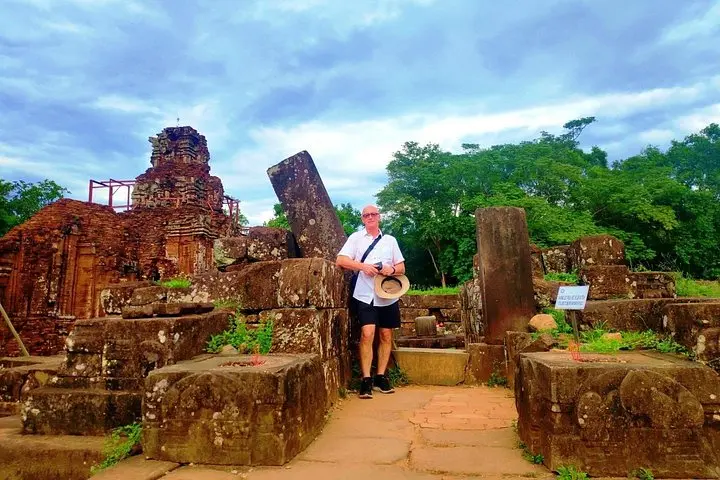
Practical guidance: wear sturdy, closed-toe shoes for uneven brick paths, bring sun protection and insect repellent, and carry a light rain layer during the monsoon months. Start early to avoid midday heat and to capture quieter light for photography. Expect roughly two hours at the core ruins, plus transfers—modern air-conditioned transport, bottled water, entrance fees, and a local guide are usually included. The walk is gentle but uneven; take your time and respect fragile masonry by not climbing on towers.
The full-day tour runs about six hours and typically includes hotel pick-up, air-conditioned transport, entrance fees, an experienced guide, bottled water, a local lunch, and a motorized boat transfer back toward Hoi An.
Yes—walking is low intensity but surfaces are uneven; families and older visitors should plan a gentler pace and bring sun protection and water.
Photography is allowed in most outdoor areas; avoid flash in shaded carvings and respect any restricted conservation zones.
Local lunches are included and operators can typically accommodate common dietary requests if notified when booking.
Local Tours PU LUONG operates guided outdoor trips and adventures with an emphasis on safety, stewardship, and memorable experiences.
The coach slips away from Hoi An before dawn and the river air moves in like an invitation—rice paddies stretch open, a motorized boat bobs at a sleepy quay, and the valley where My Son sits begins to reveal its brick towers through morning haze.
The coach slips away from Hoi An before dawn and the river air moves in like an invitation—rice paddies stretch open, a motorized boat bobs at a sleepy quay, and the valley where My Son sits begins to reveal its brick towers through morning haze.
My Son was the religious heart of the Champa kingdom from roughly the 4th through 14th centuries. Brick towers dedicated to Shiva and funerary structures rise from a sheltered basin of low hills, their baked-clay courses and stone lintels bearing Sanskrit and Cham motifs. Geologically the site occupies a small alluvial plain ringed by weathered volcanic and sedimentary hills; that shelter concentrated settlement and ritual here for centuries.
Culturally, visiting My Son is as much about listening as looking—guides explain Champa cosmology, trade links across the South China Sea, and wartime damage that led to later conservation and UNESCO recognition. The day tour typically pairs the ruins with hands-on local experiences: learning to make rice paper and sharing a family-style lunch, then a short motorboat ride along the Thu Bon river back toward Hoi An.
Practical guidance: wear sturdy, closed-toe shoes for uneven brick paths, bring sun protection and insect repellent, and carry a light rain layer during the monsoon months. Start early to avoid midday heat and to capture quieter light for photography. Expect roughly two hours at the core ruins, plus transfers—modern air-conditioned transport, bottled water, entrance fees, and a local guide are usually included. The walk is gentle but uneven; take your time and respect fragile masonry by not climbing on towers.