THE ADVENTURE COLLECTIVE® · Independent discovery and booking for outdoor travel

Walk the streets of an ancient Roman town preserved by volcanic ash. This private two-hour guided tour of Pompeii covers frescoed homes, baths and the haunting plaster casts while offering practical tips for navigating cobbled terrain.
Walk the streets of an ancient Roman town preserved by volcanic ash. This private two-hour guided tour of Pompeii covers frescoed homes, baths and the haunting plaster casts while offering practical tips for navigating cobbled terrain.
The tour begins where stone streets still hold footprints of a city frozen in ash. Sun hits the exposed cardo and decumanus, dust rising off volcanic grit as a guide traces daily life — bakeries, baths, shops — that once hummed here.
Verified experiences and guided adventures in the surrounding area.
Operated by topguidespompeii · Pompeii, Campania
The tour begins where stone streets still hold footprints of a city frozen in ash. Sun hits the exposed cardo and decumanus, dust rising off volcanic grit as a guide traces daily life — bakeries, baths, shops — that once hummed here.
Pompeii’s story is geological and human: Mount Vesuvius erupted in 79 AD, burying the town and preserving buildings, frescoes and plaster casts of victims. The volcanic tuff and pumice that sealed the site also created the sharp, uneven cobbles visitors walk today. Culturally, the ruins reveal Roman domestic life, public temples and thermal complexes; later excavations beginning in the 18th century transformed modern understanding of urban antiquity.
Expect two hours of steady walking across roughly 1.5–3 km of mostly flat but irregular terrain, punctuated by steps and threshold stones. Highlights typically include richly painted domus, the House of the Faun, public baths and the Forum, plus the chilling casted figures that remind you of the eruption’s suddenness.
Practical guidance: wear supportive, closed-toe shoes with good traction, bring sun protection and water, and plan for limited shade in summer. The site is partially accessible but has cobbles and gaps that make wheelchairs and strollers challenging; travelers with spinal or heart conditions should consider a gentler itinerary. Tours are private and customizable, so prioritize the features you want to see — frescoes, baths, or the plaster casts — and ask guides about quieter routes to avoid crowds.
This is an outdoor archaeological walk where history, geology and the city’s everyday details meet, best appreciated with deliberate steps and practical preparation.
Expect about 1.5–3 km of walking depending on your chosen highlights; terrain is mostly flat but uneven.
Parts of the park are uneven with cobbles and gaps; some routes are challenging for wheelchairs and strollers—check with your operator for accessible options.
This private tour’s admission is typically not included—confirm with the operator and bring a mobile or printed ticket if required.
Rain can make cobbles slippery and create puddles; wear appropriate footwear and be cautious on thresholds and steps.
topguidespompeii operates guided outdoor trips and adventures with an emphasis on safety, stewardship, and memorable experiences.
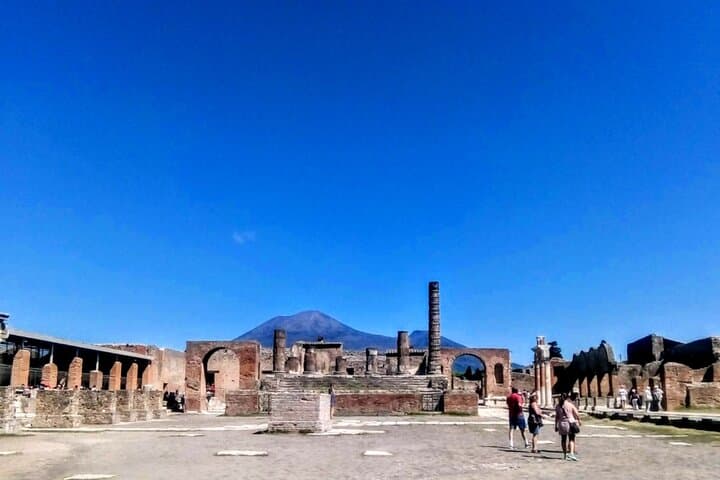
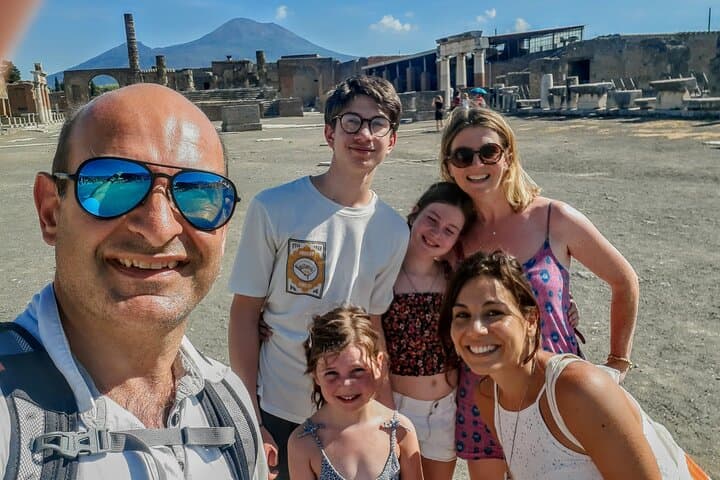
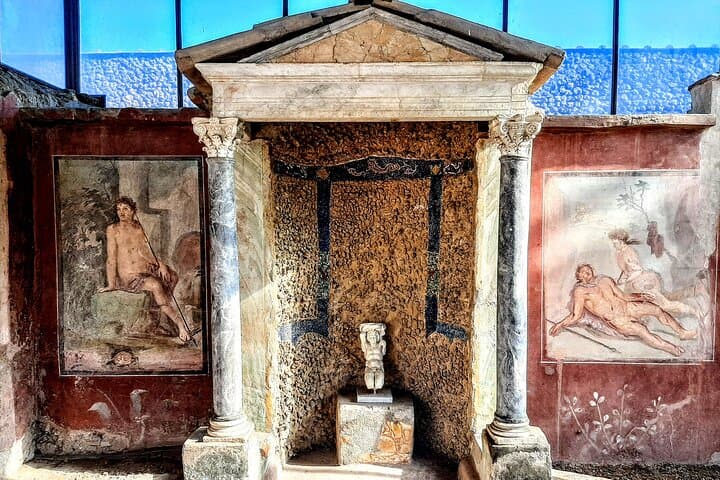
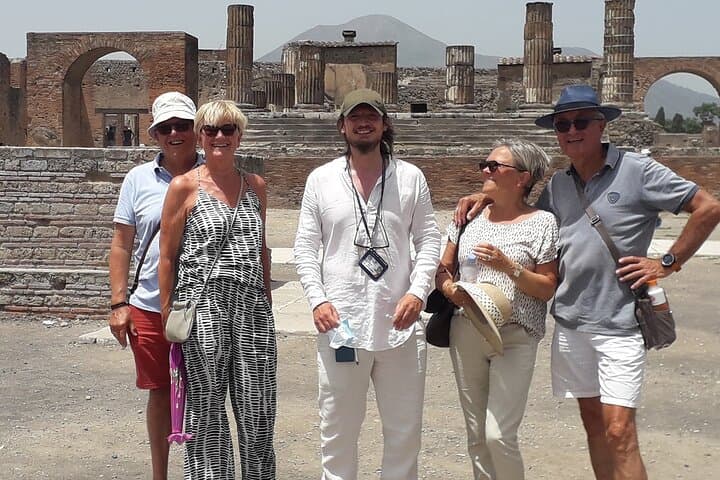
The tour begins where stone streets still hold footprints of a city frozen in ash. Sun hits the exposed cardo and decumanus, dust rising off volcanic grit as a guide traces daily life — bakeries, baths, shops — that once hummed here.
The tour begins where stone streets still hold footprints of a city frozen in ash. Sun hits the exposed cardo and decumanus, dust rising off volcanic grit as a guide traces daily life — bakeries, baths, shops — that once hummed here.
Pompeii’s story is geological and human: Mount Vesuvius erupted in 79 AD, burying the town and preserving buildings, frescoes and plaster casts of victims. The volcanic tuff and pumice that sealed the site also created the sharp, uneven cobbles visitors walk today. Culturally, the ruins reveal Roman domestic life, public temples and thermal complexes; later excavations beginning in the 18th century transformed modern understanding of urban antiquity.
Expect two hours of steady walking across roughly 1.5–3 km of mostly flat but irregular terrain, punctuated by steps and threshold stones. Highlights typically include richly painted domus, the House of the Faun, public baths and the Forum, plus the chilling casted figures that remind you of the eruption’s suddenness.
Practical guidance: wear supportive, closed-toe shoes with good traction, bring sun protection and water, and plan for limited shade in summer. The site is partially accessible but has cobbles and gaps that make wheelchairs and strollers challenging; travelers with spinal or heart conditions should consider a gentler itinerary. Tours are private and customizable, so prioritize the features you want to see — frescoes, baths, or the plaster casts — and ask guides about quieter routes to avoid crowds.
This is an outdoor archaeological walk where history, geology and the city’s everyday details meet, best appreciated with deliberate steps and practical preparation.