THE ADVENTURE COLLECTIVE® · Independent discovery and booking for outdoor travel

A focused four‑hour tour of Makhtesh Ramon introduces visitors to dramatic exposed geology, desert flora and fauna, and the crater’s surprising water features. Expect fossil-rich outcrops, short walks to viewpoints, and practical local insights.
A focused four‑hour tour of Makhtesh Ramon introduces visitors to dramatic exposed geology, desert flora and fauna, and the crater’s surprising water features. Expect fossil-rich outcrops, short walks to viewpoints, and practical local insights.
Sunlight slants across a bowl of stone and sand as you step onto the crater rim; wind carries the dry, sharp scent of halophyte scrub while layered cliffs reveal a history written in rock. This four‑hour introduction to the Ramon Crater (Makhtesh Ramon) puts you at the edge of a working geological archive—fossils, folded strata and hidden pools that mark ancient seas and more recent desert processes.
Verified experiences and guided adventures in the surrounding area.
Operated by Desert-Prime · Mitzpe Ramon, Negev
Sunlight slants across a bowl of stone and sand as you step onto the crater rim; wind carries the dry, sharp scent of halophyte scrub while layered cliffs reveal a history written in rock. This four‑hour introduction to the Ramon Crater (Makhtesh Ramon) puts you at the edge of a working geological archive—fossils, folded strata and hidden pools that mark ancient seas and more recent desert processes.
Makhtesh Ramon is an erosion-formed crater about 40 km long and up to several hundred meters deep. The exposed layers span millions of years: limestone beds holding marine fossils, sandstone ridges, and volcanic intrusions that punctuate the plain. Local Bedouin communities and small settlements like Mitzpe Ramon have long read the landscape for water and grazing; today guides combine that cultural knowledge with geology for a fuller picture.
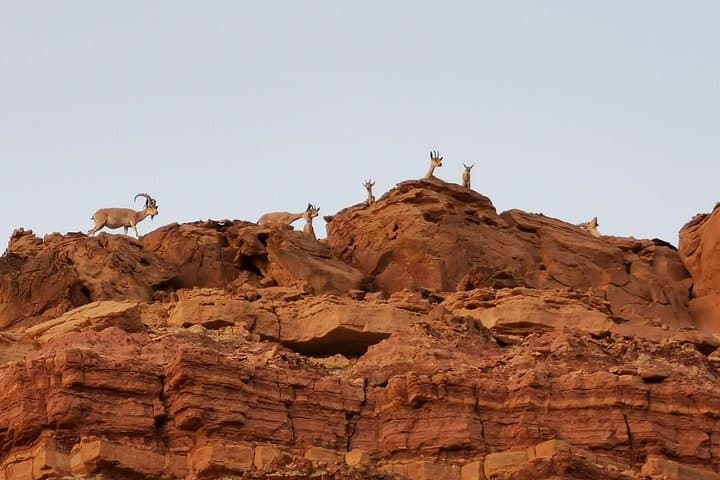
Expect short walks to overlooks, fossil spotting, and close looks at karst features and small desert springs where water, against the odds, persists. Wildlife—foxes, ibex, migratory birds and reptiles—use micro-habitats that appear sparse from a distance but teem at close range.
Practical guidance: wear sturdy shoes for uneven rock, carry at least 1–1.5 liters of water, sun protection and layered clothing for variable canyon breezes. Morning or late‑afternoon visits provide cooler temperatures and crisper light for observing strata. The tour’s snack and coffee break make a short restpoint; the site’s remoteness rewards prepared visitors who respect fragile soils and leave no trace.
The tour is described as suitable for all fitness levels and involves short, mostly easy walks to viewpoints with minimal elevation change.
Yes—guides typically point out exposed limestone beds and visible marine fossils that illustrate the crater’s ancient seafloor history.
The crater lies near Mitzpe Ramon; tours commonly depart from that town or surrounding pickup points, and the area is best reached by vehicle.
Facilities are limited in the crater; this tour includes snacks and coffee, but bring necessary supplies for comfort.
Desert-Prime operates guided outdoor trips and adventures with an emphasis on safety, stewardship, and memorable experiences.



Sunlight slants across a bowl of stone and sand as you step onto the crater rim; wind carries the dry, sharp scent of halophyte scrub while layered cliffs reveal a history written in rock. This four‑hour introduction to the Ramon Crater (Makhtesh Ramon) puts you at the edge of a working geological archive—fossils, folded strata and hidden pools that mark ancient seas and more recent desert processes.
Sunlight slants across a bowl of stone and sand as you step onto the crater rim; wind carries the dry, sharp scent of halophyte scrub while layered cliffs reveal a history written in rock. This four‑hour introduction to the Ramon Crater (Makhtesh Ramon) puts you at the edge of a working geological archive—fossils, folded strata and hidden pools that mark ancient seas and more recent desert processes.
Makhtesh Ramon is an erosion-formed crater about 40 km long and up to several hundred meters deep. The exposed layers span millions of years: limestone beds holding marine fossils, sandstone ridges, and volcanic intrusions that punctuate the plain. Local Bedouin communities and small settlements like Mitzpe Ramon have long read the landscape for water and grazing; today guides combine that cultural knowledge with geology for a fuller picture.
Expect short walks to overlooks, fossil spotting, and close looks at karst features and small desert springs where water, against the odds, persists. Wildlife—foxes, ibex, migratory birds and reptiles—use micro-habitats that appear sparse from a distance but teem at close range.
Practical guidance: wear sturdy shoes for uneven rock, carry at least 1–1.5 liters of water, sun protection and layered clothing for variable canyon breezes. Morning or late‑afternoon visits provide cooler temperatures and crisper light for observing strata. The tour’s snack and coffee break make a short restpoint; the site’s remoteness rewards prepared visitors who respect fragile soils and leave no trace.