THE ADVENTURE COLLECTIVE® · Independent discovery and booking for outdoor travel

Walk inside one of Sardinia’s oldest stone fortresses and its attached village to see everyday Bronze Age architecture and climb into the mastio via a narrow entrance. This small-group visit from Cagliari combines landscape, history, and hands-on archaeology.
Walk inside one of Sardinia’s oldest stone fortresses and its attached village to see everyday Bronze Age architecture and climb into the mastio via a narrow entrance. This small-group visit from Cagliari combines landscape, history, and hands-on archaeology.
You approach a ring of stone towers rising from low, rolling hills — squat, stern, and weathered by three millennia. Wind moves over the fields and the small horses of the Giara pick at scrub; the nuraghe’s dark doorway waits at the base of a central keep, reached by an iron ladder that forces you to slow and focus.
Verified experiences and guided adventures in the surrounding area.
Operated by CULTURE SARDINIA · Barumini, Sardinia
You approach a ring of stone towers rising from low, rolling hills — squat, stern, and weathered by three millennia. Wind moves over the fields and the small horses of the Giara pick at scrub; the nuraghe’s dark doorway waits at the base of a central keep, reached by an iron ladder that forces you to slow and focus.
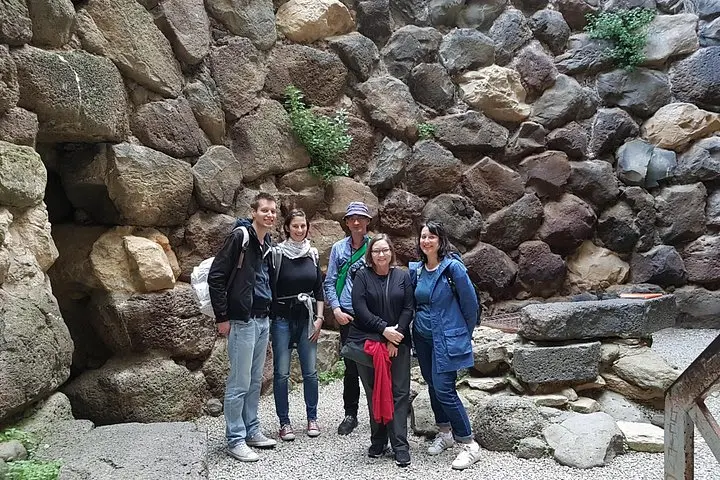
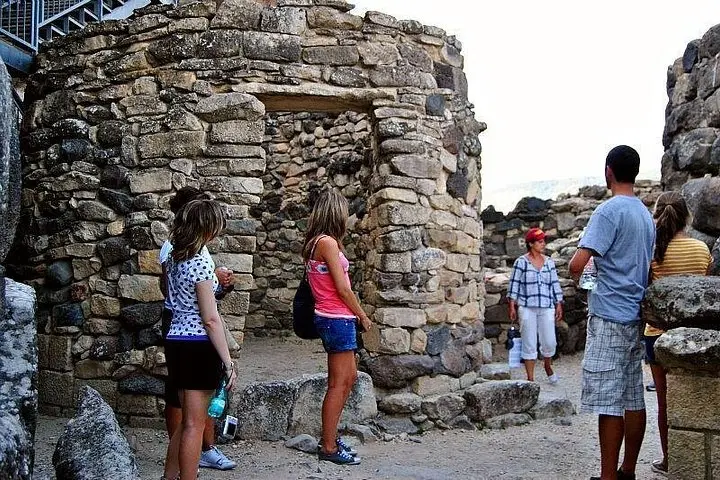
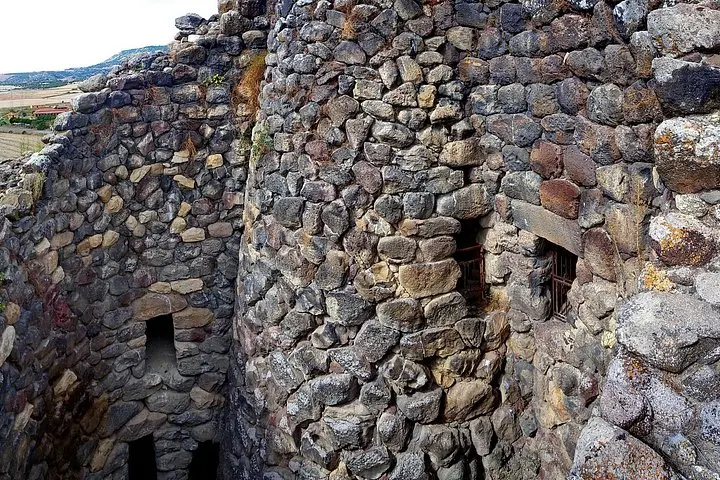
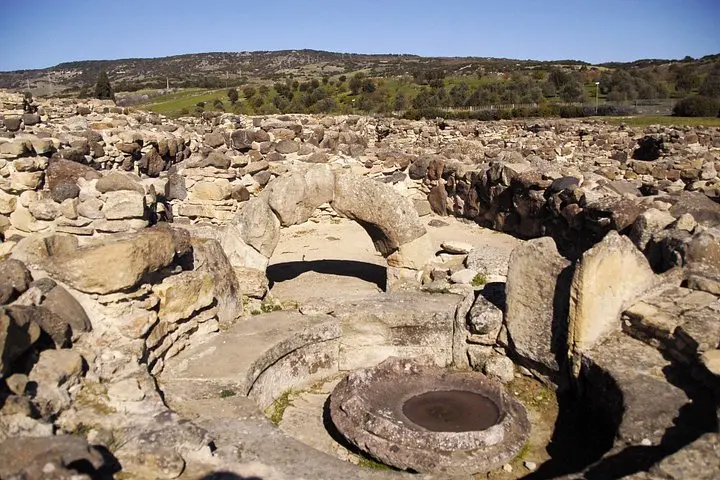
Su Nuraxi is the best-preserved example of a nuraghe complex, an island-specific Bronze Age stronghold whose core dates to around 1500 BCE. The compound combines concentric defensive towers with an attached village: round huts with central hearths, rectangular later-period houses, grain mills, ovens, and ritual spaces. The structure was built from locally quarried stone and reconfigured across centuries; its sheer mass and internal galleries reveal both domestic life and strategic design.
Culturally, the site sits in Marmilla, an agricultural upland where pastoralism shaped settlement patterns and livestock like the small “Cavallini della Giara” still graze nearby. Geology here is modest hills and fertile soils that sustained those communities for millennia.
Practical guidance: allow 4–6 hours for transport from Cagliari plus a guided visit, wear comfortable closed shoes and expect uneven paths, narrow corridors and a ladder at 7 meters. The onsite ticket is payable locally (about €16), and small-group tours often include pickup in Cagliari but may add a fuel surcharge from distant resorts. Mornings are cooler and best for photography; bring water, sun protection and a light layer—the exposed courtyards can be windy. The site is not wheelchair accessible and has several low, steep spaces where bending and careful footing are required.
The guided visit to the archaeological complex typically lasts around 60–90 minutes; factor in 4–6 hours total for round-trip transport from Cagliari and tour logistics.
No — the nuraghe has uneven ground, narrow corridors and a ladder to access the central tower, so it is not suitable for wheelchair users or those with limited mobility.
Yes — the archaeological site entrance fee (around €16) is paid at Su Nuraxi and may not be included in some tour prices.
Children can join if accompanied by two paying adults; some sections require close supervision due to steep steps and confined spaces.
CULTURE SARDINIA operates guided outdoor trips and adventures with an emphasis on safety, stewardship, and memorable experiences.
You approach a ring of stone towers rising from low, rolling hills — squat, stern, and weathered by three millennia. Wind moves over the fields and the small horses of the Giara pick at scrub; the nuraghe’s dark doorway waits at the base of a central keep, reached by an iron ladder that forces you to slow and focus.
You approach a ring of stone towers rising from low, rolling hills — squat, stern, and weathered by three millennia. Wind moves over the fields and the small horses of the Giara pick at scrub; the nuraghe’s dark doorway waits at the base of a central keep, reached by an iron ladder that forces you to slow and focus.
Su Nuraxi is the best-preserved example of a nuraghe complex, an island-specific Bronze Age stronghold whose core dates to around 1500 BCE. The compound combines concentric defensive towers with an attached village: round huts with central hearths, rectangular later-period houses, grain mills, ovens, and ritual spaces. The structure was built from locally quarried stone and reconfigured across centuries; its sheer mass and internal galleries reveal both domestic life and strategic design.
Culturally, the site sits in Marmilla, an agricultural upland where pastoralism shaped settlement patterns and livestock like the small “Cavallini della Giara” still graze nearby. Geology here is modest hills and fertile soils that sustained those communities for millennia.
Practical guidance: allow 4–6 hours for transport from Cagliari plus a guided visit, wear comfortable closed shoes and expect uneven paths, narrow corridors and a ladder at 7 meters. The onsite ticket is payable locally (about €16), and small-group tours often include pickup in Cagliari but may add a fuel surcharge from distant resorts. Mornings are cooler and best for photography; bring water, sun protection and a light layer—the exposed courtyards can be windy. The site is not wheelchair accessible and has several low, steep spaces where bending and careful footing are required.