THE ADVENTURE COLLECTIVE® · Independent discovery and booking for outdoor travel

Walk through monumental, half-ruined Soviet spa sanatoriums near Kutaisi and taste the mineral spring that once drew crowds. This 3-hour outing blends architectural intrigue with local history and practical on-site cautions.
Walk through monumental, half-ruined Soviet spa sanatoriums near Kutaisi and taste the mineral spring that once drew crowds. This 3-hour outing blends architectural intrigue with local history and practical on-site cautions.
You step off the train at Kutaisi and the road pulls you west toward a town that time left halfway behind. Tskaltubo’s boulevards open into hulking stone façades, colonnades flaking with paint and domes that still throw a cavernous echo. Sunlight slices through broken windows in Bathhouse No. 8; a marble stairwell in Sanatorium Medea tilts like the last act of a long play.
Verified experiences and guided adventures in the surrounding area.
Operated by Travel Kutaisi · Tskaltubo, Imereti
You step off the train at Kutaisi and the road pulls you west toward a town that time left halfway behind. Tskaltubo’s boulevards open into hulking stone façades, colonnades flaking with paint and domes that still throw a cavernous echo. Sunlight slices through broken windows in Bathhouse No. 8; a marble stairwell in Sanatorium Medea tilts like the last act of a long play.
Tskaltubo rose in the Soviet era as a curative resort built on karst-fed mineral springs; its architecture mixes neoclassical columns with 1950s modernism. Geology here matters: limestone bedrock feeds warm, mineral-rich springs that drew visitors for pulmonary and rheumatic treatments, and that same karst landscape created caves and sinkholes nearby.
The cultural context is blunt — a boomtown of state-run health tourism that emptied after the Soviet collapse and regional conflicts. Today the sites are held in a liminal state: partly reclaimed by locals, partly preserved as relics, and occasionally used for film and photography.
Practical guidance: tours are short (about 3 hours) and organized from Kutaisi; expect flat, uneven floors, low light and debris. Wear sturdy shoes, bring a headlamp for interior rooms, and follow your guide — access is controlled and safety varies by building. Photography is rewarding but be respectful: don’t remove artifacts or graffiti, and avoid wandering off permitted routes. Hydrate and plan for variable temperatures inside versus outside. If you’ve got a curiosity for industrial-scale decay, Soviet social history, and raw architectural drama, Tskaltubo delivers a compact, accessible day trip.
The published tour runs about 3 hours including transport from Kutaisi and stops at multiple sanatoriums and the Spring of Beauty.
Guided tours visit permitted and relatively stable areas; off-route exploration is discouraged and may be illegal — follow your guide’s instructions.
Yes; the tour is listed as suitable for all fitness levels, but children should be supervised due to uneven floors and limited barriers.
The Spring of Beauty is noted locally as drinkable; follow guide advice and only taste from recommended taps.
Travel Kutaisi operates guided outdoor trips and adventures with an emphasis on safety, stewardship, and memorable experiences.
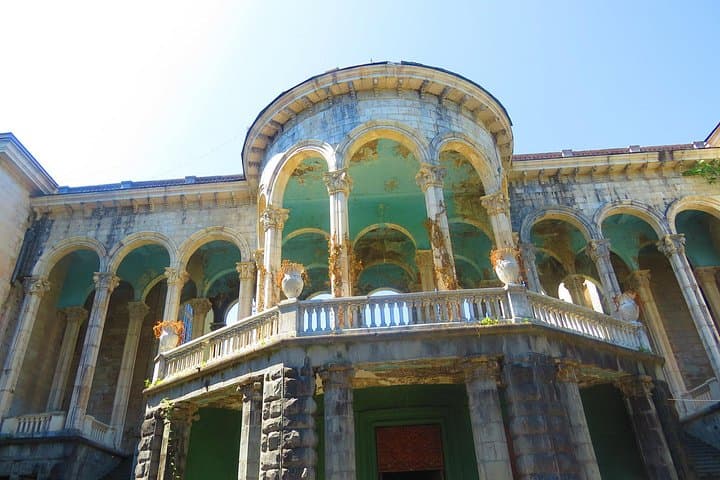
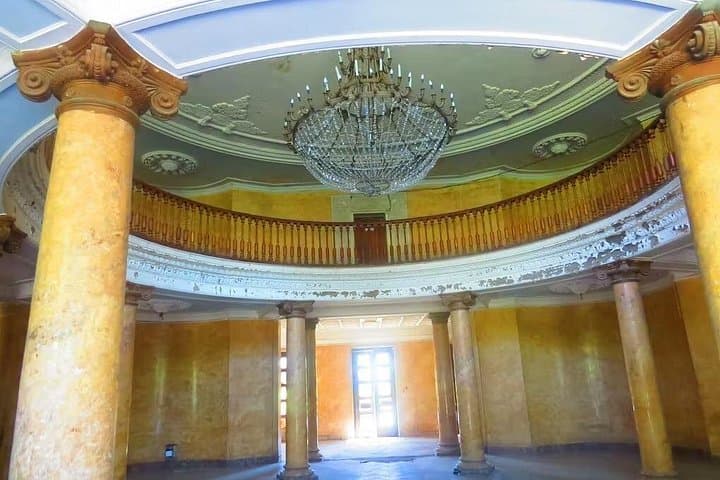


You step off the train at Kutaisi and the road pulls you west toward a town that time left halfway behind. Tskaltubo’s boulevards open into hulking stone façades, colonnades flaking with paint and domes that still throw a cavernous echo. Sunlight slices through broken windows in Bathhouse No. 8; a marble stairwell in Sanatorium Medea tilts like the last act of a long play.
You step off the train at Kutaisi and the road pulls you west toward a town that time left halfway behind. Tskaltubo’s boulevards open into hulking stone façades, colonnades flaking with paint and domes that still throw a cavernous echo. Sunlight slices through broken windows in Bathhouse No. 8; a marble stairwell in Sanatorium Medea tilts like the last act of a long play.
Tskaltubo rose in the Soviet era as a curative resort built on karst-fed mineral springs; its architecture mixes neoclassical columns with 1950s modernism. Geology here matters: limestone bedrock feeds warm, mineral-rich springs that drew visitors for pulmonary and rheumatic treatments, and that same karst landscape created caves and sinkholes nearby.
The cultural context is blunt — a boomtown of state-run health tourism that emptied after the Soviet collapse and regional conflicts. Today the sites are held in a liminal state: partly reclaimed by locals, partly preserved as relics, and occasionally used for film and photography.
Practical guidance: tours are short (about 3 hours) and organized from Kutaisi; expect flat, uneven floors, low light and debris. Wear sturdy shoes, bring a headlamp for interior rooms, and follow your guide — access is controlled and safety varies by building. Photography is rewarding but be respectful: don’t remove artifacts or graffiti, and avoid wandering off permitted routes. Hydrate and plan for variable temperatures inside versus outside. If you’ve got a curiosity for industrial-scale decay, Soviet social history, and raw architectural drama, Tskaltubo delivers a compact, accessible day trip.