THE ADVENTURE COLLECTIVE® · Independent discovery and booking for outdoor travel

Explore the Cu Chi Tunnels on a half-day guided tour from Ho Chi Minh City. Walk through restored tunnel entrances, hear firsthand accounts from guides, and learn practical wartime ingenuity amid the distinctive red earth of the Cu Chi district.
Explore the Cu Chi Tunnels on a half-day guided tour from Ho Chi Minh City. Walk through restored tunnel entrances, hear firsthand accounts from guides, and learn practical wartime ingenuity amid the distinctive red earth of the Cu Chi district.
You step off the air-conditioned minivan into a patch of roadside grass and red earth, the rumble of Ho Chi Minh City falling away behind you. A low concrete entrance gapes into the hill—this is where the ground hides stories of endurance and improvisation.
Verified experiences and guided adventures in the surrounding area.
Operated by Local Tours PU LUONG · Ho Chi Minh City, Ho Chi Minh
You step off the air-conditioned minivan into a patch of roadside grass and red earth, the rumble of Ho Chi Minh City falling away behind you. A low concrete entrance gapes into the hill—this is where the ground hides stories of endurance and improvisation.
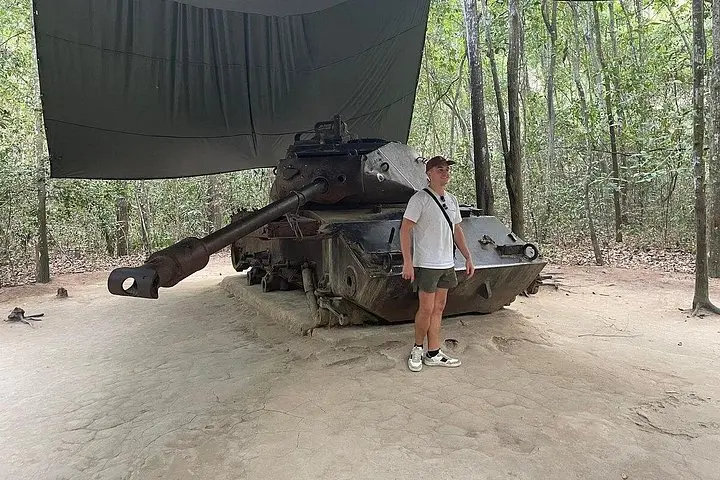
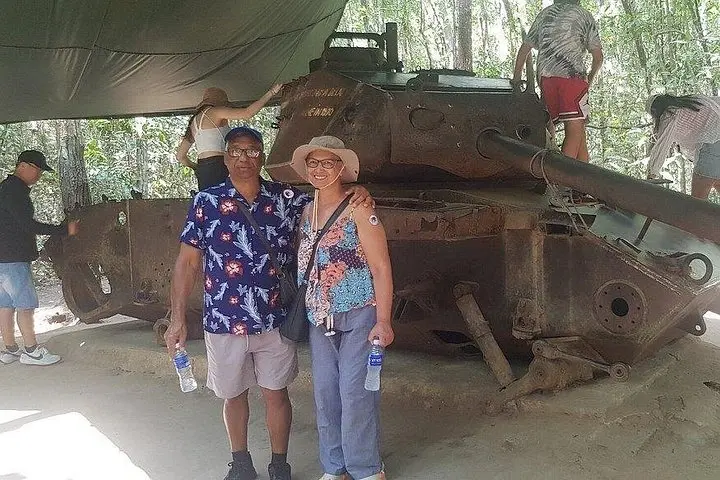
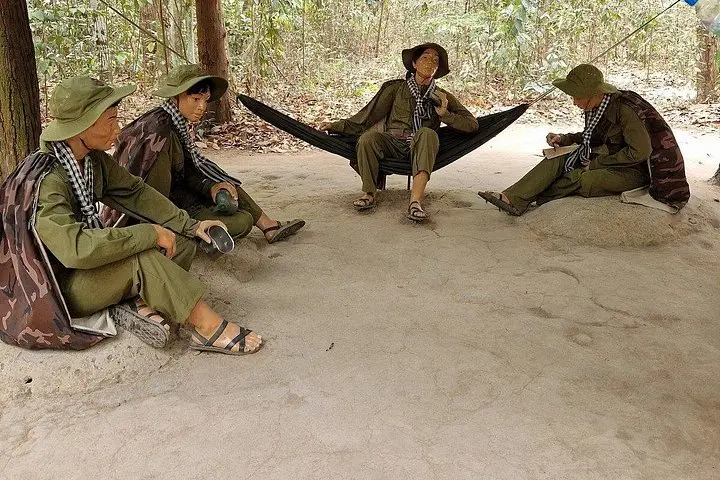
The Cu Chi Tunnels are a vast, mostly underground network used by Viet Cong fighters during the Vietnam War. Stretching over 124 miles (200 km), the system includes narrow living quarters, kitchens, weapon caches and cleverly concealed trapdoors. The soil here is primarily alluvial and lateritic—soft enough to dig but prone to collapse without shoring—so much of the tunnel work was reinforced with timber and ingenuity born of necessity.
Culturally, the site is as much a memorial as a museum: local guides relate personal and community histories that frame the tunnels as both military infrastructure and village lifeways. Geologically, you’ll notice the characteristic reddish-brown earth and low, palm-lined scrub typical of the Cu Chi district.
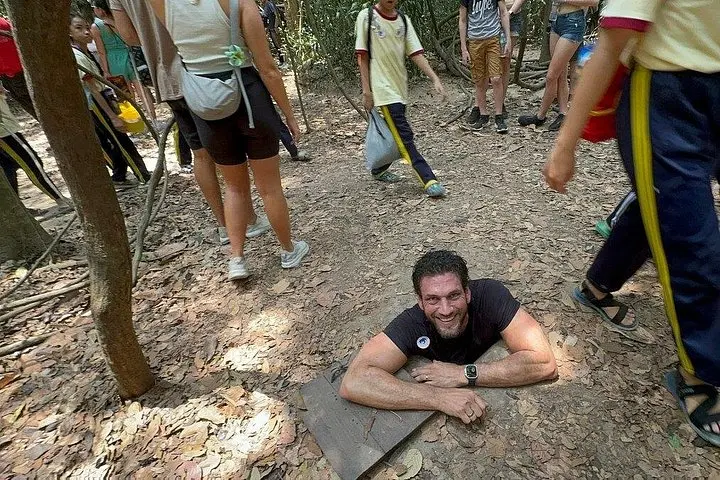
Practical guidance: tours run about six hours with hotel pickup from District 1; choose morning to avoid peak heat. Wear closed-toe shoes and light, breathable clothing. Be prepared for tight crawl spaces if you opt to enter a restored section—those with back or heart problems, or who are pregnant, should avoid crawling demonstrations. Bring water, insect repellent and modest cash for the small souvenir stalls.
The visit balances close-up, sometimes claustrophobic history with clear interpretation—expect a hands-on look at wartime tactics, surviving architecture and the everyday resourcefulness that kept people moving underground.
The tour runs about six hours door-to-door from central Ho Chi Minh City, with roughly four hours on-site including interpretation and exhibits.
Pickup and drop-off are included for hotels in District 1; other pickup points may incur an extra fee.
A restored, widened section is available for visitors; demonstrations are optional and discouraged for those with medical restrictions.
There are basic restrooms and small refreshment stalls or cafes near the visitor center; carrying small local currency is helpful.
Local Tours PU LUONG operates guided outdoor trips and adventures with an emphasis on safety, stewardship, and memorable experiences.
You step off the air-conditioned minivan into a patch of roadside grass and red earth, the rumble of Ho Chi Minh City falling away behind you. A low concrete entrance gapes into the hill—this is where the ground hides stories of endurance and improvisation.
You step off the air-conditioned minivan into a patch of roadside grass and red earth, the rumble of Ho Chi Minh City falling away behind you. A low concrete entrance gapes into the hill—this is where the ground hides stories of endurance and improvisation.
The Cu Chi Tunnels are a vast, mostly underground network used by Viet Cong fighters during the Vietnam War. Stretching over 124 miles (200 km), the system includes narrow living quarters, kitchens, weapon caches and cleverly concealed trapdoors. The soil here is primarily alluvial and lateritic—soft enough to dig but prone to collapse without shoring—so much of the tunnel work was reinforced with timber and ingenuity born of necessity.
Culturally, the site is as much a memorial as a museum: local guides relate personal and community histories that frame the tunnels as both military infrastructure and village lifeways. Geologically, you’ll notice the characteristic reddish-brown earth and low, palm-lined scrub typical of the Cu Chi district.
Practical guidance: tours run about six hours with hotel pickup from District 1; choose morning to avoid peak heat. Wear closed-toe shoes and light, breathable clothing. Be prepared for tight crawl spaces if you opt to enter a restored section—those with back or heart problems, or who are pregnant, should avoid crawling demonstrations. Bring water, insect repellent and modest cash for the small souvenir stalls.
The visit balances close-up, sometimes claustrophobic history with clear interpretation—expect a hands-on look at wartime tactics, surviving architecture and the everyday resourcefulness that kept people moving underground.