THE ADVENTURE COLLECTIVE® · Independent discovery and booking for outdoor travel

A short drive from Cuenca, the Ciudad Encantada offers a compact, otherworldly display of karst formations and canyon viewpoints. This practical guide covers what to expect, why the geology matters, and how to prepare for the 3–3.5 hour excursion.
A short drive from Cuenca, the Ciudad Encantada offers a compact, otherworldly display of karst formations and canyon viewpoints. This practical guide covers what to expect, why the geology matters, and how to prepare for the 3–3.5 hour excursion.
You step out of the minibus onto a flat shelf of limestone and the world snaps into geological focus: wind-carved pillars rise like old guardians, narrow alleys of rock channeling a cool draft that seems to have its own agenda.
Verified experiences and guided adventures in the surrounding area.
Operated by Cuenqueando · Cuenca, Castilla-La Mancha
You step out of the minibus onto a flat shelf of limestone and the world snaps into geological focus: wind-carved pillars rise like old guardians, narrow alleys of rock channeling a cool draft that seems to have its own agenda.
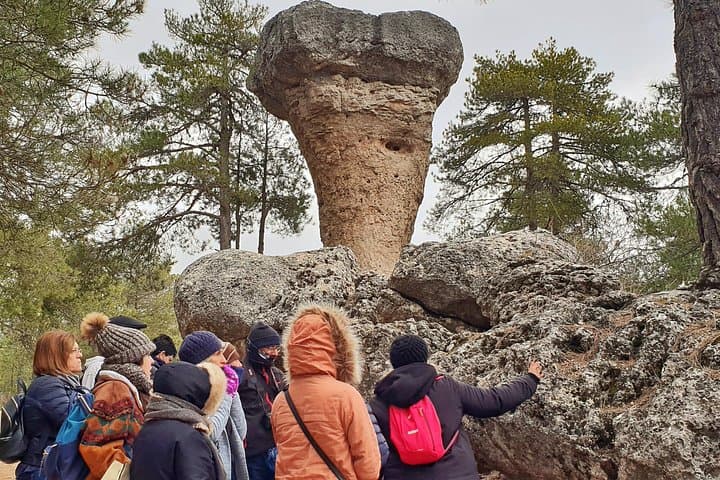
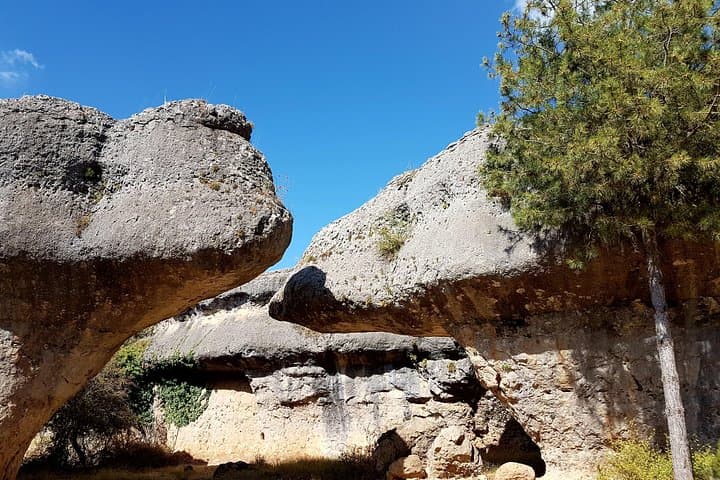
The Ciudad Encantada—declared a Natural Site of National Interest in 1929—is a concentrated classroom of karst erosion. Over millennia water and frost have sculpted the Cretaceous limestone into pillars, arches and hollows; names given by locals (the Sail, the Cathedral, the Dog) help visitors read the stone like a living atlas. The route from Cuenca passes the Ventano del Diablo, a dramatic viewpoint over the Júcar canyon where griffon and Egyptian vultures wheel on thermal lifts.
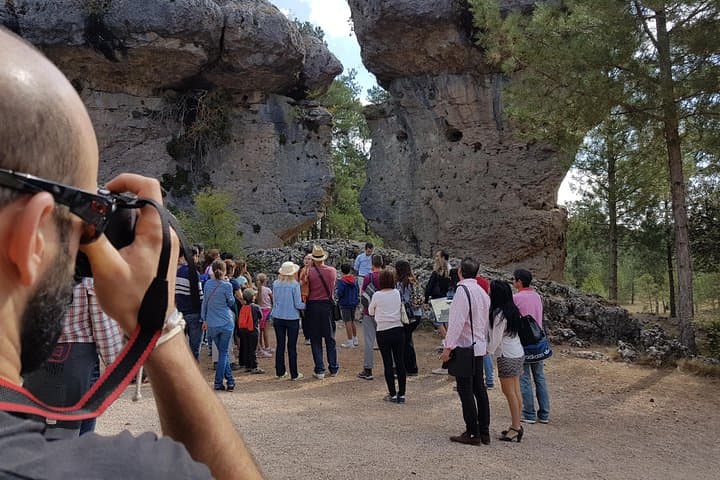
Culturally the site sits in Castilla‑La Mancha’s dry plateau, an agricultural landscape where shepherding and small-scale farming shaped access routes and local lore. Expect a certified guide, included ticketing, and an English/Spanish mix on shared tours that last roughly 3–3.5 hours.
Practically: the trail around the main formation is well-marked but uneven—sturdy shoes and a steady pace make the difference. Spring and autumn bring the best light and cooler temperatures; summer is hot and exposed, winter can be icy in shaded chasms. Pack water, sun protection, and a wind layer. Stay on the paths—the karst is fragile and under protection—and aim for morning or late afternoon for better light and fewer people.
The tour is roughly 3–3.5 hours total, including pickup, the Ventano del Diablo stop, and about 1.5–2 hours on-site at the Ciudad Encantada.
Yes—the route is classified as easy and suitable for most ages, but families should expect uneven surfaces and keep children close near drop-offs.
Yes; certified guide, entrance tickets and air-conditioned transport from Cuenca are typically included in the excursion package.
Spring and fall offer the most comfortable temperatures and best light; summer is crowded and hot, while winter can bring icy patches.
Cuenqueando operates guided outdoor trips and adventures with an emphasis on safety, stewardship, and memorable experiences.
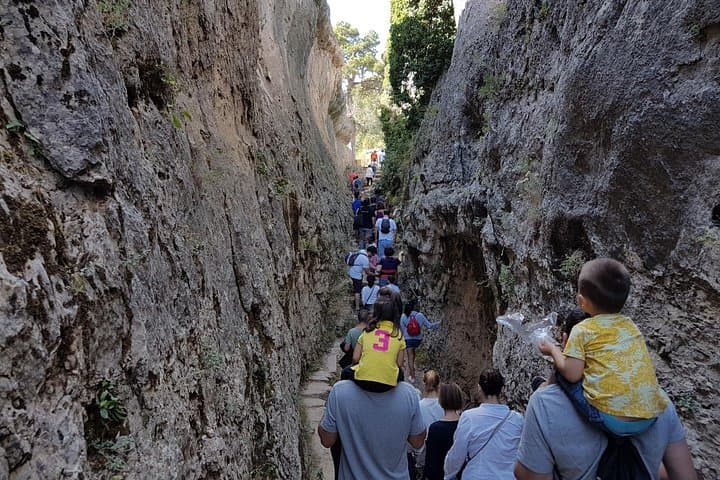
You step out of the minibus onto a flat shelf of limestone and the world snaps into geological focus: wind-carved pillars rise like old guardians, narrow alleys of rock channeling a cool draft that seems to have its own agenda.
You step out of the minibus onto a flat shelf of limestone and the world snaps into geological focus: wind-carved pillars rise like old guardians, narrow alleys of rock channeling a cool draft that seems to have its own agenda.
The Ciudad Encantada—declared a Natural Site of National Interest in 1929—is a concentrated classroom of karst erosion. Over millennia water and frost have sculpted the Cretaceous limestone into pillars, arches and hollows; names given by locals (the Sail, the Cathedral, the Dog) help visitors read the stone like a living atlas. The route from Cuenca passes the Ventano del Diablo, a dramatic viewpoint over the Júcar canyon where griffon and Egyptian vultures wheel on thermal lifts.
Culturally the site sits in Castilla‑La Mancha’s dry plateau, an agricultural landscape where shepherding and small-scale farming shaped access routes and local lore. Expect a certified guide, included ticketing, and an English/Spanish mix on shared tours that last roughly 3–3.5 hours.
Practically: the trail around the main formation is well-marked but uneven—sturdy shoes and a steady pace make the difference. Spring and autumn bring the best light and cooler temperatures; summer is hot and exposed, winter can be icy in shaded chasms. Pack water, sun protection, and a wind layer. Stay on the paths—the karst is fragile and under protection—and aim for morning or late afternoon for better light and fewer people.