THE ADVENTURE COLLECTIVE® · Independent discovery and booking for outdoor travel

White Pocket’s strange white mounds and colorful swirls feel like another planet but are reachable in a long private-day tour. This guide explains what to expect—geology, logistics and how to photograph the best light safely.
White Pocket’s strange white mounds and colorful swirls feel like another planet but are reachable in a long private-day tour. This guide explains what to expect—geology, logistics and how to photograph the best light safely.
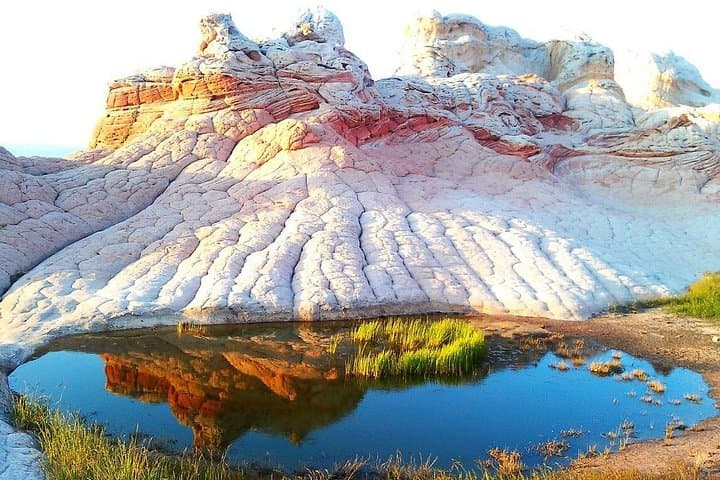
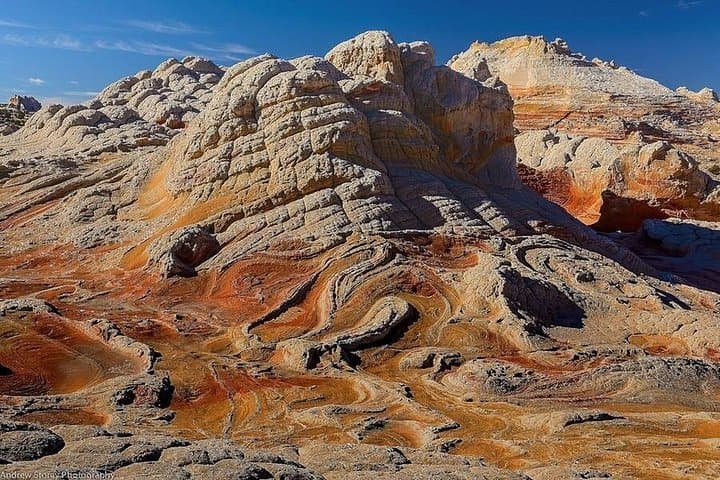
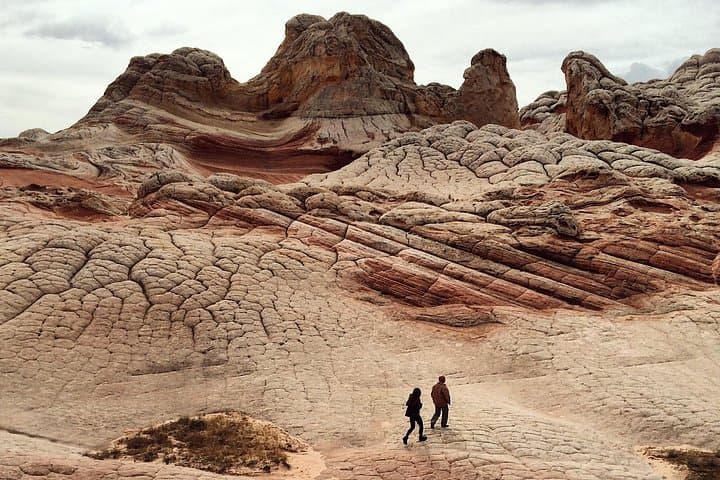
You arrive before midday after hours of red dirt and scrub—an air-conditioned van drops you at the edge of a landscape that refuses to behave. White Pocket looks like a geological prank: thin white caps of sandstone folded into egg-sized mounds, fractured into polygonal plates, with orange and red swirls exposed in the seams. Wind and rain have gone to work here for millions of years, carving thin crusts over crazed underlayers that peel, curl and reflect light like a painter’s palette.
Verified experiences and guided adventures in the surrounding area.
Operated by Seeking Treasure Adventures · Page, Arizona
You arrive before midday after hours of red dirt and scrub—an air-conditioned van drops you at the edge of a landscape that refuses to behave. White Pocket looks like a geological prank: thin white caps of sandstone folded into egg-sized mounds, fractured into polygonal plates, with orange and red swirls exposed in the seams. Wind and rain have gone to work here for millions of years, carving thin crusts over crazed underlayers that peel, curl and reflect light like a painter’s palette.
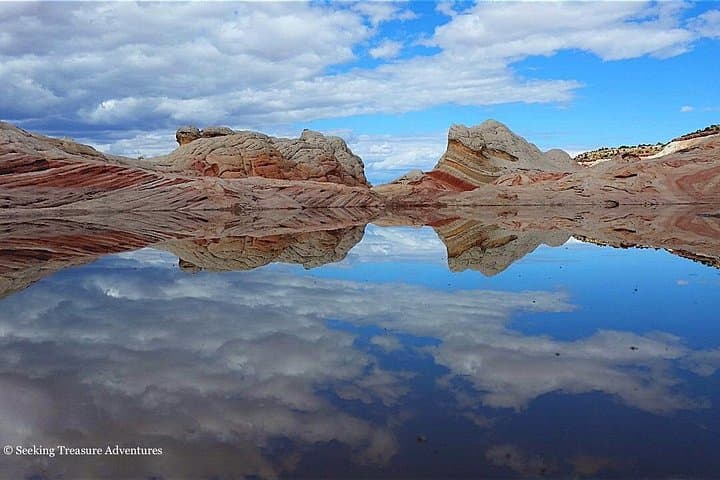
The area sits inside the larger sweep of the Vermilion Cliffs country, a chapter in the Southwest written by shifting dunes, rising seas and millennia of erosion. Those white skins are ancient dune sandstone—deposited in a much wetter, wind-swept world and later exposed by the slow scraping of water and wind. The result is not a single formation but an accumulation of oddities: pothole pools that mirror sky, twisted cross-bedding that reads like planetary handwriting, and colors that reveal the chemistry of iron and manganese oxidizing over time.
White Pocket has no services, no marked trails and no interpretive signs; the nearest towns are Page and Kanab, and the route in demands respect. For centuries the land was traversed by Indigenous people whose knowledge of water, season and stone made long travel possible here. Today access often requires high-clearance vehicles or a knowledgeable guide; this private tour handles the drive and navigation so you can focus on the fieldwork of looking and photographing.
Practical details shape the day. Expect a 7–9 hour outing including travel, stops and a relaxed exploration window. The hike itself is relatively easy over short distances, but footing is irregular—sand, slickrock and small ledges. After summer storms, shallow pools collect in basins and create mirror-like photos, but they also make surfaces slippery. The tour includes bottled water and climate-controlled transport, and operators typically confirm bookings manually and require cancellation notice at least 24 hours prior.
To get the most from White Pocket: move slowly, let your camera settle on details as much as wide angles, and plan your hydration and sun protection carefully. Leave no trace—these fragile surfaces are easy to scar. Combine the trip with nearby slot canyons such as Buckskin Gulch if you want longer multi-day exploration, but treat White Pocket as a place for careful observation rather than a fast checklist.
On the practical side, bring sturdy shoes, 2+ liters of water, a sun hat and a small tripod for low-light shots. Expect cell service to be intermittent; rely on the guide’s timing and vehicle for safety. If you go after a thunderstorm prepare for slick rock and brilliant reflections—this is, quite simply, one of the Southwest’s most peculiar and photogenic places.
The outing runs about 7–9 hours including drive time; hiking distances are short but over uneven terrain—expect 1–3 miles of walking at a relaxed pace.
Yes, public access roads are rough and unmaintained; most visitors arrive via a high-clearance 4WD or on a guided tour that provides appropriate vehicles.
White Pocket is on public land within Vermilion Cliffs, but access rules can change; guided, private tours typically handle access and any necessary land-use considerations.
The hike is generally family-friendly—short and not steep—but uneven footing and desert exposure mean parental discretion and basic mobility are required.
Early morning and late afternoon provide warmer, more directional light; after summer storms, mid-to-late afternoon can offer dramatic reflections in temporary pools.
Expect little to no cell service and no facilities; the tour supplies bottled water and transport but plan for no restrooms or services on-site.
Seeking Treasure Adventures operates guided outdoor trips and adventures with an emphasis on safety, stewardship, and memorable experiences.
You arrive before midday after hours of red dirt and scrub—an air-conditioned van drops you at the edge of a landscape that refuses to behave. White Pocket looks like a geological prank: thin white caps of sandstone folded into egg-sized mounds, fractured into polygonal plates, with orange and red swirls exposed in the seams. Wind and rain have gone to work here for millions of years, carving thin crusts over crazed underlayers that peel, curl and reflect light like a painter’s palette.
You arrive before midday after hours of red dirt and scrub—an air-conditioned van drops you at the edge of a landscape that refuses to behave. White Pocket looks like a geological prank: thin white caps of sandstone folded into egg-sized mounds, fractured into polygonal plates, with orange and red swirls exposed in the seams. Wind and rain have gone to work here for millions of years, carving thin crusts over crazed underlayers that peel, curl and reflect light like a painter’s palette.
The area sits inside the larger sweep of the Vermilion Cliffs country, a chapter in the Southwest written by shifting dunes, rising seas and millennia of erosion. Those white skins are ancient dune sandstone—deposited in a much wetter, wind-swept world and later exposed by the slow scraping of water and wind. The result is not a single formation but an accumulation of oddities: pothole pools that mirror sky, twisted cross-bedding that reads like planetary handwriting, and colors that reveal the chemistry of iron and manganese oxidizing over time.
White Pocket has no services, no marked trails and no interpretive signs; the nearest towns are Page and Kanab, and the route in demands respect. For centuries the land was traversed by Indigenous people whose knowledge of water, season and stone made long travel possible here. Today access often requires high-clearance vehicles or a knowledgeable guide; this private tour handles the drive and navigation so you can focus on the fieldwork of looking and photographing.
Practical details shape the day. Expect a 7–9 hour outing including travel, stops and a relaxed exploration window. The hike itself is relatively easy over short distances, but footing is irregular—sand, slickrock and small ledges. After summer storms, shallow pools collect in basins and create mirror-like photos, but they also make surfaces slippery. The tour includes bottled water and climate-controlled transport, and operators typically confirm bookings manually and require cancellation notice at least 24 hours prior.
To get the most from White Pocket: move slowly, let your camera settle on details as much as wide angles, and plan your hydration and sun protection carefully. Leave no trace—these fragile surfaces are easy to scar. Combine the trip with nearby slot canyons such as Buckskin Gulch if you want longer multi-day exploration, but treat White Pocket as a place for careful observation rather than a fast checklist.
On the practical side, bring sturdy shoes, 2+ liters of water, a sun hat and a small tripod for low-light shots. Expect cell service to be intermittent; rely on the guide’s timing and vehicle for safety. If you go after a thunderstorm prepare for slick rock and brilliant reflections—this is, quite simply, one of the Southwest’s most peculiar and photogenic places.