THE ADVENTURE COLLECTIVE® · Independent discovery and booking for outdoor travel

A compact, two-day crossing from Marrakech to Erg Chebbi that pairs Ait Ben Haddou and Atlas passes with a camel trek and overnight at a private desert camp. Ideal for travelers who want a concentrated Saharan experience with guided logistics.
A compact, two-day crossing from Marrakech to Erg Chebbi that pairs Ait Ben Haddou and Atlas passes with a camel trek and overnight at a private desert camp. Ideal for travelers who want a concentrated Saharan experience with guided logistics.
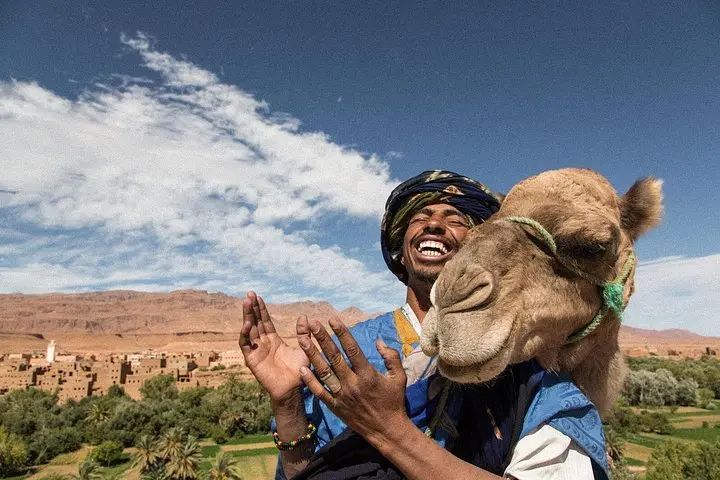
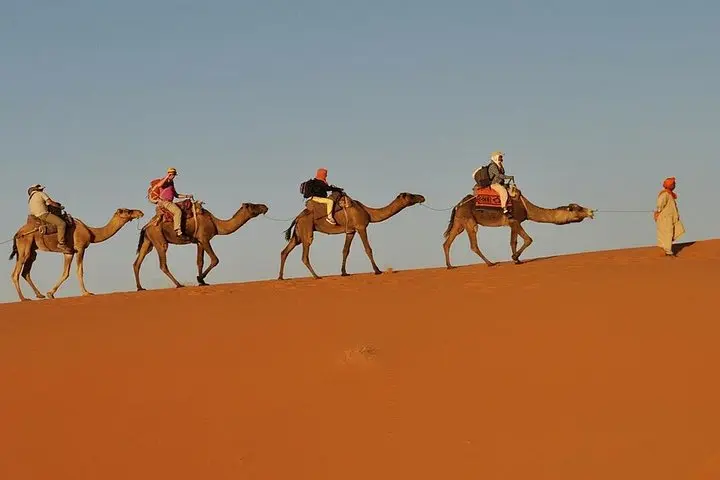
The road leaves Marrakech behind with the High Atlas folding into a spine of rock and snow; the driver eases up Tizi-n-Tichka and the world opens into ochre kasbahs and palm-lined oases. By late afternoon the long, rippled shoulders of Erg Chebbi appear—dunes that shift and glow as the sun leans west. You swap wheels for camels, rise and fall with their deliberate pace, and crest a dune in time for sunset.
Verified experiences and guided adventures in the surrounding area.
Operated by Caravane Du Grand Erg · Merzouga, Errachidia
The road leaves Marrakech behind with the High Atlas folding into a spine of rock and snow; the driver eases up Tizi-n-Tichka and the world opens into ochre kasbahs and palm-lined oases. By late afternoon the long, rippled shoulders of Erg Chebbi appear—dunes that shift and glow as the sun leans west. You swap wheels for camels, rise and fall with their deliberate pace, and crest a dune in time for sunset.
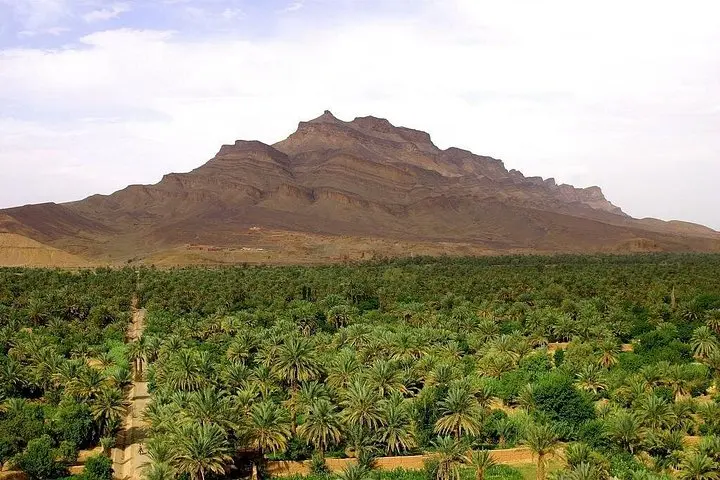
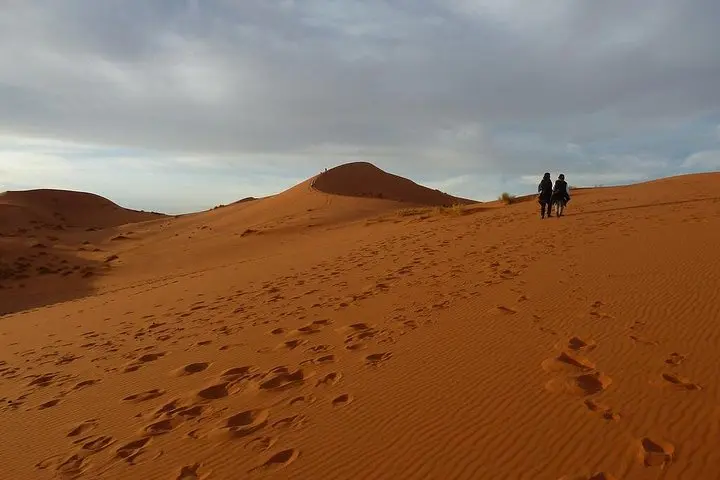
This two-day route threads historical waypoints: Ait Ben Haddou’s earthen citadel, a caravan-era gateway on the trans-Saharan route; the palm oases of Agdez and Nkob where irrigation wells and kasbahs mark human survival in arid terrain. Geologically, Erg Chebbi is a field of wind-sculpted sand built from Atlas erosion and Saharan transport—expect steep slipfaces, soft sand, and dramatic wind ripples that change daily.
Culturally the trip leans Berber: overnight camps often feature communal dinners, drums and songs; local guides share practical desert lore—water, shade, and timing matter.
Practical edge: pack layers for big temperature swings (hot days, cold desert nights), plan for several hours of vehicle time each day, and bring a small daypack for the camel trek and sunrise watch. Hydration and sun protection are non-negotiable; sandals won’t cut it on dune slopes—choose grippy trail shoes. Aim to ride camels at sunset and return at sunrise for best light and cooler sand. Expect simple camp facilities in private tents, evening music, and a slow, patient rhythm that the desert enforces.
Typical camel transfers are about 45–60 minutes each way for sunset and sunrise experiences; shorter options may be available on request.
Private desert camps generally offer private tents with mattresses, basic linens, communal dining, a campfire area, and chemical or simple flush toilets depending on the camp's standard.
Yes—vehicle transport covers long distances and camel rides and camp access are usually gentle; however, bring motion-sickness remedies for winding mountain roads and notify the operator about any mobility concerns.
Travel insurance is recommended for medical evacuation and trip interruption; routine vaccinations should be up to date—consult your travel clinic for current recommendations.
Caravane Du Grand Erg operates guided outdoor trips and adventures with an emphasis on safety, stewardship, and memorable experiences.
The road leaves Marrakech behind with the High Atlas folding into a spine of rock and snow; the driver eases up Tizi-n-Tichka and the world opens into ochre kasbahs and palm-lined oases. By late afternoon the long, rippled shoulders of Erg Chebbi appear—dunes that shift and glow as the sun leans west. You swap wheels for camels, rise and fall with their deliberate pace, and crest a dune in time for sunset.
The road leaves Marrakech behind with the High Atlas folding into a spine of rock and snow; the driver eases up Tizi-n-Tichka and the world opens into ochre kasbahs and palm-lined oases. By late afternoon the long, rippled shoulders of Erg Chebbi appear—dunes that shift and glow as the sun leans west. You swap wheels for camels, rise and fall with their deliberate pace, and crest a dune in time for sunset.
This two-day route threads historical waypoints: Ait Ben Haddou’s earthen citadel, a caravan-era gateway on the trans-Saharan route; the palm oases of Agdez and Nkob where irrigation wells and kasbahs mark human survival in arid terrain. Geologically, Erg Chebbi is a field of wind-sculpted sand built from Atlas erosion and Saharan transport—expect steep slipfaces, soft sand, and dramatic wind ripples that change daily.
Culturally the trip leans Berber: overnight camps often feature communal dinners, drums and songs; local guides share practical desert lore—water, shade, and timing matter.
Practical edge: pack layers for big temperature swings (hot days, cold desert nights), plan for several hours of vehicle time each day, and bring a small daypack for the camel trek and sunrise watch. Hydration and sun protection are non-negotiable; sandals won’t cut it on dune slopes—choose grippy trail shoes. Aim to ride camels at sunset and return at sunrise for best light and cooler sand. Expect simple camp facilities in private tents, evening music, and a slow, patient rhythm that the desert enforces.