THE ADVENTURE COLLECTIVE® · Independent discovery and booking for outdoor travel

Short on time but craving the classic Edge of the World views? This 3-hour Darb Al-Manjour tour pairs off-road driving with a quick cliffside hike to deliver sweeping Tuwaiq escarpment panoramas at sunset. Ideal for travelers who want the dramatic cliffs without a full-day commitment.
Short on time but craving the classic Edge of the World views? This 3-hour Darb Al-Manjour tour pairs off-road driving with a quick cliffside hike to deliver sweeping Tuwaiq escarpment panoramas at sunset. Ideal for travelers who want the dramatic cliffs without a full-day commitment.
You climb out of a modern 4x4 and the city noise collapses behind you—sand and stone take over. Within an hour the landscape changes to long, folded cliffs and raw escarpments where the Tuwaiq Range cuts the horizon. The Second Edge of the World at Darb Al-Manjour gives the same vertiginous views as the better-known main Edge, but in a compact, 3-hour format that’s built for travelers short on time.
Verified experiences and guided adventures in the surrounding area.
Operated by Nomadic Tours · Riyadh, Riyadh Province
You climb out of a modern 4x4 and the city noise collapses behind you—sand and stone take over. Within an hour the landscape changes to long, folded cliffs and raw escarpments where the Tuwaiq Range cuts the horizon. The Second Edge of the World at Darb Al-Manjour gives the same vertiginous views as the better-known main Edge, but in a compact, 3-hour format that’s built for travelers short on time.
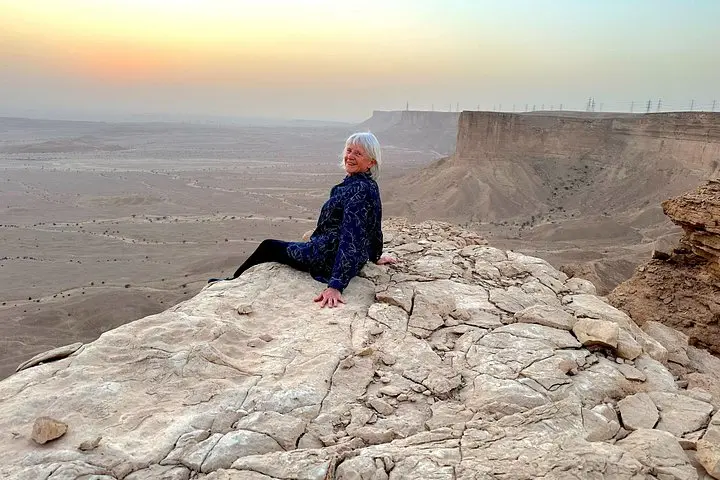
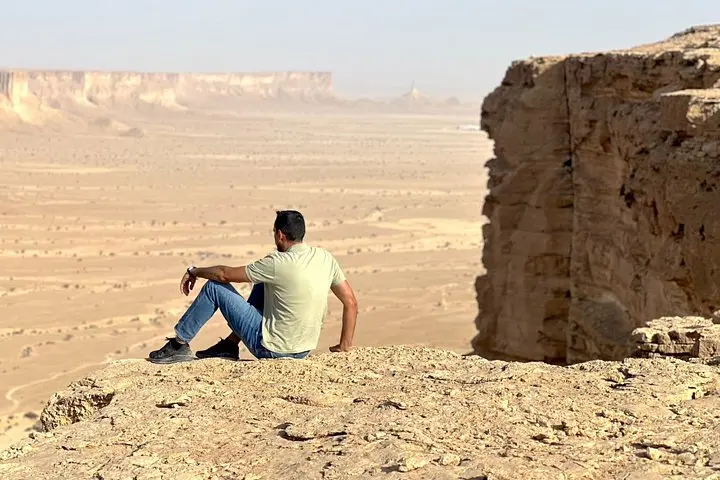
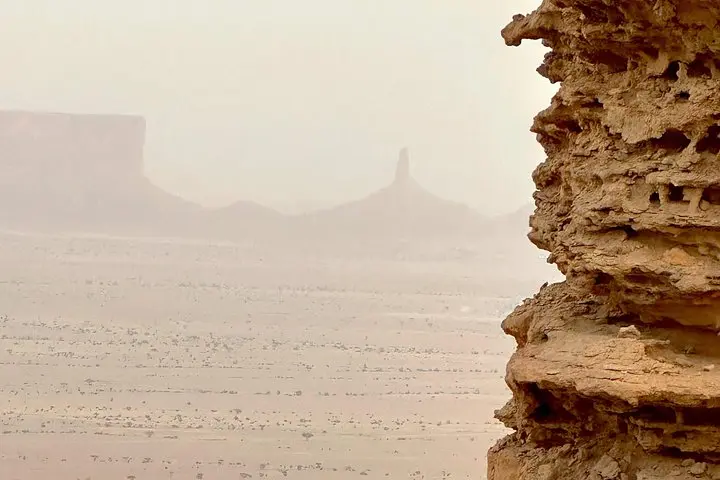
Geologically, the Tuwaiq escarpment is an ancient limestone spine carved by wind and intermittent flash floods; the cliff faces expose horizontal bedding and weathered buttresses that photographers prize at golden hour. Culturally the word darb means a desert path—this route follows one of the old tracks used to cross the plateau, a remnant of regional movement before modern roads.
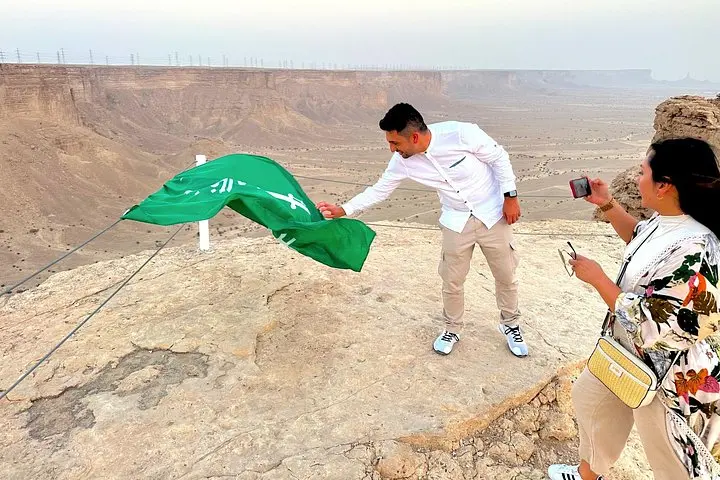
Expect short, uneven hiking over sandy soil and broken limestone slabs, with several photo-worthy vantage points and low scrub peppering the slopes. Guides usually park within easy reach of the rim, then lead a brisk out-and-back walk to key overlooks—perfect for sunset sequences when light shapes the escarpment.
Practical advice: bring sun protection, 1–2 liters of water, sturdy shoes with good grip, and a light layer for evening wind. The terrain is not technical but pay attention near cliff edges. Tours run in modern, air-conditioned 4x4s and are suitable for most fitness levels; they’re a high-value way to experience the Tuwaiq without a full-day commitment.
Most vantage points are a short walk—typically 0.5–1.5 km round trip—over uneven ground and sandy patches.
Yes, the short format suits families and older visitors, but those with mobility or spinal issues should avoid steep sections and follow guide advice.
Yes; the route includes off-road driving over soft sand and rocky tracks best handled by a modern 4x4 vehicle.
Late afternoon toward sunset yields the most dramatic light on the cliffs and cooler walking temperatures.
Nomadic Tours operates guided outdoor trips and adventures with an emphasis on safety, stewardship, and memorable experiences.
You climb out of a modern 4x4 and the city noise collapses behind you—sand and stone take over. Within an hour the landscape changes to long, folded cliffs and raw escarpments where the Tuwaiq Range cuts the horizon. The Second Edge of the World at Darb Al-Manjour gives the same vertiginous views as the better-known main Edge, but in a compact, 3-hour format that’s built for travelers short on time.
You climb out of a modern 4x4 and the city noise collapses behind you—sand and stone take over. Within an hour the landscape changes to long, folded cliffs and raw escarpments where the Tuwaiq Range cuts the horizon. The Second Edge of the World at Darb Al-Manjour gives the same vertiginous views as the better-known main Edge, but in a compact, 3-hour format that’s built for travelers short on time.
Geologically, the Tuwaiq escarpment is an ancient limestone spine carved by wind and intermittent flash floods; the cliff faces expose horizontal bedding and weathered buttresses that photographers prize at golden hour. Culturally the word darb means a desert path—this route follows one of the old tracks used to cross the plateau, a remnant of regional movement before modern roads.
Expect short, uneven hiking over sandy soil and broken limestone slabs, with several photo-worthy vantage points and low scrub peppering the slopes. Guides usually park within easy reach of the rim, then lead a brisk out-and-back walk to key overlooks—perfect for sunset sequences when light shapes the escarpment.
Practical advice: bring sun protection, 1–2 liters of water, sturdy shoes with good grip, and a light layer for evening wind. The terrain is not technical but pay attention near cliff edges. Tours run in modern, air-conditioned 4x4s and are suitable for most fitness levels; they’re a high-value way to experience the Tuwaiq without a full-day commitment.