THE ADVENTURE COLLECTIVE® · Independent discovery and booking for outdoor travel

Covering Middle Atlas forests, Ziz Valley palms and the towering Erg Chebbi dunes, this 2-day circuit from Fes compresses classic Moroccan desert experiences—camels, campfire, and sunrise—into a compact overnight adventure.
Covering Middle Atlas forests, Ziz Valley palms and the towering Erg Chebbi dunes, this 2-day circuit from Fes compresses classic Moroccan desert experiences—camels, campfire, and sunrise—into a compact overnight adventure.
Morning light strips the Azrou cedars of their long shadows as your driver slips out of Fes and heads toward the Middle Atlas. The road climbs past red-earth villages, then tilts into cedar stands where Barbary macaques watch travelers with casual curiosity.
Verified experiences and guided adventures in the surrounding area.
Operated by Morocco Customized Tours · Merzouga, Errachidia Province
Morning light strips the Azrou cedars of their long shadows as your driver slips out of Fes and heads toward the Middle Atlas. The road climbs past red-earth villages, then tilts into cedar stands where Barbary macaques watch travelers with casual curiosity.
By midday the landscape opens to ochre plateaus and, later, the ragged rise of the Anti-Atlas. Geology here reads like a slow-motion book: folded metamorphic ridges giving way to wind-sculpted sand. In Merzouga, Erg Chebbi’s dunes stand like living walls—each crest breathes, slides, and reforms under the Sahara’s persistent wind.
This tour threads history and culture into the terrain: caravan routes that once moved salt and dates, local Amazigh (Berber) communities that keep music and tea rituals alive, and small settlements like Khamlia where Gnawa songs mark ancestral ties to West Africa.
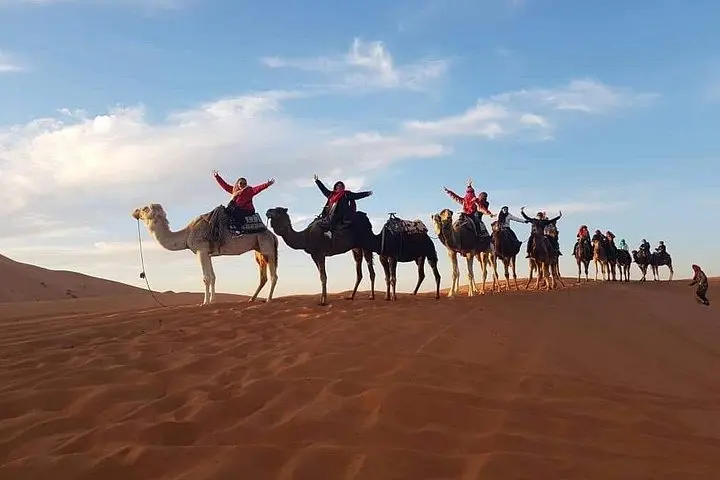
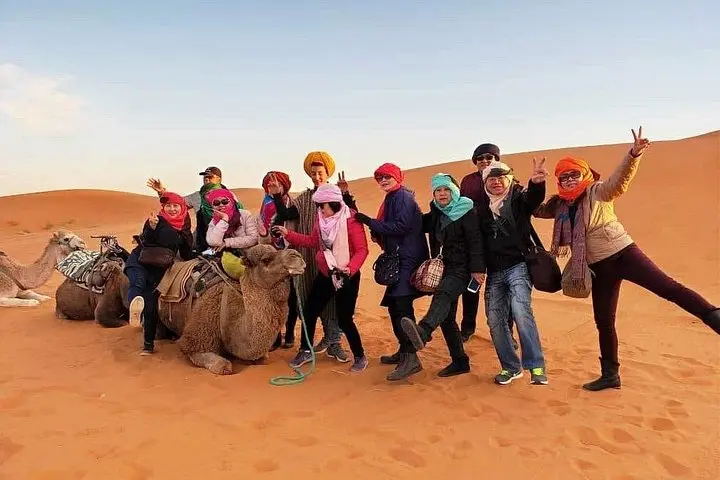
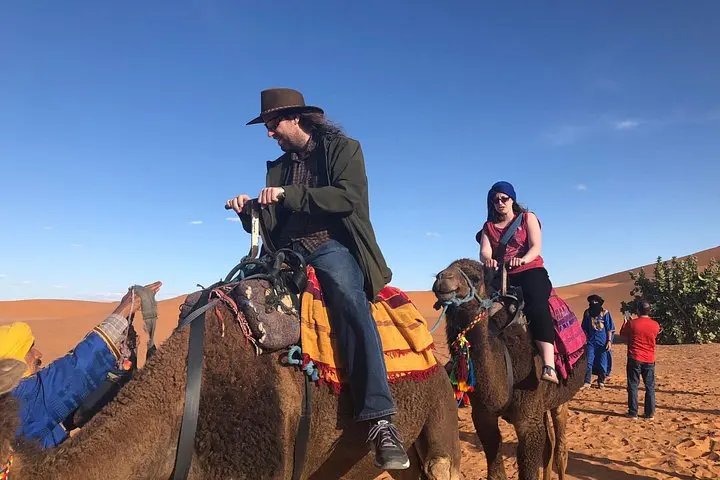
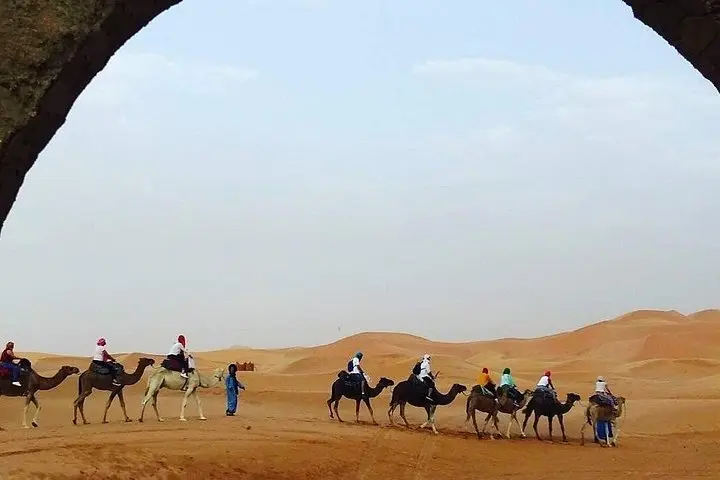
Practical edge: expect long drives broken by short stops—Ifrane’s alpine architecture, cedar forests with macaques, Midelt’s market, and the panoramic Ziz Valley. Camel treks to a private desert camp last roughly 30–45 minutes; sunset and sunrise over the dunes are the trip’s centerpieces. Nights bring sharp temperature shifts and clear stars; mornings bring sandboard runs and a brisk return by camel or jeep.
Plan for sun protection, layers, and at least 2 liters of water per day. If you’re short on time, this itinerary compresses the Sahara’s best moments into two active days—mobility and an appetite for long-road rhythm are the only real requirements.
Camel treks are typically 30–45 minutes—long enough to reach a dune crest for sunset before a short walk to the camp.
Dinner and breakfast are usually provided at the camp; bring snacks for the road or personal preferences not covered by the menu.
Most bookings stay in shared but comfortable Berber-style tents; luxury private tents are often available on request—confirm with the operator.
Children are commonly included, but camel rides and tent sleeping may be uncomfortable for those with serious back issues—consult the operator before booking.
Morocco Customized Tours operates guided outdoor trips and adventures with an emphasis on safety, stewardship, and memorable experiences.
Morning light strips the Azrou cedars of their long shadows as your driver slips out of Fes and heads toward the Middle Atlas. The road climbs past red-earth villages, then tilts into cedar stands where Barbary macaques watch travelers with casual curiosity.
Morning light strips the Azrou cedars of their long shadows as your driver slips out of Fes and heads toward the Middle Atlas. The road climbs past red-earth villages, then tilts into cedar stands where Barbary macaques watch travelers with casual curiosity.
By midday the landscape opens to ochre plateaus and, later, the ragged rise of the Anti-Atlas. Geology here reads like a slow-motion book: folded metamorphic ridges giving way to wind-sculpted sand. In Merzouga, Erg Chebbi’s dunes stand like living walls—each crest breathes, slides, and reforms under the Sahara’s persistent wind.
This tour threads history and culture into the terrain: caravan routes that once moved salt and dates, local Amazigh (Berber) communities that keep music and tea rituals alive, and small settlements like Khamlia where Gnawa songs mark ancestral ties to West Africa.
Practical edge: expect long drives broken by short stops—Ifrane’s alpine architecture, cedar forests with macaques, Midelt’s market, and the panoramic Ziz Valley. Camel treks to a private desert camp last roughly 30–45 minutes; sunset and sunrise over the dunes are the trip’s centerpieces. Nights bring sharp temperature shifts and clear stars; mornings bring sandboard runs and a brisk return by camel or jeep.
Plan for sun protection, layers, and at least 2 liters of water per day. If you’re short on time, this itinerary compresses the Sahara’s best moments into two active days—mobility and an appetite for long-road rhythm are the only real requirements.