THE ADVENTURE COLLECTIVE® · Independent discovery and booking for outdoor travel

Glide in tandem directly in front of the Matterhorn on a 30‑minute extended paragliding flight from Riffelberg. This June–September experience combines aerial perspective, professional instruction, and alpine thermals for a memorable view of Zermatt’s high peaks.
Glide in tandem directly in front of the Matterhorn on a 30‑minute extended paragliding flight from Riffelberg. This June–September experience combines aerial perspective, professional instruction, and alpine thermals for a memorable view of Zermatt’s high peaks.
You stand on the platform at Riffelberg while the Matterhorn fills the sky—its ridgelines carving the light. The air moves with intention here: thermals rising from sun-warmed slopes, a current that will lift you into a vantage few travelers earn. In a tandem harness with an instructor at your back, the valley exhales and you glide forward, the village of Zermatt shrinking beneath; glaciers and 4,000‑meter peaks frame a horizon that seems to push you higher.
Verified experiences and guided adventures in the surrounding area.
Operated by Matterhorn Paragliding · Zermatt, Valais
You stand on the platform at Riffelberg while the Matterhorn fills the sky—its ridgelines carving the light. The air moves with intention here: thermals rising from sun-warmed slopes, a current that will lift you into a vantage few travelers earn. In a tandem harness with an instructor at your back, the valley exhales and you glide forward, the village of Zermatt shrinking beneath; glaciers and 4,000‑meter peaks frame a horizon that seems to push you higher.
The high Alps around Zermatt have been a mountaineering stage since the 19th century, and modern flight here reads like the next chapter—flying in front of the Matterhorn connects the region’s climbing legacy with airborne exploration. Geologically, these peaks are heavily glaciated granites and gneisses, carved by ice and now animated by summer thermals. Culturally, Zermatt is car-free and focused on mountain stewardship; pilots operate within strict safety and environmental guidelines.
Practicalities matter: this extended tandem flight runs June–September when thermals are reliable. Meet at the bottom station of the Gornergrat railway by the clock at Zermatt station; pilots assist with the cogwheel train ticket to takeoff. The experience requires a moderate fitness level, a weight limit (~90 kg/200 lb) and a maximum age guideline; expect pre-flight briefing, provided helmet, gloves and a flight suit if cold.
Timing your flight for midday to late afternoon increases thermal potential but also exposure to stronger winds—listen to pilot briefings and pack layers. Photo and video packages are optional; bring a small camera with a secure strap if you want personal shots. Above all, be ready to let the mountain currents carry you: the Matterhorn will demand attention and reward calm focus.
Maximum weight is about 90 kg (200 lbs) and pilots typically set a maximum age guideline (around 65); check the operator’s exact limits when booking.
No—this is a tandem flight with an experienced pilot who handles all flying; participants need only follow briefings and assist with simple movements during launch and landing.
Photo and video packages are usually optional extras you can purchase during booking or from the pilot on the day.
Flights depend on thermals and wind; if cancelled for safety you’ll receive a full refund or rebooking—transportation costs for the cogwheel train are not typically reimbursed.
Matterhorn Paragliding operates guided outdoor trips and adventures with an emphasis on safety, stewardship, and memorable experiences.
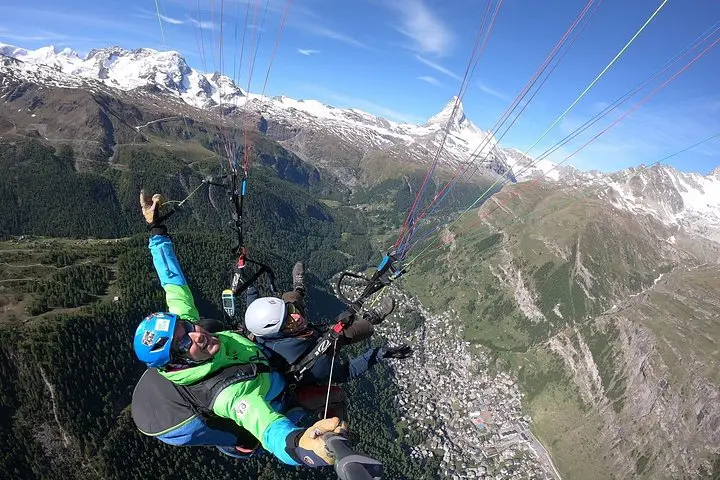
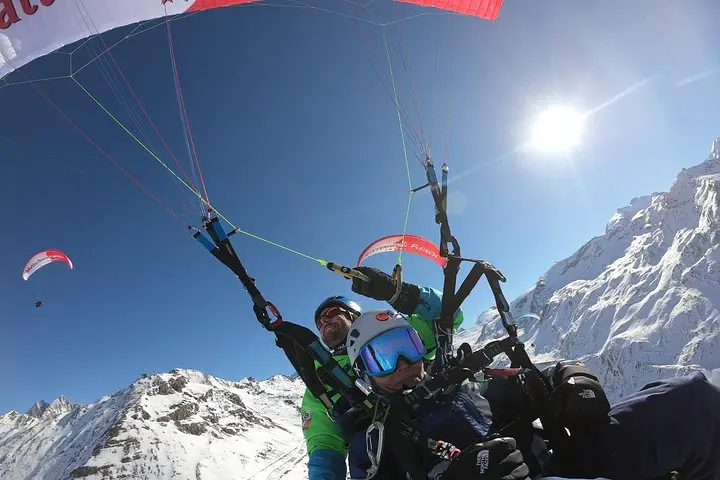
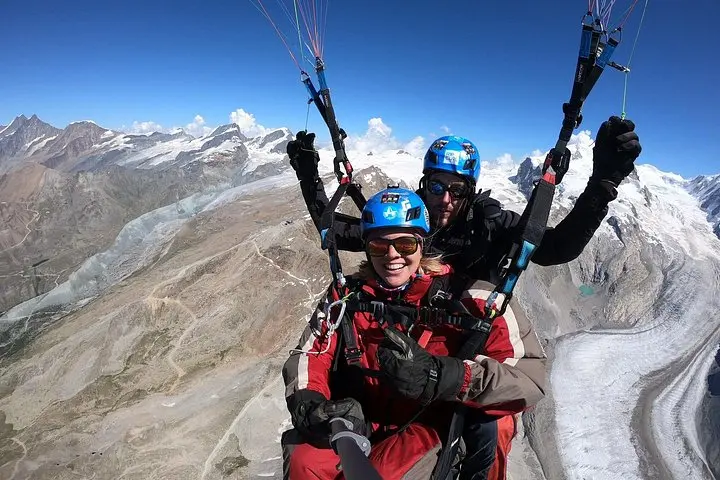
You stand on the platform at Riffelberg while the Matterhorn fills the sky—its ridgelines carving the light. The air moves with intention here: thermals rising from sun-warmed slopes, a current that will lift you into a vantage few travelers earn. In a tandem harness with an instructor at your back, the valley exhales and you glide forward, the village of Zermatt shrinking beneath; glaciers and 4,000‑meter peaks frame a horizon that seems to push you higher.
You stand on the platform at Riffelberg while the Matterhorn fills the sky—its ridgelines carving the light. The air moves with intention here: thermals rising from sun-warmed slopes, a current that will lift you into a vantage few travelers earn. In a tandem harness with an instructor at your back, the valley exhales and you glide forward, the village of Zermatt shrinking beneath; glaciers and 4,000‑meter peaks frame a horizon that seems to push you higher.
The high Alps around Zermatt have been a mountaineering stage since the 19th century, and modern flight here reads like the next chapter—flying in front of the Matterhorn connects the region’s climbing legacy with airborne exploration. Geologically, these peaks are heavily glaciated granites and gneisses, carved by ice and now animated by summer thermals. Culturally, Zermatt is car-free and focused on mountain stewardship; pilots operate within strict safety and environmental guidelines.
Practicalities matter: this extended tandem flight runs June–September when thermals are reliable. Meet at the bottom station of the Gornergrat railway by the clock at Zermatt station; pilots assist with the cogwheel train ticket to takeoff. The experience requires a moderate fitness level, a weight limit (~90 kg/200 lb) and a maximum age guideline; expect pre-flight briefing, provided helmet, gloves and a flight suit if cold.
Timing your flight for midday to late afternoon increases thermal potential but also exposure to stronger winds—listen to pilot briefings and pack layers. Photo and video packages are optional; bring a small camera with a secure strap if you want personal shots. Above all, be ready to let the mountain currents carry you: the Matterhorn will demand attention and reward calm focus.