THE ADVENTURE COLLECTIVE® · Independent discovery and booking for outdoor travel

Watch the Alaskan sky come alive on a Northern Lights photography tour near Fairbanks, complete with a warm geodesic dome, bonfire, and expert guidance. Whether you shoot or simply soak it in, this flexible outing chases clear skies for the best chance at dancing aurora.
Watch the Alaskan sky come alive on a Northern Lights photography tour near Fairbanks, complete with a warm geodesic dome, bonfire, and expert guidance. Whether you shoot or simply soak it in, this flexible outing chases clear skies for the best chance at dancing aurora.
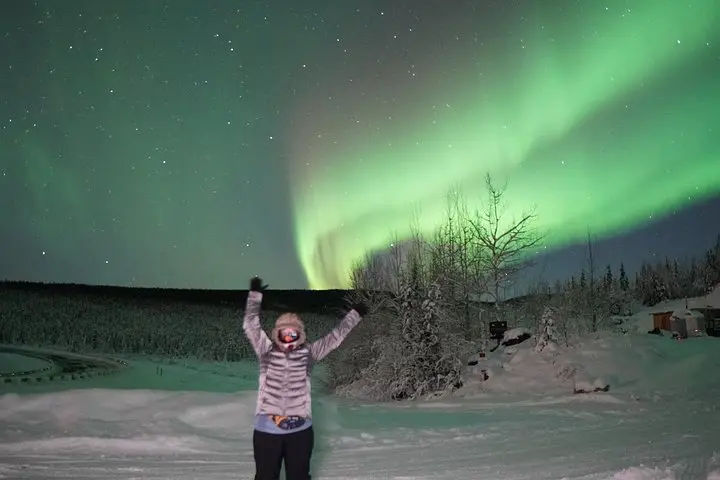
The subarctic night settles fast in Interior Alaska. Spruce trees draw long shadows across the snowpack and the sky starts to breathe—first with faint, milky bands, then with a green current that stirs and dares you to follow. On this Northern Lights outing just outside Fairbanks, the warmth of a geodesic dome and a crackling bonfire stand by like loyal companions while you step into the cold and watch the sky go to work.
Verified experiences and guided adventures in the surrounding area.
Operated by Howling Bay Kennel · Fairbanks, Alaska
The subarctic night settles fast in Interior Alaska. Spruce trees draw long shadows across the snowpack and the sky starts to breathe—first with faint, milky bands, then with a green current that stirs and dares you to follow. On this Northern Lights outing just outside Fairbanks, the warmth of a geodesic dome and a crackling bonfire stand by like loyal companions while you step into the cold and watch the sky go to work.
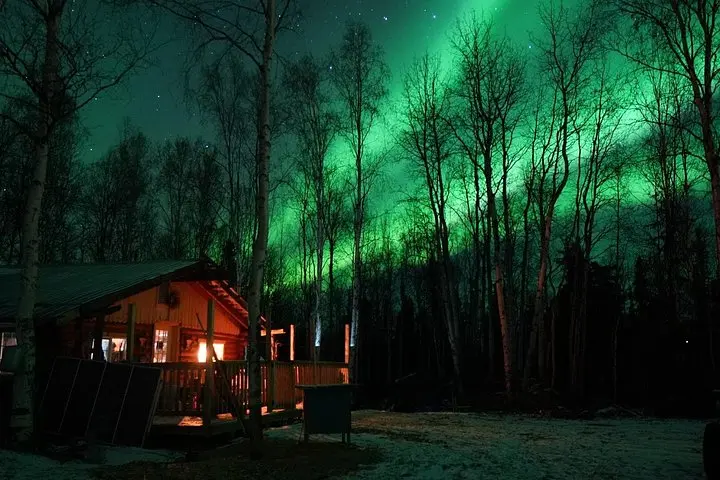
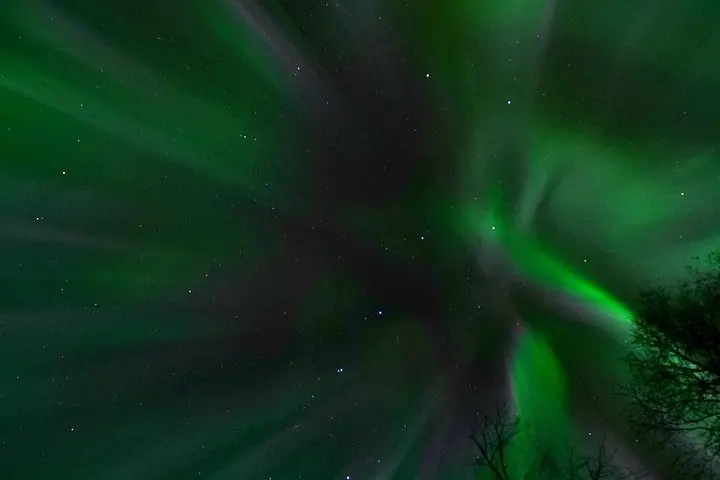
This is aurora country for a reason. Fairbanks sits beneath the Auroral Oval with cold, continental air that often clears by night, giving the lights a generous stage from late August through early April. Guides read the sky like a forecast at sea—tracking cloud cover, solar wind, and KP index—then pivot: linger at the off-grid homestead for foreground shots of the dome and snowy spruce, or climb into the van to chase openings near Murphy Dome or Cleary Summit. When the night sharpens and the particles flow, the aurora can surge without warning, pulling curtains across the horizon and rippling overhead.
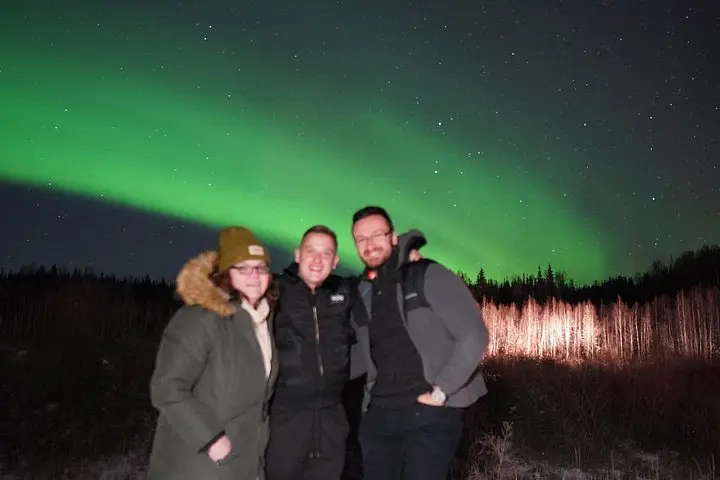
You don’t need to be a photographer to enjoy it, but if you are, this tour leans into the craft. Tripods get planted on firm snow. Lenses open wide. The guides offer straightforward settings—think f/1.8–2.8, ISO 800–3200, 5–15 seconds—and help dial in focus on a bright star. Phones in Night Mode can still earn a keeper, and if you’d rather stay present, the crew also captures portraits under the lights. Between bursts, the dome beckons with hot chocolate, coffee, tea, and s’mores. Fingers thaw, batteries warm, then you step back out when the sky stirs again.
There’s context to the glow above: a collision of charged particles from the sun with Earth’s upper atmosphere, bending along magnetic lines as if the planet is quietly orchestrating the show. Local lore adds its own texture; elders once told stories to explain the lights long before science named them. Tonight, both stories meet as the aurora sweeps, pauses, and returns.
Plan for 4–5 hours door-to-door with pickup in Fairbanks. Dress like it’s colder than the forecast: moisture-wicking base layers, an insulating midlayer, and a windproof parka. Insulated boots matter more than style. Bring extra batteries—they fade quickly in subzero temps—and avoid white lights that wash out your night vision. The road can be icy; the guides handle the driving.
If the lights go quiet, the quiet is part of the experience. Interior Alaska rewards patience. When the sky wakes again, it does so suddenly—and you’ll be ready.
Late August through early April offers dark nights; peak viewing typically runs from September to March when skies are clearest and nights are longest.
Guides monitor forecasts and may relocate to clearer areas; if conditions don’t cooperate, they prioritize comfort and photography coaching to make the most of the night.
No. DSLRs and mirrorless cameras perform best, but recent smartphones with Night Mode can capture aurora. Guides assist with settings and also take portraits under the lights.
Temperatures can drop to −20°F (−29°C) or lower. Wear wicking base layers, an insulating midlayer, a windproof parka, insulated boots, warm gloves, and a hat or balaclava.
Yes, pickup is available from most Fairbanks city locations with good access; confirm your hotel at booking.
Expect limited facilities. The warm dome provides shelter; plan bathroom breaks before pickup and between viewing stops.
Howling Bay Kennel operates guided outdoor trips and adventures with an emphasis on safety, stewardship, and memorable experiences.
The subarctic night settles fast in Interior Alaska. Spruce trees draw long shadows across the snowpack and the sky starts to breathe—first with faint, milky bands, then with a green current that stirs and dares you to follow. On this Northern Lights outing just outside Fairbanks, the warmth of a geodesic dome and a crackling bonfire stand by like loyal companions while you step into the cold and watch the sky go to work.
The subarctic night settles fast in Interior Alaska. Spruce trees draw long shadows across the snowpack and the sky starts to breathe—first with faint, milky bands, then with a green current that stirs and dares you to follow. On this Northern Lights outing just outside Fairbanks, the warmth of a geodesic dome and a crackling bonfire stand by like loyal companions while you step into the cold and watch the sky go to work.
This is aurora country for a reason. Fairbanks sits beneath the Auroral Oval with cold, continental air that often clears by night, giving the lights a generous stage from late August through early April. Guides read the sky like a forecast at sea—tracking cloud cover, solar wind, and KP index—then pivot: linger at the off-grid homestead for foreground shots of the dome and snowy spruce, or climb into the van to chase openings near Murphy Dome or Cleary Summit. When the night sharpens and the particles flow, the aurora can surge without warning, pulling curtains across the horizon and rippling overhead.
You don’t need to be a photographer to enjoy it, but if you are, this tour leans into the craft. Tripods get planted on firm snow. Lenses open wide. The guides offer straightforward settings—think f/1.8–2.8, ISO 800–3200, 5–15 seconds—and help dial in focus on a bright star. Phones in Night Mode can still earn a keeper, and if you’d rather stay present, the crew also captures portraits under the lights. Between bursts, the dome beckons with hot chocolate, coffee, tea, and s’mores. Fingers thaw, batteries warm, then you step back out when the sky stirs again.
There’s context to the glow above: a collision of charged particles from the sun with Earth’s upper atmosphere, bending along magnetic lines as if the planet is quietly orchestrating the show. Local lore adds its own texture; elders once told stories to explain the lights long before science named them. Tonight, both stories meet as the aurora sweeps, pauses, and returns.
Plan for 4–5 hours door-to-door with pickup in Fairbanks. Dress like it’s colder than the forecast: moisture-wicking base layers, an insulating midlayer, and a windproof parka. Insulated boots matter more than style. Bring extra batteries—they fade quickly in subzero temps—and avoid white lights that wash out your night vision. The road can be icy; the guides handle the driving.
If the lights go quiet, the quiet is part of the experience. Interior Alaska rewards patience. When the sky wakes again, it does so suddenly—and you’ll be ready.