THE ADVENTURE COLLECTIVE® · Independent discovery and booking for outdoor travel

Glide through the midnight mangroves of Laguna Grande and watch the water light up beneath your paddle. This guided night kayak from San Juan pairs hands-on orientation with local conservation insight for an unforgettable, low-light adventure.
Glide through the midnight mangroves of Laguna Grande and watch the water light up beneath your paddle. This guided night kayak from San Juan pairs hands-on orientation with local conservation insight for an unforgettable, low-light adventure.
Paddle silence breaks into a slow phosphorescent wake as your kayak threads the black ribbon of water through mangrove roots. Stars hang low; the mangrove canopy leans in like a curious audience. You feel the water pulse under your paddle—each stroke releases a brief blue-green flare where microscopic life meets motion.
Verified experiences and guided adventures in the surrounding area.
Operated by Puerto Rico Access Eco Tours · Fajardo, Puerto Rico
Paddle silence breaks into a slow phosphorescent wake as your kayak threads the black ribbon of water through mangrove roots. Stars hang low; the mangrove canopy leans in like a curious audience. You feel the water pulse under your paddle—each stroke releases a brief blue-green flare where microscopic life meets motion.
Laguna Grande near Fajardo is one of Puerto Rico's best-known bio-bays, shaped by a shallow lagoon, dense red mangroves and a narrow inlet to the Atlantic. The bay's glow comes from dinoflagellates—single-celled organisms that light up with disturbance—a phenomenon long noted by local coastal communities and now central to conservation efforts.
The surrounding coastline reflects volcanic and coral-building processes: bedrock shelves, sand bars and mangrove peat that slow tidal exchange and help sustain the microbes. Culturally, the area links modern eco-tourism to fishing villages and the Las Cabezas de San Juan reserve to the west, where a historic lighthouse keeps watch over shifting currents.
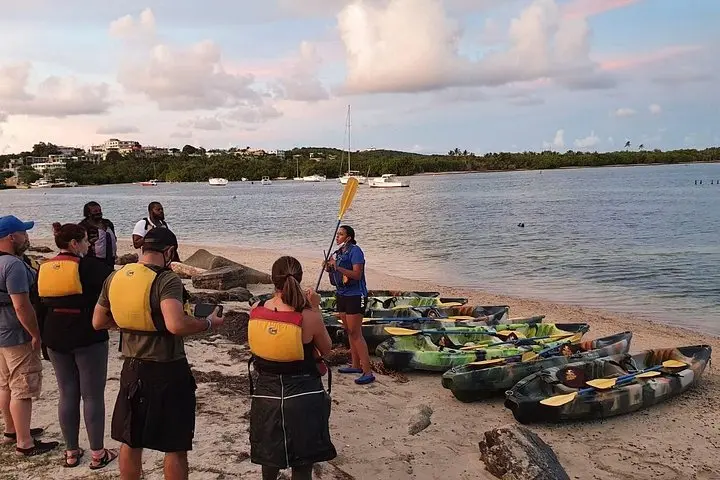
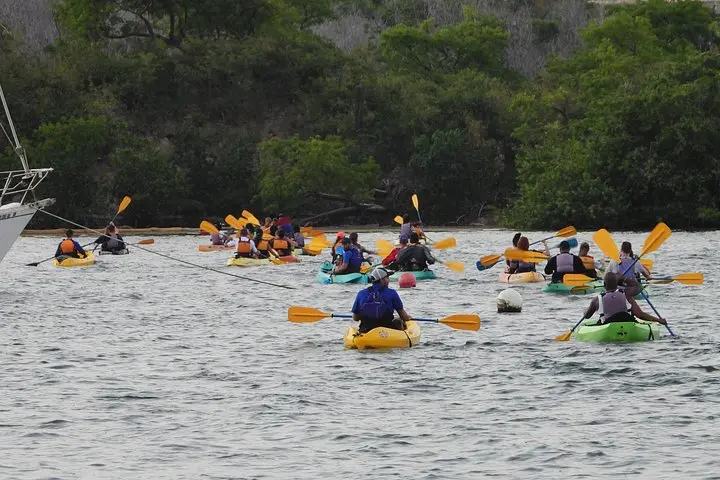
On a guided night kayak tour you get knowledgeable commentary, tandem sit-on-top kayaks, and USCG life jackets. Expect 90–120 minutes on the water, with brief orientation and safety checks. Light from phones and headlamps will wash out the effect—guides enforce low-light rules and ask you not to touch the water to protect the organisms. Dress for waist-level wetting, bring insect repellent, and plan arrival time to handle limited parking or pickup windows.
This is a sensory, low-impact adventure: move slowly, breathe in the salt and mangrove scents, and let the bay—quiet, reactive, alive—do the rest.
Total booking time is about 2 hours with roughly 60–90 minutes paddling after orientation and launch.
No advanced skills are needed—guides provide basic instruction and tandem kayaks; you should be comfortable paddling and able to swim.
Visibility depends on moon phase, tide, recent rain, water temperature and nutrient levels—guides cannot guarantee intensity but choose nights to maximize viewing.
Yes—children as young as 6–7 may join depending on operator policies, but all participants must meet weight limits, wear life jackets and be able to swim.
Puerto Rico Access Eco Tours operates guided outdoor trips and adventures with an emphasis on safety, stewardship, and memorable experiences.
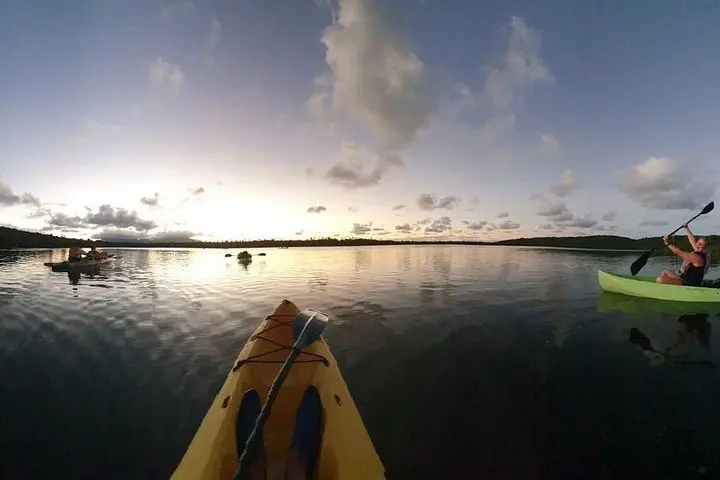
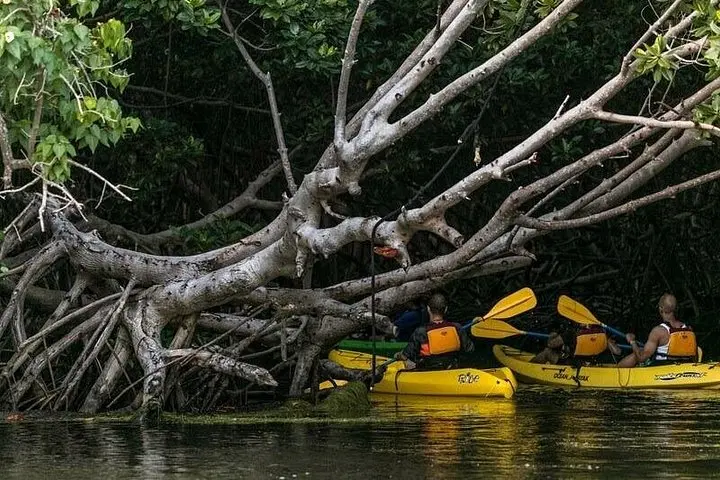
Paddle silence breaks into a slow phosphorescent wake as your kayak threads the black ribbon of water through mangrove roots. Stars hang low; the mangrove canopy leans in like a curious audience. You feel the water pulse under your paddle—each stroke releases a brief blue-green flare where microscopic life meets motion.
Paddle silence breaks into a slow phosphorescent wake as your kayak threads the black ribbon of water through mangrove roots. Stars hang low; the mangrove canopy leans in like a curious audience. You feel the water pulse under your paddle—each stroke releases a brief blue-green flare where microscopic life meets motion.
Laguna Grande near Fajardo is one of Puerto Rico's best-known bio-bays, shaped by a shallow lagoon, dense red mangroves and a narrow inlet to the Atlantic. The bay's glow comes from dinoflagellates—single-celled organisms that light up with disturbance—a phenomenon long noted by local coastal communities and now central to conservation efforts.
The surrounding coastline reflects volcanic and coral-building processes: bedrock shelves, sand bars and mangrove peat that slow tidal exchange and help sustain the microbes. Culturally, the area links modern eco-tourism to fishing villages and the Las Cabezas de San Juan reserve to the west, where a historic lighthouse keeps watch over shifting currents.
On a guided night kayak tour you get knowledgeable commentary, tandem sit-on-top kayaks, and USCG life jackets. Expect 90–120 minutes on the water, with brief orientation and safety checks. Light from phones and headlamps will wash out the effect—guides enforce low-light rules and ask you not to touch the water to protect the organisms. Dress for waist-level wetting, bring insect repellent, and plan arrival time to handle limited parking or pickup windows.
This is a sensory, low-impact adventure: move slowly, breathe in the salt and mangrove scents, and let the bay—quiet, reactive, alive—do the rest.