THE ADVENTURE COLLECTIVE® · Independent discovery and booking for outdoor travel

Paddle through mangrove corridors to reach Laguna Grande’s famous bioluminescent waters. This guided night kayak tour pairs a short safety lesson with a chance to see dinoflagellates light up with every stroke.
Paddle through mangrove corridors to reach Laguna Grande’s famous bioluminescent waters. This guided night kayak tour pairs a short safety lesson with a chance to see dinoflagellates light up with every stroke.
The paddle slips from the dock into a black ribbon of water, and the mangroves close in like a dark, breathing corridor. Fingers skim the surface and each stroke lights the bay in tiny sparks; the water seems to remember every motion and answers with a faint blue-green glow. Guides move quietly, narrating the ecology as the horizon dims and the mangrove roots take on shape.
Verified experiences and guided adventures in the surrounding area.
Operated by Puerto Rico Access Eco Tours · Fajardo, Puerto Rico
The paddle slips from the dock into a black ribbon of water, and the mangroves close in like a dark, breathing corridor. Fingers skim the surface and each stroke lights the bay in tiny sparks; the water seems to remember every motion and answers with a faint blue-green glow. Guides move quietly, narrating the ecology as the horizon dims and the mangrove roots take on shape.
Laguna Grande is one of Puerto Rico’s few bioluminescent bays, where dinoflagellates emit light when disturbed. The bay sits in a shallow lagoon behind a mangrove forest, shaped by carbonate sands and tropical storm deposits over millennia. The area has long held value for local fishing communities and today is managed with conservation controls to protect the fragile microorganisms and mangrove habitat.
Expect a short safety briefing and a 101 kayaking lesson before you push off in a two-person kayak. The route winds roughly a mile through sheltered channels to the open water of the bay; currents are mild but paddling at night requires focus. Light use is restricted—avoid flash photography and bright headlamps to preserve the experience.
Practical tips: wear quick-dry clothing and water shoes, secure electronics in waterproof cases, and plan for mosquitoes on shore. Tours usually provide life jackets and basic instruction, but you should be comfortable in water and able to follow guide commands. The best viewing follows a moonless night and calm weather; visibility can drop after heavy rain. The glow is fragile—observe without touching the organisms or polluting the water, and leave the mangroves as you found them.
Visibility depends on weather, moon phase, and freshwater runoff—guides operate on conditions but cannot guarantee intensity; the best displays happen on calm, moonless nights.
Yes—minimum age is typically 6 years; children must be supervised and meet the weight/safety requirements, and life jackets are provided.
No—this tour is not recommended for pregnant travelers due to the demands of night paddling and safety protocols.
No—operators provide a 101 kayaking lesson and basic instruction, but participants must be able to swim and follow guide directions.
Puerto Rico Access Eco Tours operates guided outdoor trips and adventures with an emphasis on safety, stewardship, and memorable experiences.
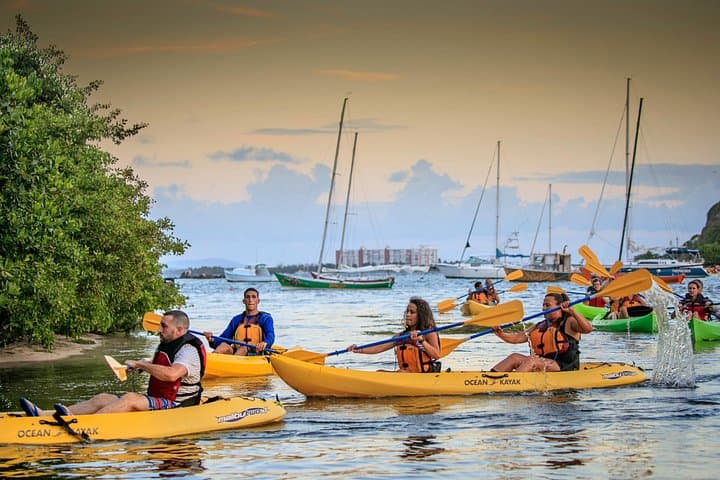


The paddle slips from the dock into a black ribbon of water, and the mangroves close in like a dark, breathing corridor. Fingers skim the surface and each stroke lights the bay in tiny sparks; the water seems to remember every motion and answers with a faint blue-green glow. Guides move quietly, narrating the ecology as the horizon dims and the mangrove roots take on shape.
The paddle slips from the dock into a black ribbon of water, and the mangroves close in like a dark, breathing corridor. Fingers skim the surface and each stroke lights the bay in tiny sparks; the water seems to remember every motion and answers with a faint blue-green glow. Guides move quietly, narrating the ecology as the horizon dims and the mangrove roots take on shape.
Laguna Grande is one of Puerto Rico’s few bioluminescent bays, where dinoflagellates emit light when disturbed. The bay sits in a shallow lagoon behind a mangrove forest, shaped by carbonate sands and tropical storm deposits over millennia. The area has long held value for local fishing communities and today is managed with conservation controls to protect the fragile microorganisms and mangrove habitat.
Expect a short safety briefing and a 101 kayaking lesson before you push off in a two-person kayak. The route winds roughly a mile through sheltered channels to the open water of the bay; currents are mild but paddling at night requires focus. Light use is restricted—avoid flash photography and bright headlamps to preserve the experience.
Practical tips: wear quick-dry clothing and water shoes, secure electronics in waterproof cases, and plan for mosquitoes on shore. Tours usually provide life jackets and basic instruction, but you should be comfortable in water and able to follow guide commands. The best viewing follows a moonless night and calm weather; visibility can drop after heavy rain. The glow is fragile—observe without touching the organisms or polluting the water, and leave the mangroves as you found them.