THE ADVENTURE COLLECTIVE® · Independent discovery and booking for outdoor travel

Bring Greek myths to life on a kid-friendly, 90‑minute guided tour of the Palace of Knossos. Hands-on storytelling, simple archaeology activities, and short walks make this a great family introduction to Minoan history.
Bring Greek myths to life on a kid-friendly, 90‑minute guided tour of the Palace of Knossos. Hands-on storytelling, simple archaeology activities, and short walks make this a great family introduction to Minoan history.
You step out of the dusty Aegean light into a courtyard where columns still hold the ghosts of voices; children press palms to cool stone as a guide begins a tale of kings and labyrinths. The Palace of Knossos opens as a stage — rooms, rampways and fresco fragments invite play and questions rather than silent admiration.
Verified experiences and guided adventures in the surrounding area.
Operated by KnossosGuides · Heraklion, Crete
You step out of the dusty Aegean light into a courtyard where columns still hold the ghosts of voices; children press palms to cool stone as a guide begins a tale of kings and labyrinths. The Palace of Knossos opens as a stage — rooms, rampways and fresco fragments invite play and questions rather than silent admiration.
Knossos was the ceremonial and political center of Minoan Crete from roughly 1900–1375 BCE. Built atop limestone with seas of red clay and gypsum accents, the site shows sophisticated drainage, multi-level rooms and vivid wall paintings that recall a maritime culture with strong ritual life. The myths tied to Theseus, King Minos and the Minotaur grew from this place’s complex layout and long history of ritual and trade.
Local culture still orbits these ruins: Heraklion’s markets trade herbs and honey that ancient Cretans knew well, and nearby villages keep traditional crafts alive. For families, the site becomes a hands-on lesson in how archaeology reconstructs lives from pottery sherds and fresco fragments.
Practical guidance: tours run about 90 minutes with short, manageable walks over uneven surfaces; wear sturdy shoes, bring water and sun protection. Arrive early to avoid heat and crowds and to let kids run through the open spaces between stops. Respect cordoned areas — the site's preservation depends on on-foot discipline. Expect a mix of shade under olive trees and exposed sun on the upper terraces. The experience rewards curiosity: ask about fresco pigments, drainage shafts and the real logistics behind the Labyrinth legend.
Yes—this family tour is designed for mixed ages; infants sit on laps and activities are adapted for kids, though children must be supervised.
Yes, admission to the Palace of Knossos is included with the tour as stated in the itinerary.
Strollers are impractical on some uneven paths and steps; a child carrier is a better option for infants.
The site has uneven terrain and steps; not recommended for those with serious spinal or mobility issues—check with the operator for specific accommodations.
KnossosGuides operates guided outdoor trips and adventures with an emphasis on safety, stewardship, and memorable experiences.
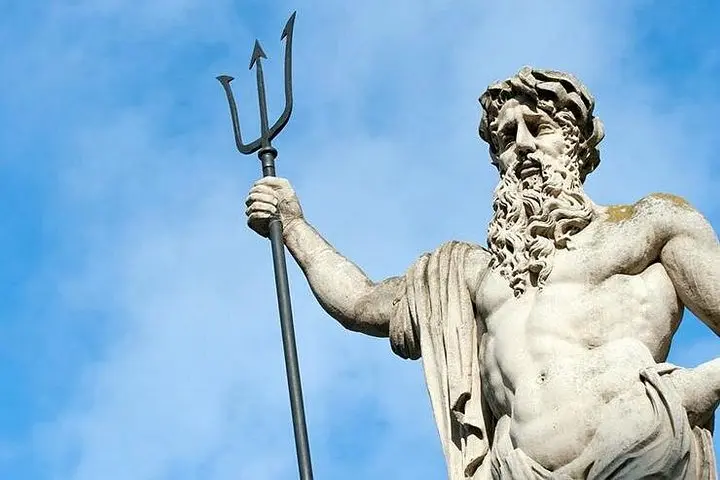
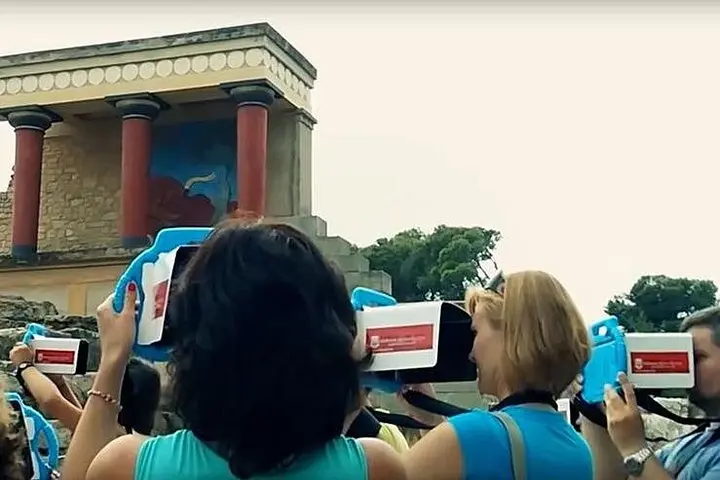
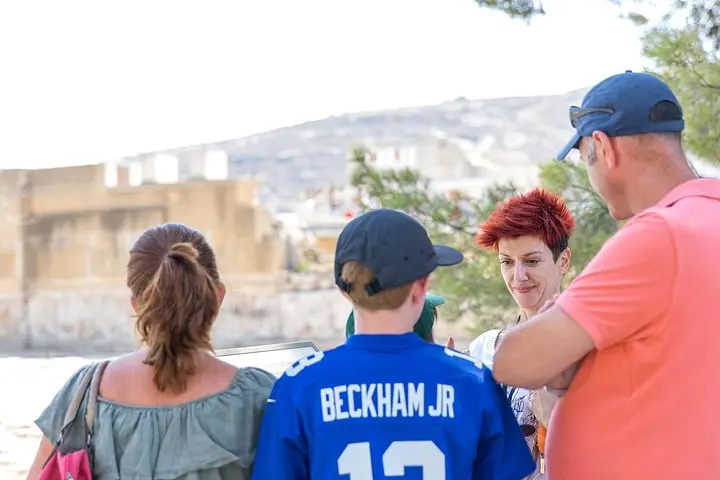
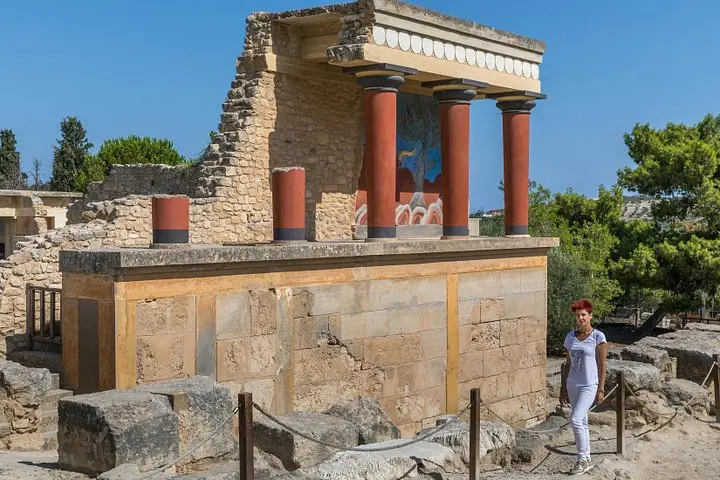
You step out of the dusty Aegean light into a courtyard where columns still hold the ghosts of voices; children press palms to cool stone as a guide begins a tale of kings and labyrinths. The Palace of Knossos opens as a stage — rooms, rampways and fresco fragments invite play and questions rather than silent admiration.
You step out of the dusty Aegean light into a courtyard where columns still hold the ghosts of voices; children press palms to cool stone as a guide begins a tale of kings and labyrinths. The Palace of Knossos opens as a stage — rooms, rampways and fresco fragments invite play and questions rather than silent admiration.
Knossos was the ceremonial and political center of Minoan Crete from roughly 1900–1375 BCE. Built atop limestone with seas of red clay and gypsum accents, the site shows sophisticated drainage, multi-level rooms and vivid wall paintings that recall a maritime culture with strong ritual life. The myths tied to Theseus, King Minos and the Minotaur grew from this place’s complex layout and long history of ritual and trade.
Local culture still orbits these ruins: Heraklion’s markets trade herbs and honey that ancient Cretans knew well, and nearby villages keep traditional crafts alive. For families, the site becomes a hands-on lesson in how archaeology reconstructs lives from pottery sherds and fresco fragments.
Practical guidance: tours run about 90 minutes with short, manageable walks over uneven surfaces; wear sturdy shoes, bring water and sun protection. Arrive early to avoid heat and crowds and to let kids run through the open spaces between stops. Respect cordoned areas — the site's preservation depends on on-foot discipline. Expect a mix of shade under olive trees and exposed sun on the upper terraces. The experience rewards curiosity: ask about fresco pigments, drainage shafts and the real logistics behind the Labyrinth legend.