THE ADVENTURE COLLECTIVE® · Independent discovery and booking for outdoor travel

A full-day excursion from Abuja offers close-up access to Farin Ruwa, Nigeria's second-highest waterfall. Expect a bumpy bike approach, three stream crossings, a short walk to the viewpoint, and dramatic plunges of water best seen after rains.
A full-day excursion from Abuja offers close-up access to Farin Ruwa, Nigeria's second-highest waterfall. Expect a bumpy bike approach, three stream crossings, a short walk to the viewpoint, and dramatic plunges of water best seen after rains.
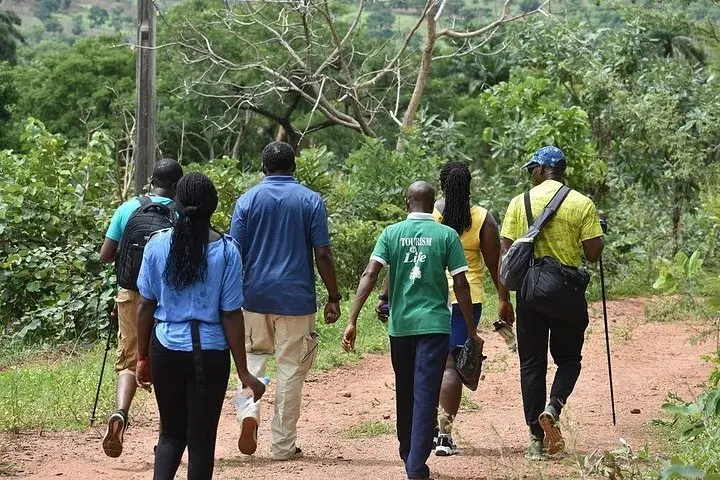
The road out of Abuja loosens its grip on traffic and tightens around red earth as the vehicle hums toward Nasarawa's high ridge country. Trees thin, millet fields open like pages, and by midmorning the engine falls silent at Makai village: this is as far as cars will go. From here a battered bike waits, and the real approach begins—30 minutes of rutted track, three stream crossings that dare the rider to move faster, and a rhythm that pulls you closer to the sound before you see it.
Verified experiences and guided adventures in the surrounding area.
Operated by Motley Travels · Wamba, Nasarawa State
The road out of Abuja loosens its grip on traffic and tightens around red earth as the vehicle hums toward Nasarawa's high ridge country. Trees thin, millet fields open like pages, and by midmorning the engine falls silent at Makai village: this is as far as cars will go. From here a battered bike waits, and the real approach begins—30 minutes of rutted track, three stream crossings that dare the rider to move faster, and a rhythm that pulls you closer to the sound before you see it.
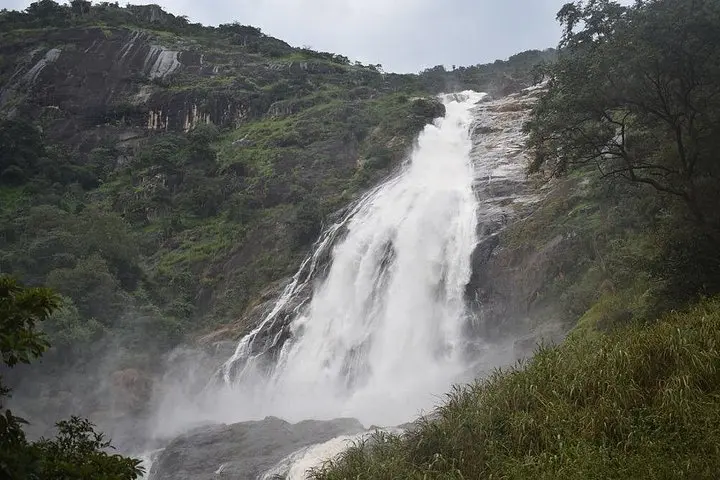
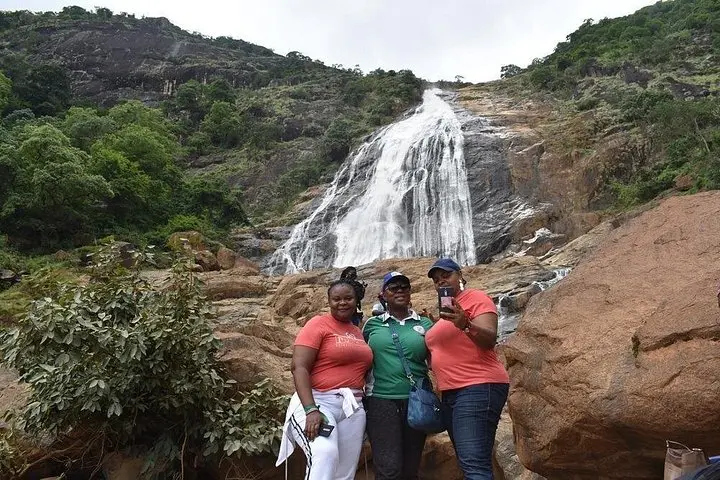
Farin Ruwa is a geological blunt force: water dropping over a high escarpment that slices across this portion of central Nigeria. Locals in the Wamba area have long read its presence into their stories—the fall's spray called “white water” in Hausa—an elemental marker between plateau and plain. The cliff is volcanic in origin; over millennia rivers exploited seams in the rock, carving the vertical sheet that now sends a steady column of water into the ravine below. On arrival you'll leave the bike behind and walk roughly 150 meters from the gate, where a cool breeze carries the mist and the first full view of the fall reveals itself.
Cultural notes are part of the visit: communities on the approach are open and used to visitors, trading groundnuts and snacks, and greeting with the easy courtesy of places that expect travelers to be moved by what they find. Guides are local, and their knowledge extends beyond directions—about which seasonal streams run, where the spray forms rainbows mid-afternoon, and how to step around the slick basalt safely.
Practically, the day is long but straightforward. The operator provides hotel pickup in Abuja and an air-conditioned vehicle for the road leg, bottled water, lunch, and a guide. Expect a full-day outing—roughly 11 to 24 hours depending on pickup point and traffic—and bring a moderate level of fitness: the bike ride and short hike are uneven and occasionally steep. Footwear with grip is mandatory; parts of the route are wet and muddy.
Timing matters. Visit early to beat the midday heat and to see clearer air for photos; in the wet season the falls are fullest, but the approach is muddier and stream crossings deeper. The dry season softens the access but reduces the curtain of water.
Leave no trace: local infrastructure is minimal and the area benefits when visitors carry out trash and respect community spaces. For travelers willing to swap a city day for rough roads and a thunderous descent of water, Farin Ruwa delivers: not only height and spray, but a close-up lesson in geology, a window into rural life, and a day that ends with the simple satisfaction of having chased a waterfall and found it greater than the picture.
The rough-track bike leg is about 30 minutes and includes three small stream crossings; vehicles only reach Makai.
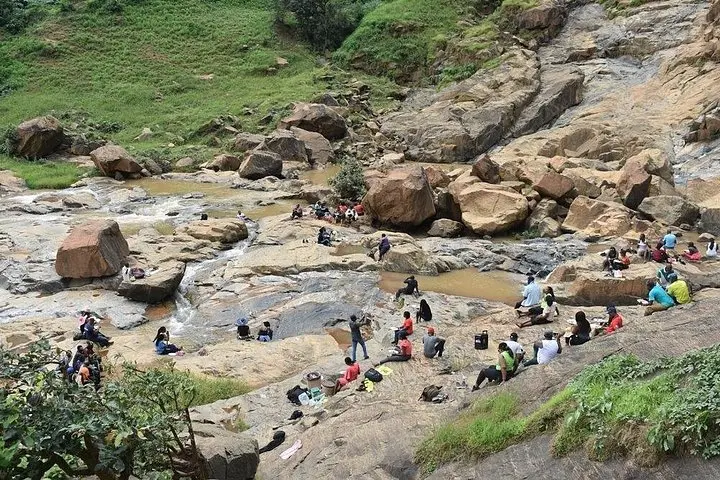
Swimming is sometimes possible in shallower pools but depends on recent rainfall; check with your guide—strong currents can be present after heavy rain.
Children can attend but the ride and short hike require supervision; operators recommend moderate fitness and caution on slippery sections.
Yes—lunch and bottled water are included in the tour package.
The site is accessible year-round, but the wet season makes the approach muddier and stream crossings deeper—expect slower travel then.
Local guides included with the tour handle access and logistics; there’s typically no formal permit but entry is managed at the site gate.
Motley Travels operates guided outdoor trips and adventures with an emphasis on safety, stewardship, and memorable experiences.
The road out of Abuja loosens its grip on traffic and tightens around red earth as the vehicle hums toward Nasarawa's high ridge country. Trees thin, millet fields open like pages, and by midmorning the engine falls silent at Makai village: this is as far as cars will go. From here a battered bike waits, and the real approach begins—30 minutes of rutted track, three stream crossings that dare the rider to move faster, and a rhythm that pulls you closer to the sound before you see it.
The road out of Abuja loosens its grip on traffic and tightens around red earth as the vehicle hums toward Nasarawa's high ridge country. Trees thin, millet fields open like pages, and by midmorning the engine falls silent at Makai village: this is as far as cars will go. From here a battered bike waits, and the real approach begins—30 minutes of rutted track, three stream crossings that dare the rider to move faster, and a rhythm that pulls you closer to the sound before you see it.
Farin Ruwa is a geological blunt force: water dropping over a high escarpment that slices across this portion of central Nigeria. Locals in the Wamba area have long read its presence into their stories—the fall's spray called “white water” in Hausa—an elemental marker between plateau and plain. The cliff is volcanic in origin; over millennia rivers exploited seams in the rock, carving the vertical sheet that now sends a steady column of water into the ravine below. On arrival you'll leave the bike behind and walk roughly 150 meters from the gate, where a cool breeze carries the mist and the first full view of the fall reveals itself.
Cultural notes are part of the visit: communities on the approach are open and used to visitors, trading groundnuts and snacks, and greeting with the easy courtesy of places that expect travelers to be moved by what they find. Guides are local, and their knowledge extends beyond directions—about which seasonal streams run, where the spray forms rainbows mid-afternoon, and how to step around the slick basalt safely.
Practically, the day is long but straightforward. The operator provides hotel pickup in Abuja and an air-conditioned vehicle for the road leg, bottled water, lunch, and a guide. Expect a full-day outing—roughly 11 to 24 hours depending on pickup point and traffic—and bring a moderate level of fitness: the bike ride and short hike are uneven and occasionally steep. Footwear with grip is mandatory; parts of the route are wet and muddy.
Timing matters. Visit early to beat the midday heat and to see clearer air for photos; in the wet season the falls are fullest, but the approach is muddier and stream crossings deeper. The dry season softens the access but reduces the curtain of water.
Leave no trace: local infrastructure is minimal and the area benefits when visitors carry out trash and respect community spaces. For travelers willing to swap a city day for rough roads and a thunderous descent of water, Farin Ruwa delivers: not only height and spray, but a close-up lesson in geology, a window into rural life, and a day that ends with the simple satisfaction of having chased a waterfall and found it greater than the picture.