THE ADVENTURE COLLECTIVE® · Independent discovery and booking for outdoor travel

Spend 2½ hours on a working Gran Canaria farm learning milking, feeding animals and sampling local produce. Family-friendly and largely accessible, this hands-on visit pairs practical skill with insights into island agriculture.
Spend 2½ hours on a working Gran Canaria farm learning milking, feeding animals and sampling local produce. Family-friendly and largely accessible, this hands-on visit pairs practical skill with insights into island agriculture.
You step through a low gate onto warm, loamy ground and the island’s light falls hard on a patchwork of pens, greenhouse rows and terraced beds. Rabbits slide into clover, donkeys lift their heads like old neighbors, and chickens patrol the dust — the kind of small-scale farm life that still runs on routine and rhythm.
Verified experiences and guided adventures in the surrounding area.
Operated by La Jaira de Ana · Las Palmas de Gran Canaria, Canary Islands
You step through a low gate onto warm, loamy ground and the island’s light falls hard on a patchwork of pens, greenhouse rows and terraced beds. Rabbits slide into clover, donkeys lift their heads like old neighbors, and chickens patrol the dust — the kind of small-scale farm life that still runs on routine and rhythm.
Gran Canaria’s farms sit on volcanic soils carved by ravines and centuries of stone terraces. This two-and-a-half-hour visit is a primer in that human-land relationship: traditional milking, feeding routines, and a chance to handle animals used to people. The farm combines Canary Island agricultural practices — small vegetable plots and greenhouse cultivation — with a family-friendly demonstration of animal care.
Expect to enter pens, feed goats, try hand-milking and tour the greenhouse and vegetable garden. Guides explain daily chores, seasonal planting and local products; tastings often include fresh cheese, honey or produce when available. The experience is intentionally low-impact and accessible — suitable for children and older adults, with some wheelchair-friendly paths.
Practical notes: mornings are best for cooler temperatures and active animals; allow the full 2½ hours to move unhurriedly through demonstrations and tastings. Wear closed-toe shoes for uneven ground, bring water and sun protection, and be ready to get gently hands-on. Photography is welcome but follow staff guidance around animals.
For visitors staying in Las Palmas or coastal resorts, the farm is an easy half-day outing that connects island geology, rural culture and tactile learning — a quiet, practical way to understand where local food and livestock fit into Gran Canaria life.
Yes — the activity is family-friendly and designed for interaction; children should be supervised and follow staff instructions.
The farm reports wheelchair-accessible paths for much of the visit, though some areas (pens or terraces) may be uneven; contact the operator for specific accessibility needs.
Guides often offer samples of local products like cheese or honey when available, but offerings can vary by season and stock.
Most travelers reach rural farms by car or booked transfer; check the operator’s meeting point and public transport options in advance.
La Jaira de Ana operates guided outdoor trips and adventures with an emphasis on safety, stewardship, and memorable experiences.

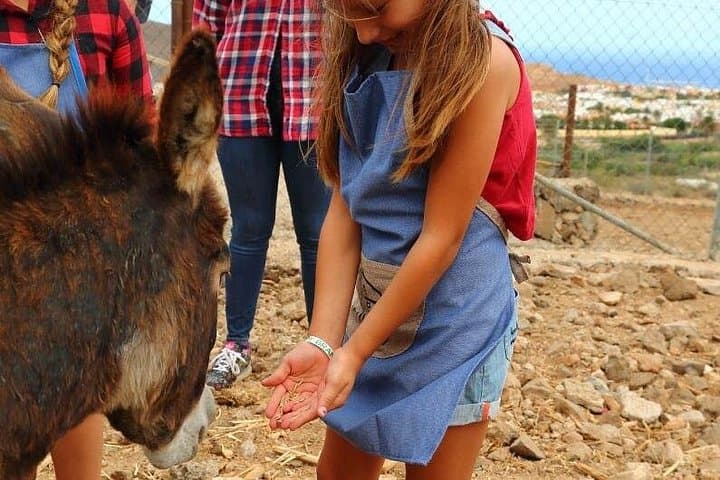


You step through a low gate onto warm, loamy ground and the island’s light falls hard on a patchwork of pens, greenhouse rows and terraced beds. Rabbits slide into clover, donkeys lift their heads like old neighbors, and chickens patrol the dust — the kind of small-scale farm life that still runs on routine and rhythm.
You step through a low gate onto warm, loamy ground and the island’s light falls hard on a patchwork of pens, greenhouse rows and terraced beds. Rabbits slide into clover, donkeys lift their heads like old neighbors, and chickens patrol the dust — the kind of small-scale farm life that still runs on routine and rhythm.
Gran Canaria’s farms sit on volcanic soils carved by ravines and centuries of stone terraces. This two-and-a-half-hour visit is a primer in that human-land relationship: traditional milking, feeding routines, and a chance to handle animals used to people. The farm combines Canary Island agricultural practices — small vegetable plots and greenhouse cultivation — with a family-friendly demonstration of animal care.
Expect to enter pens, feed goats, try hand-milking and tour the greenhouse and vegetable garden. Guides explain daily chores, seasonal planting and local products; tastings often include fresh cheese, honey or produce when available. The experience is intentionally low-impact and accessible — suitable for children and older adults, with some wheelchair-friendly paths.
Practical notes: mornings are best for cooler temperatures and active animals; allow the full 2½ hours to move unhurriedly through demonstrations and tastings. Wear closed-toe shoes for uneven ground, bring water and sun protection, and be ready to get gently hands-on. Photography is welcome but follow staff guidance around animals.
For visitors staying in Las Palmas or coastal resorts, the farm is an easy half-day outing that connects island geology, rural culture and tactile learning — a quiet, practical way to understand where local food and livestock fit into Gran Canaria life.