THE ADVENTURE COLLECTIVE® · Independent discovery and booking for outdoor travel

Swap Cairo crowds for desert nights and fossil fields on this two-day Fayoum camping tour. Hike across dunes, sandboard at Magic Lake, and explore Wadi El Hitan’s ancient whale fossils with guided cultural stops and communal desert camp.
Swap Cairo crowds for desert nights and fossil fields on this two-day Fayoum camping tour. Hike across dunes, sandboard at Magic Lake, and explore Wadi El Hitan’s ancient whale fossils with guided cultural stops and communal desert camp.
At dusk the desert casts long, cool shadows and the camp lanterns at Qusoor Al Arab throw warm circles across sand. The first night on this Fayoum circuit finds you swapping city noise for a soundtrack of wind and distant owls, waking to light that sharpens the dunes into ridges and makes the still water of Magic Lake a mirror.
Verified experiences and guided adventures in the surrounding area.
Operated by Dune Raider · Faiyum, Fayoum Governorate
At dusk the desert casts long, cool shadows and the camp lanterns at Qusoor Al Arab throw warm circles across sand. The first night on this Fayoum circuit finds you swapping city noise for a soundtrack of wind and distant owls, waking to light that sharpens the dunes into ridges and makes the still water of Magic Lake a mirror.
This two-day camping tour threads together two protected landscapes — Wadi El Rayan’s connected lakes and falls and Wadi El Hitan, the Valley of the Whales where 40‑million‑year‑old marine fossils lie exposed. Between natural springs and fossil beds are human layers: Ptolemaic ruins at Dima El Siba’ and the Middle Kingdom temple of Qasr El Sagha that speak to Egypt’s long habitation of this fertile depression. Geologically the area is an inland basin where Mediterranean seas once reached, leaving salt flats, petrified wood, and limestone shelves sculpted by wind and water.
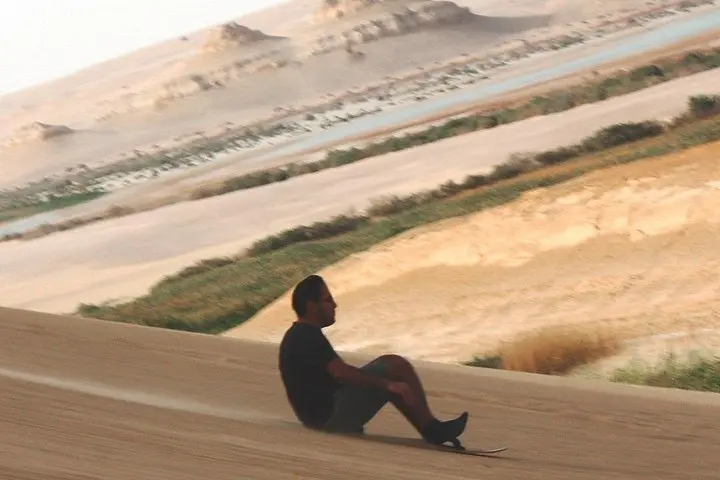
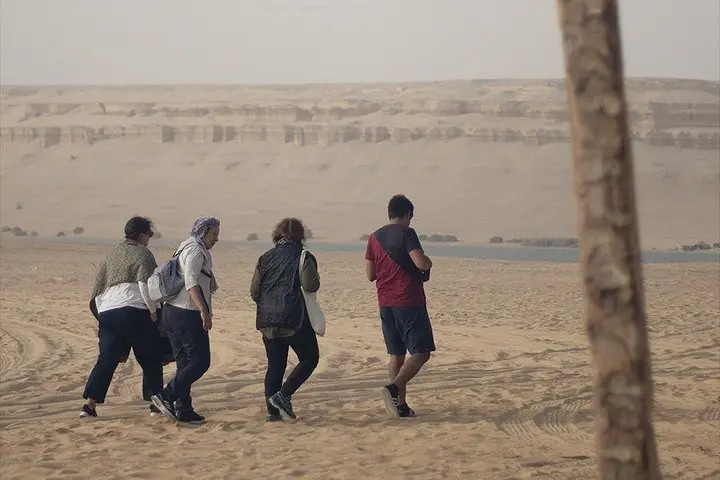
Expect a mix of gentle hikes, dune traverses for sandboarding, short swims in warm spring-fed pools, and guided walks across fossil fields. Camps are traditional desert-style, with shared sleeping areas and communal meals; guides provide context on archaeology, local Bedouin culture, and the delicate desert ecology.
Practical notes: pack sun protection, a refillable water system, sturdy shoes for loose sand, and a warm layer for cold desert nights. Travel time from Cairo is about 2 hours each way; mobile reception is intermittent. A moderate fitness level and readiness for uneven terrain make the trip enjoyable and safe. The route rewards travelers who want active time outdoors combined with easy cultural stops and night skies unspoiled by city lights.
No — the camp is set up for guests; guides handle logistics, though participants should be comfortable sleeping in a shared tented camp.
Yes — visitors often swim in warm spring-fed areas at Wadi El Rayan and Magic Lake, but follow guide instructions about water depth and currents.
The tour is labeled suitable for most fitness levels, but expect walking on uneven ground, climbing dunes, and short hikes; basic mobility is required.
Drive time from central Cairo is roughly 1.5–2.5 hours depending on traffic and the specific itinerary stops.
Dune Raider operates guided outdoor trips and adventures with an emphasis on safety, stewardship, and memorable experiences.
At dusk the desert casts long, cool shadows and the camp lanterns at Qusoor Al Arab throw warm circles across sand. The first night on this Fayoum circuit finds you swapping city noise for a soundtrack of wind and distant owls, waking to light that sharpens the dunes into ridges and makes the still water of Magic Lake a mirror.
At dusk the desert casts long, cool shadows and the camp lanterns at Qusoor Al Arab throw warm circles across sand. The first night on this Fayoum circuit finds you swapping city noise for a soundtrack of wind and distant owls, waking to light that sharpens the dunes into ridges and makes the still water of Magic Lake a mirror.
This two-day camping tour threads together two protected landscapes — Wadi El Rayan’s connected lakes and falls and Wadi El Hitan, the Valley of the Whales where 40‑million‑year‑old marine fossils lie exposed. Between natural springs and fossil beds are human layers: Ptolemaic ruins at Dima El Siba’ and the Middle Kingdom temple of Qasr El Sagha that speak to Egypt’s long habitation of this fertile depression. Geologically the area is an inland basin where Mediterranean seas once reached, leaving salt flats, petrified wood, and limestone shelves sculpted by wind and water.
Expect a mix of gentle hikes, dune traverses for sandboarding, short swims in warm spring-fed pools, and guided walks across fossil fields. Camps are traditional desert-style, with shared sleeping areas and communal meals; guides provide context on archaeology, local Bedouin culture, and the delicate desert ecology.
Practical notes: pack sun protection, a refillable water system, sturdy shoes for loose sand, and a warm layer for cold desert nights. Travel time from Cairo is about 2 hours each way; mobile reception is intermittent. A moderate fitness level and readiness for uneven terrain make the trip enjoyable and safe. The route rewards travelers who want active time outdoors combined with easy cultural stops and night skies unspoiled by city lights.