THE ADVENTURE COLLECTIVE® · Independent discovery and booking for outdoor travel

A full‑day private tour from Cairo that pairs saline Qarun Lake, the waterfalls and lakes of Wadi El Rayan, and the fossil fields of Wadi Hitan. Expect hikes, sandboarding, local village visits, and easy wildlife viewing on a long but rewarding day.
A full‑day private tour from Cairo that pairs saline Qarun Lake, the waterfalls and lakes of Wadi El Rayan, and the fossil fields of Wadi Hitan. Expect hikes, sandboarding, local village visits, and easy wildlife viewing on a long but rewarding day.
You step out of the air‑conditioned vehicle onto the wind‑ruffled west shore of Lake Qarun. A flat ribbon of saltwater stretches under a hard blue sky while gulls argue over fish; behind you, low desert ridges rise into dunes that invite a quick, sandy sprint.
Verified experiences and guided adventures in the surrounding area.
Operated by Cairotour360 · Fayoum, Faiyum Governorate
You step out of the air‑conditioned vehicle onto the wind‑ruffled west shore of Lake Qarun. A flat ribbon of saltwater stretches under a hard blue sky while gulls argue over fish; behind you, low desert ridges rise into dunes that invite a quick, sandy sprint.
This private full‑day route stitches together Fayoum’s contrasting stories: Qarun (Lake Qaroun), a remnant of ancient Lake Moeris that sustained pharaonic agriculture; Wadi El Rayan, where engineered canals and natural depressions create sluggish lakes and Egypt’s unexpected waterfalls; and Wadi Hitan, the UNESCO fossil field where early whale skeletons lie in fossilized repose, proof that the Sahara once wore an ocean.
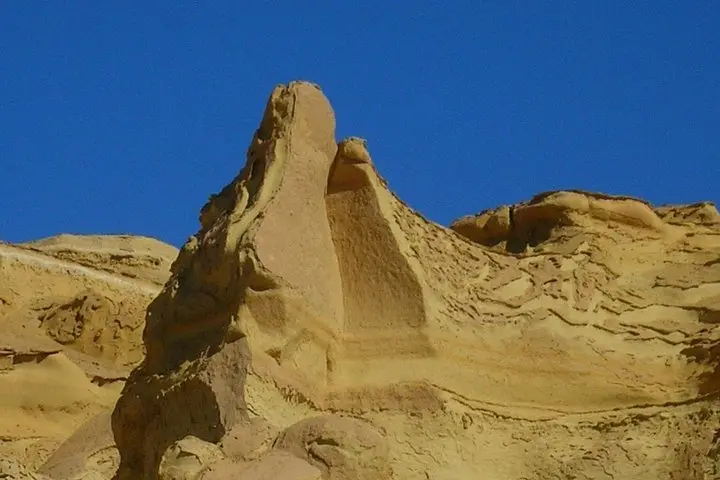
Culturally, Tunis Village offers mudbrick lanes and living pottery traditions — artisans still shape clay much as generations have. The geology here is blunt and readable: sedimentary basins, marine deposits, and the erosive edges of the Western Desert. Nature has an easy arrogance—lakes that push life into the arid plains, gulls and flamingos that stake claims, and fossil whales that stubbornly narrate deep time.
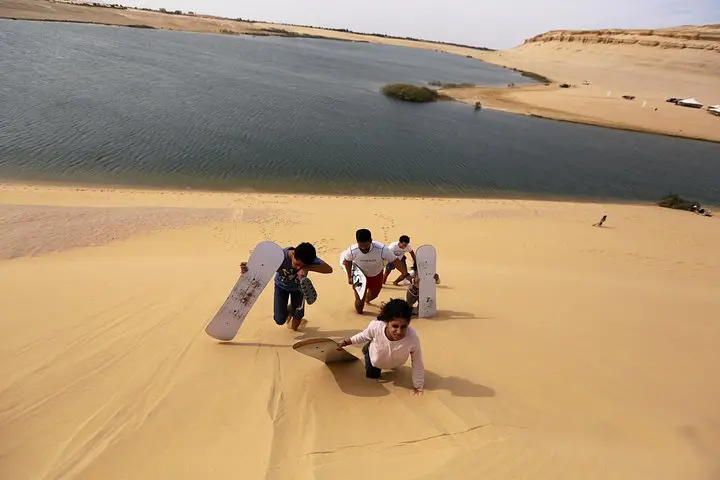
Practical guidance: expect a long day (pick‑up in Cairo), dusty trails, and uneven surfaces when hiking and sandboarding. Bring 2–3 liters of water, sturdy closed shoes for fossil trails, sun protection, and a lightweight layer for early morning or late evening. Respect local customs in villages — modest dress and asking before photographing people. The trip suits moderately fit travelers comfortable with short hikes, walking on soft sand, and stepping up and down ruins and viewpoints.
The drive to Fayoum typically takes 1.5–2 hours each way depending on traffic; expect a full‑day itinerary of 10–12 hours including stops.
Wadi Hitan has marked trails and viewpoints but surfaces are uneven; travelers with significant mobility limitations should check accessibility in advance.
Lunch and bottled water are included in the tour; bringing snacks and extra water is recommended for long activities.
Yes — many operators include sandboarding and optional horse riding on the Lake Qarun shore or nearby dunes as part of the full‑day package.
Cairotour360 operates guided outdoor trips and adventures with an emphasis on safety, stewardship, and memorable experiences.
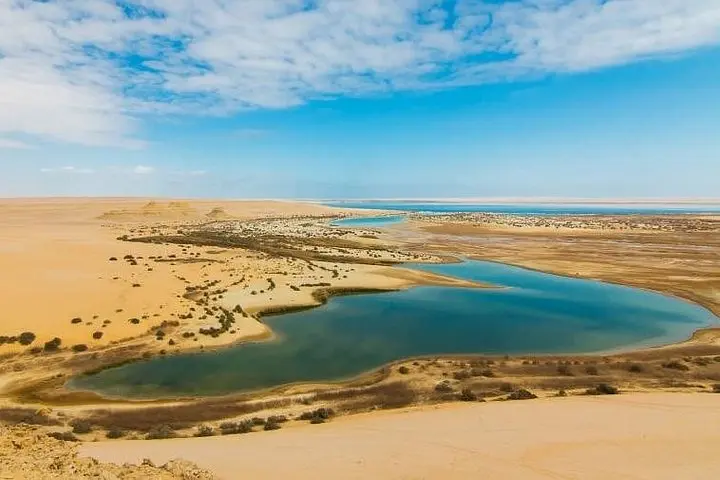
You step out of the air‑conditioned vehicle onto the wind‑ruffled west shore of Lake Qarun. A flat ribbon of saltwater stretches under a hard blue sky while gulls argue over fish; behind you, low desert ridges rise into dunes that invite a quick, sandy sprint.
You step out of the air‑conditioned vehicle onto the wind‑ruffled west shore of Lake Qarun. A flat ribbon of saltwater stretches under a hard blue sky while gulls argue over fish; behind you, low desert ridges rise into dunes that invite a quick, sandy sprint.
This private full‑day route stitches together Fayoum’s contrasting stories: Qarun (Lake Qaroun), a remnant of ancient Lake Moeris that sustained pharaonic agriculture; Wadi El Rayan, where engineered canals and natural depressions create sluggish lakes and Egypt’s unexpected waterfalls; and Wadi Hitan, the UNESCO fossil field where early whale skeletons lie in fossilized repose, proof that the Sahara once wore an ocean.
Culturally, Tunis Village offers mudbrick lanes and living pottery traditions — artisans still shape clay much as generations have. The geology here is blunt and readable: sedimentary basins, marine deposits, and the erosive edges of the Western Desert. Nature has an easy arrogance—lakes that push life into the arid plains, gulls and flamingos that stake claims, and fossil whales that stubbornly narrate deep time.
Practical guidance: expect a long day (pick‑up in Cairo), dusty trails, and uneven surfaces when hiking and sandboarding. Bring 2–3 liters of water, sturdy closed shoes for fossil trails, sun protection, and a lightweight layer for early morning or late evening. Respect local customs in villages — modest dress and asking before photographing people. The trip suits moderately fit travelers comfortable with short hikes, walking on soft sand, and stepping up and down ruins and viewpoints.