THE ADVENTURE COLLECTIVE® · Independent discovery and booking for outdoor travel

A full-day private transfer from Fes to Casablanca that stops at the Roman ruins of Volubilis, the imperial sites of Meknes, and Rabat’s historical heart. Expect about 9–10 hours of combined driving and short on-foot exploration through Morocco’s layered history.
A full-day private transfer from Fes to Casablanca that stops at the Roman ruins of Volubilis, the imperial sites of Meknes, and Rabat’s historical heart. Expect about 9–10 hours of combined driving and short on-foot exploration through Morocco’s layered history.
You leave Fes at first light, windows framing a changing Morocco — tiled medina rooftops give way to olive groves and the rounded silhouette of the Zerhoun massif. In a private, air-conditioned car the road narrows and the rhythm of the trip becomes measured: stops for ruins, a walled medina, then the wide esplanade of a modern capital.
Verified experiences and guided adventures in the surrounding area.
Operated by Hassle Free Excursion · Fes, Fès-Meknès
You leave Fes at first light, windows framing a changing Morocco — tiled medina rooftops give way to olive groves and the rounded silhouette of the Zerhoun massif. In a private, air-conditioned car the road narrows and the rhythm of the trip becomes measured: stops for ruins, a walled medina, then the wide esplanade of a modern capital.
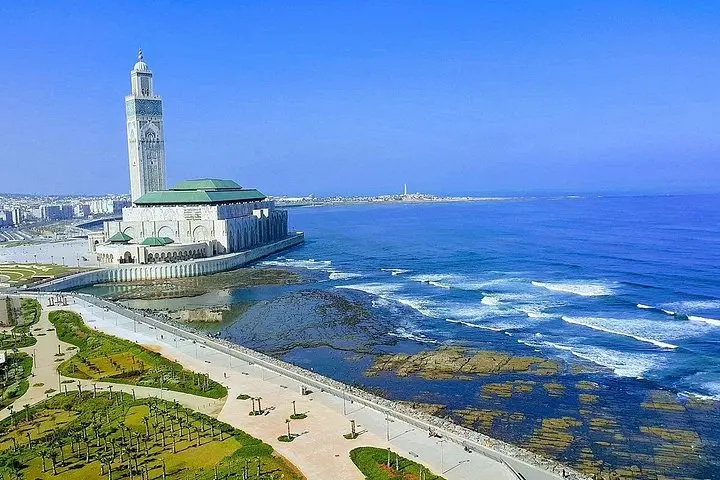
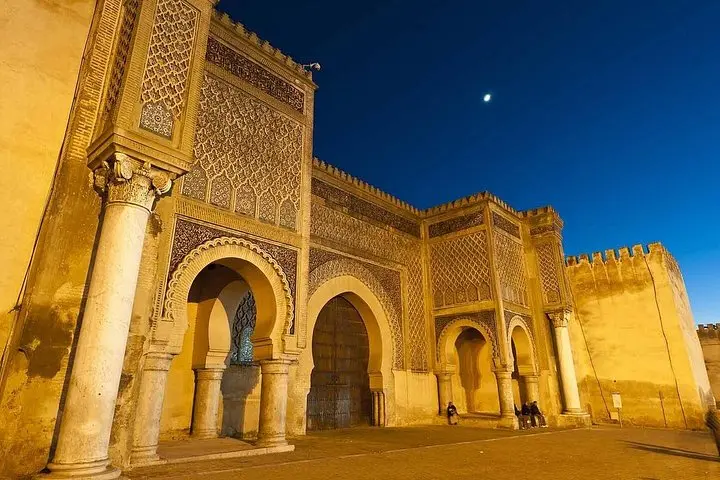
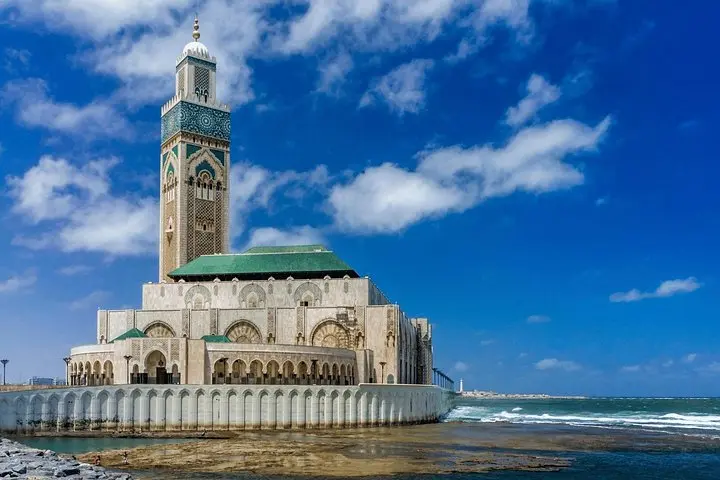
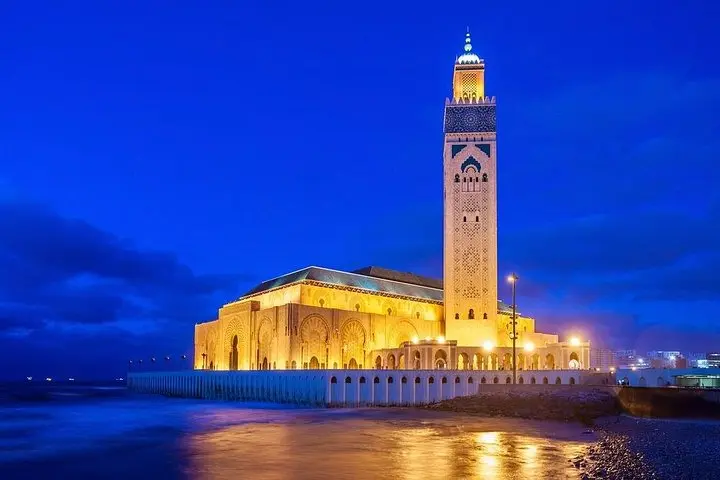
The route threads several layers of history. Volubilis sits on the foothills of Jebel Zerhoun, its exposed Roman pavements and white marble columns spreading across roughly 18 hectares of open site within a larger protected zone. Nearby Meknes, refashioned into an imperial capital by Moulay Ismaïl in the 17th century, offers ornate gates and sprawling palaces that reveal Morocco’s dynastic ambitions. Rabat adds an Andalusian influence: the Kasbah of the Udayas and the Hassan Tower frame the city’s role as modern capital, while Casablanca’s Hassan II Mosque showcases late-20th-century Islamic craftsmanship.
Practicalities shape the day. Expect a 9–10 hour outing with roughly four hours of driving between endpoints; most time is spent seated with several short walking spells—ancient sites have uneven stone and brief stair sections. Bring a filled water bottle, sun protection, and shoes with good grip for mosaics and cobbled streets. Carry small bills for local purchases and allow time for restroom and lunch breaks in Meknes or Rabat.
This transfer combines cultural depth with travel efficiency: it’s a full day that rewards curiosity, a patient pace, and basic preparation for varied surfaces and a long, scenic stretch of highway.
Total door-to-door time is typically 9–10 hours including stops; direct driving between Fes and Casablanca is about 4 hours without stops.
This transfer lists sightseeing stops but does not include admissions; plan to purchase tickets on site or ask your driver for arrangements.
The mosque permits guided visits outside of prayer times; schedules can vary, so check timings in advance or ask the operator the morning of travel.
The tour is family-friendly and described as physically easy, but ruins and medina areas have uneven surfaces and steps—mobility limitations may reduce access at certain sites.
Hassle Free Excursion operates guided outdoor trips and adventures with an emphasis on safety, stewardship, and memorable experiences.
You leave Fes at first light, windows framing a changing Morocco — tiled medina rooftops give way to olive groves and the rounded silhouette of the Zerhoun massif. In a private, air-conditioned car the road narrows and the rhythm of the trip becomes measured: stops for ruins, a walled medina, then the wide esplanade of a modern capital.
You leave Fes at first light, windows framing a changing Morocco — tiled medina rooftops give way to olive groves and the rounded silhouette of the Zerhoun massif. In a private, air-conditioned car the road narrows and the rhythm of the trip becomes measured: stops for ruins, a walled medina, then the wide esplanade of a modern capital.
The route threads several layers of history. Volubilis sits on the foothills of Jebel Zerhoun, its exposed Roman pavements and white marble columns spreading across roughly 18 hectares of open site within a larger protected zone. Nearby Meknes, refashioned into an imperial capital by Moulay Ismaïl in the 17th century, offers ornate gates and sprawling palaces that reveal Morocco’s dynastic ambitions. Rabat adds an Andalusian influence: the Kasbah of the Udayas and the Hassan Tower frame the city’s role as modern capital, while Casablanca’s Hassan II Mosque showcases late-20th-century Islamic craftsmanship.
Practicalities shape the day. Expect a 9–10 hour outing with roughly four hours of driving between endpoints; most time is spent seated with several short walking spells—ancient sites have uneven stone and brief stair sections. Bring a filled water bottle, sun protection, and shoes with good grip for mosaics and cobbled streets. Carry small bills for local purchases and allow time for restroom and lunch breaks in Meknes or Rabat.
This transfer combines cultural depth with travel efficiency: it’s a full day that rewards curiosity, a patient pace, and basic preparation for varied surfaces and a long, scenic stretch of highway.