THE ADVENTURE COLLECTIVE® · Independent discovery and booking for outdoor travel

A full‑day drive from Fes delivers you into Chefchaouen’s blue-washed medina, Rif foothill views, and living craft traditions. This guide explains what to expect on the road, in the lanes, and how to prepare for a respectful, comfortable visit.
A full‑day drive from Fes delivers you into Chefchaouen’s blue-washed medina, Rif foothill views, and living craft traditions. This guide explains what to expect on the road, in the lanes, and how to prepare for a respectful, comfortable visit.
A long ribbon of road climbs into the Rif and the town appears like an argument between sky and stone: whitewashed walls painted in blues that catch the morning light, alleys folding into shade, and the call to prayer threading through the air. Visitors arrive by car from Fes, step onto pebbled Outa-el-Hammam, and feel the medina rearrange the day — market stalls selling woven shawls, the octagonal minaret of the Grand Tarik-Ben-Ziad mosque watching over narrow lanes.
Verified experiences and guided adventures in the surrounding area.
Operated by Fes Sahara Tours · Chefchaouen, Chefchaouen Province
A long ribbon of road climbs into the Rif and the town appears like an argument between sky and stone: whitewashed walls painted in blues that catch the morning light, alleys folding into shade, and the call to prayer threading through the air. Visitors arrive by car from Fes, step onto pebbled Outa-el-Hammam, and feel the medina rearrange the day — market stalls selling woven shawls, the octagonal minaret of the Grand Tarik-Ben-Ziad mosque watching over narrow lanes.
Chefchaouen’s buildings and kasbah reflect Andalusian influence from 15th‑century exiles; the town sits on limestone foothills carved by erosion, with terraces and springs like Ras El Ma flowing down into the medina. Local crafts—wool weaving, pottery and natural-dye traditions—are alive, not staged, and bargaining at small workshops is part of the rhythm.
Expect cobbled streets, steep lanes and short stair climbs; the city sits around 560–600 m in elevation and offers several lookouts, including the short hike to the Spanish Mosque for a panoramic view. A day trip from Fes is roughly 3.5–4 hours each way by road (about 200 km round-trip), so plan for an early departure and a late return.
Practical guidance: wear sturdy walking shoes, carry water and cash for small purchases, and give yourself time for relaxed wandering rather than a checklist tour. Midday is brightest for photography but hottest; late afternoon brings softer light and fewer day-trippers. Respect local customs in markets and mosques, and support family-run ateliers to keep traditions thriving.
Expect roughly 3.5–4 hours each way by car depending on traffic and stops—plan for a full day (10–12 hours) for the round trip.
Yes; the medina is compact but includes uneven ground and stairs, so bring a stroller for flat sections only and plan for slower walking paces.
No—visitors can explore independently, but a local guide offers historical context, efficient navigation, and introductions to artisans if you want depth.
Moroccan dirham (MAD) is used; Arabic and Tamazight are local languages, and French is widely spoken—English is common in tourist services.
Fes Sahara Tours operates guided outdoor trips and adventures with an emphasis on safety, stewardship, and memorable experiences.
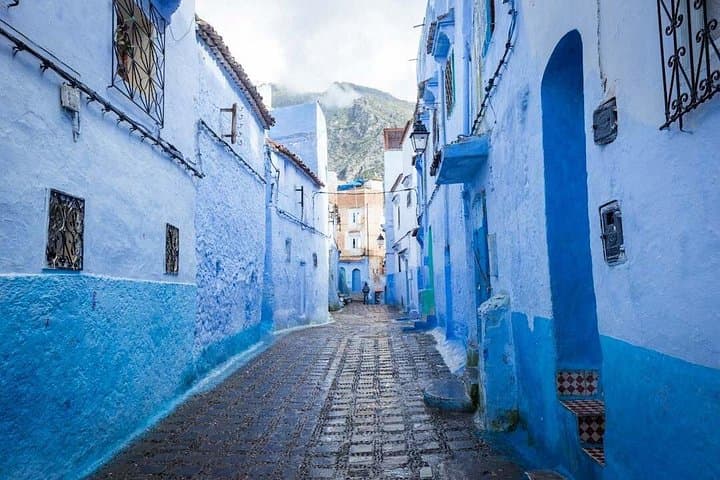
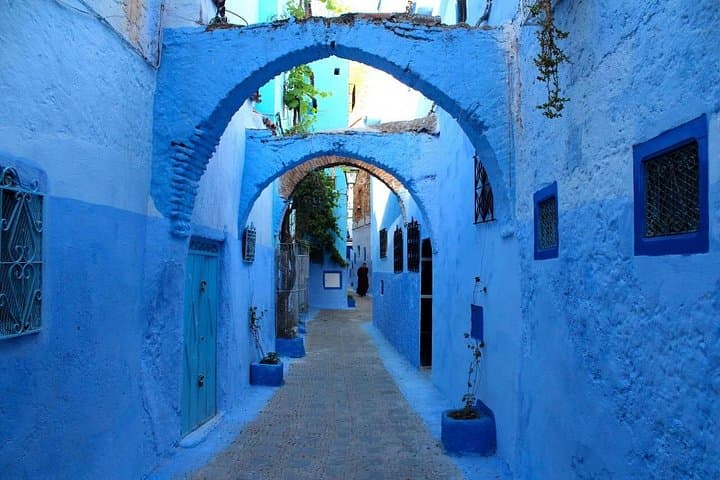
A long ribbon of road climbs into the Rif and the town appears like an argument between sky and stone: whitewashed walls painted in blues that catch the morning light, alleys folding into shade, and the call to prayer threading through the air. Visitors arrive by car from Fes, step onto pebbled Outa-el-Hammam, and feel the medina rearrange the day — market stalls selling woven shawls, the octagonal minaret of the Grand Tarik-Ben-Ziad mosque watching over narrow lanes.
A long ribbon of road climbs into the Rif and the town appears like an argument between sky and stone: whitewashed walls painted in blues that catch the morning light, alleys folding into shade, and the call to prayer threading through the air. Visitors arrive by car from Fes, step onto pebbled Outa-el-Hammam, and feel the medina rearrange the day — market stalls selling woven shawls, the octagonal minaret of the Grand Tarik-Ben-Ziad mosque watching over narrow lanes.
Chefchaouen’s buildings and kasbah reflect Andalusian influence from 15th‑century exiles; the town sits on limestone foothills carved by erosion, with terraces and springs like Ras El Ma flowing down into the medina. Local crafts—wool weaving, pottery and natural-dye traditions—are alive, not staged, and bargaining at small workshops is part of the rhythm.
Expect cobbled streets, steep lanes and short stair climbs; the city sits around 560–600 m in elevation and offers several lookouts, including the short hike to the Spanish Mosque for a panoramic view. A day trip from Fes is roughly 3.5–4 hours each way by road (about 200 km round-trip), so plan for an early departure and a late return.
Practical guidance: wear sturdy walking shoes, carry water and cash for small purchases, and give yourself time for relaxed wandering rather than a checklist tour. Midday is brightest for photography but hottest; late afternoon brings softer light and fewer day-trippers. Respect local customs in markets and mosques, and support family-run ateliers to keep traditions thriving.