THE ADVENTURE COLLECTIVE® · Independent discovery and booking for outdoor travel

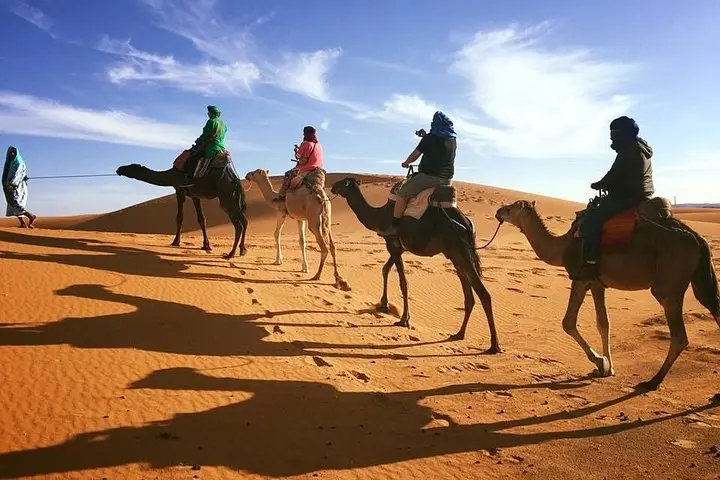
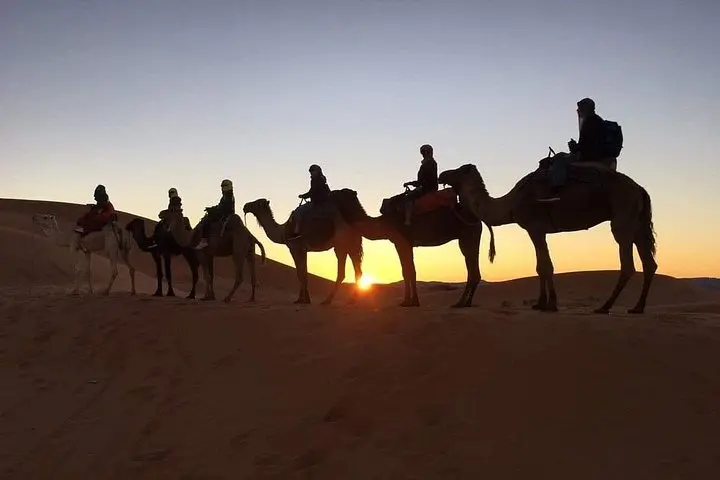
Travel from Fes to Marrakech in three days via the Merzouga dunes—sunset camel rides, sunrise on high sand, and visits to Todra and Ait Ben Haddou. This compact overland loop combines long driving days with unforgettable desert nights.
Travel from Fes to Marrakech in three days via the Merzouga dunes—sunset camel rides, sunrise on high sand, and visits to Todra and Ait Ben Haddou. This compact overland loop combines long driving days with unforgettable desert nights.
Dust lifts off the road as the minivan slips out of Fes at dawn; cedar forests and a string of atlas towns pass in a slow procession while the driver points to distant ridgelines. By midafternoon the landscape changes—rocky plateaus give way to the ochre sweep of the Ziz Valley and finally the orange crests of Erg Chebbi, where camels trace a steady line across sand.
Verified experiences and guided adventures in the surrounding area.
Operated by Merzouga Experience · Merzouga, Errachidia Province
Dust lifts off the road as the minivan slips out of Fes at dawn; cedar forests and a string of atlas towns pass in a slow procession while the driver points to distant ridgelines. By midafternoon the landscape changes—rocky plateaus give way to the ochre sweep of the Ziz Valley and finally the orange crests of Erg Chebbi, where camels trace a steady line across sand.
This route threads Moroccan history and geology: the Rif and Middle Atlas were carved by old tectonic collisions, while the Ziz River keeps narrow palm oases alive through limestone canyons. You’ll touch culture in small market towns—Rissani’s souk rhythm, fossil workshops in Erfoud, and the mud-brick kasbahs of the Dades and Ait Ben Haddou, a UNESCO ksar used repeatedly by international filmmakers.
Expect long drives between highlights (several 3–5 hour legs), an overnight in a desert camp under a wide sky, a sunrise climb on a high dune, and canyon walks in Todra and Dades. Terrain shifts from paved mountain passes to sand tracks and short rocky hikes; elevation varies from about 1,600 m at Tizi n’Tichka down to 700–800 m in the Ziz valley and flat dunes at Merzouga.
Practical guidance: bring layered clothing for hot days and cold desert nights, carry 2–3 liters of water per day, and wear sturdy closed shoes for gorges. Plan for early starts and photo stops, and keep local currency for market purchases and tips. The trip balances long road mileage with high-impact moments—sunset camel rides, towering gorges, and the stonework of ancient kasbahs.
Expect several long transfers—typically 3–5 hours between major stops; day one and day three include the longest road segments.
No—camel rides are guided and suitable for first-timers; staff handle saddling and safe mounting.
Yes—two dinners and two breakfasts plus accommodation (desert camp and riad/hotel) are included as specified by the operator.
Generally yes—operators list the trip as suitable for all fitness levels, but long drives and sandy terrain may be tiring for very young children or travelers with mobility issues.
Merzouga Experience operates guided outdoor trips and adventures with an emphasis on safety, stewardship, and memorable experiences.
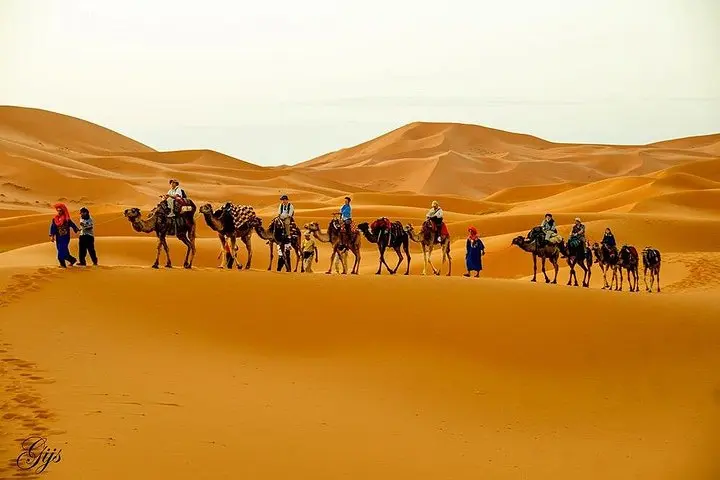
Dust lifts off the road as the minivan slips out of Fes at dawn; cedar forests and a string of atlas towns pass in a slow procession while the driver points to distant ridgelines. By midafternoon the landscape changes—rocky plateaus give way to the ochre sweep of the Ziz Valley and finally the orange crests of Erg Chebbi, where camels trace a steady line across sand.
Dust lifts off the road as the minivan slips out of Fes at dawn; cedar forests and a string of atlas towns pass in a slow procession while the driver points to distant ridgelines. By midafternoon the landscape changes—rocky plateaus give way to the ochre sweep of the Ziz Valley and finally the orange crests of Erg Chebbi, where camels trace a steady line across sand.
This route threads Moroccan history and geology: the Rif and Middle Atlas were carved by old tectonic collisions, while the Ziz River keeps narrow palm oases alive through limestone canyons. You’ll touch culture in small market towns—Rissani’s souk rhythm, fossil workshops in Erfoud, and the mud-brick kasbahs of the Dades and Ait Ben Haddou, a UNESCO ksar used repeatedly by international filmmakers.
Expect long drives between highlights (several 3–5 hour legs), an overnight in a desert camp under a wide sky, a sunrise climb on a high dune, and canyon walks in Todra and Dades. Terrain shifts from paved mountain passes to sand tracks and short rocky hikes; elevation varies from about 1,600 m at Tizi n’Tichka down to 700–800 m in the Ziz valley and flat dunes at Merzouga.
Practical guidance: bring layered clothing for hot days and cold desert nights, carry 2–3 liters of water per day, and wear sturdy closed shoes for gorges. Plan for early starts and photo stops, and keep local currency for market purchases and tips. The trip balances long road mileage with high-impact moments—sunset camel rides, towering gorges, and the stonework of ancient kasbahs.