THE ADVENTURE COLLECTIVE® · Independent discovery and booking for outdoor travel

Drive the Middle Atlas to reach the rippling dunes of Erg Chebbi on a compact 2-day loop from Fes. Expect cedar groves and mountain passes, a late-afternoon camel trek, an overnight desert camp and a sunrise over the Sahara.
Drive the Middle Atlas to reach the rippling dunes of Erg Chebbi on a compact 2-day loop from Fes. Expect cedar groves and mountain passes, a late-afternoon camel trek, an overnight desert camp and a sunrise over the Sahara.
Dawn pulls a thin gold line across Erg Chebbi as camels file away from the camp; the dunes inhale and shift under each step. On this 2-day loop from Fes you trade cedar forests and mountain passes for scrub, fossil-strewn plateaus and a night beneath a wide desert sky.
Verified experiences and guided adventures in the surrounding area.
Operated by Hassle Free Excursion · Merzouga, Drâa-Tafilalet
Dawn pulls a thin gold line across Erg Chebbi as camels file away from the camp; the dunes inhale and shift under each step. On this 2-day loop from Fes you trade cedar forests and mountain passes for scrub, fossil-strewn plateaus and a night beneath a wide desert sky.
The route threads the Middle Atlas—Ifrane’s alpine-style houses and Azrou’s cedar groves give way to Midelt’s apple orchards and the dusty towns of Erfoud and Rissani. Geologically the Erg Chebbi dunes are wind-built ridges of Saharan sand that migrate seasonally; culturally the corridor is steeped in Amazigh (Berber) traditions and the old trans-Saharan trade roads that once linked caravans and markets.
Expect a long day of driving (roughly 470 km; 7–9 hours depending on stops) on day one, broken by short cultural and photo stops, then a late-afternoon camel trek to a traditional desert camp. Dinner is typically communal with local music; tents range from basic to comfortable—confirm standards with your operator. An early-morning climb of a dune rewards you with one of the Sahara’s most striking sunrises before the return drive with a stop in Rissani’s souk.
Practical edge: layer for big diurnal swings, carry at least 1–2 liters of water beyond what’s provided, and time camel walks for late afternoon or pre-dawn to avoid heat. Footwear should handle both sand and paved stops. Leave no trace on fragile dune surfaces and follow guide instructions when viewing wildlife or visiting remote villages.
Expect roughly 7–9 hours of driving one-way (about 470 km), broken by short cultural stops through the Middle Atlas and towns like Midelt and Erfoud.
Camel treks to the camp are typically 45–90 minutes across soft sand—paced for comfort; riders should have basic balance but no special skills are needed.
Camps vary from basic nomadic-style tents to more comfortable private tents with mattresses; dinner is communal traditional food—confirm level of comfort when booking.
The tour is generally family-friendly and marked as suitable for all fitness levels, but long driving stretches and uneven sand terrain may be challenging for very young children or those with limited mobility.
Hassle Free Excursion operates guided outdoor trips and adventures with an emphasis on safety, stewardship, and memorable experiences.
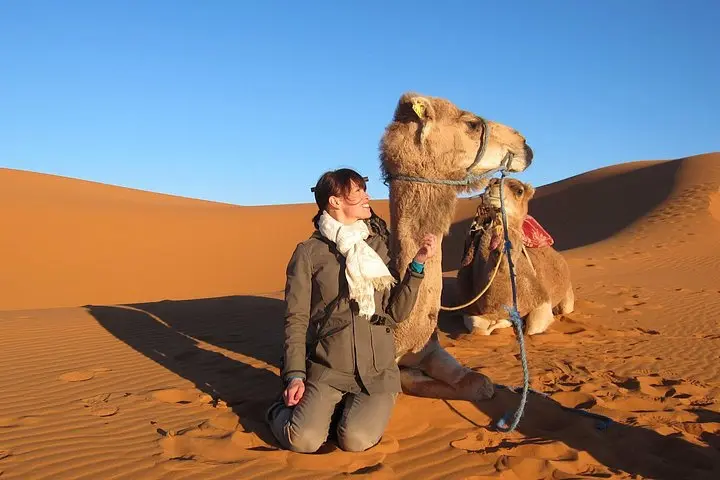
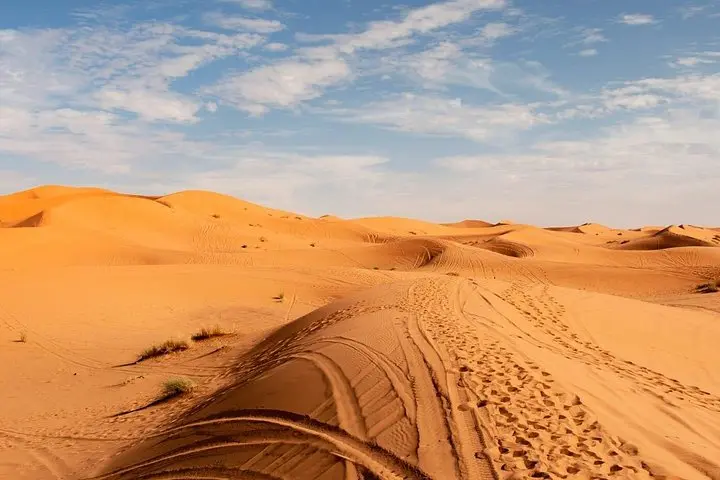
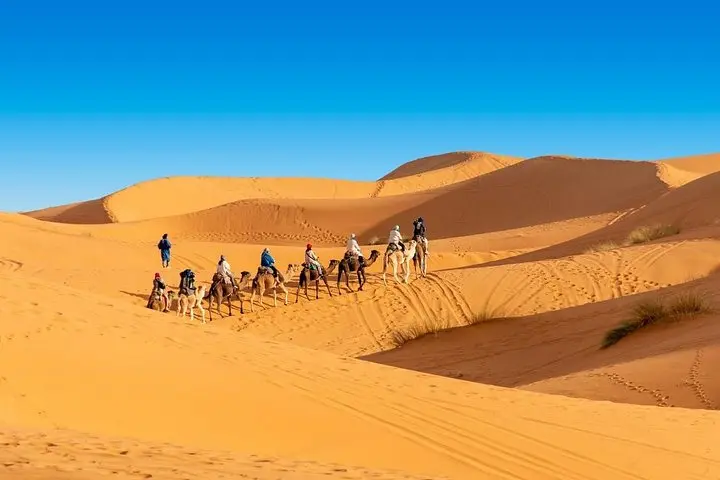
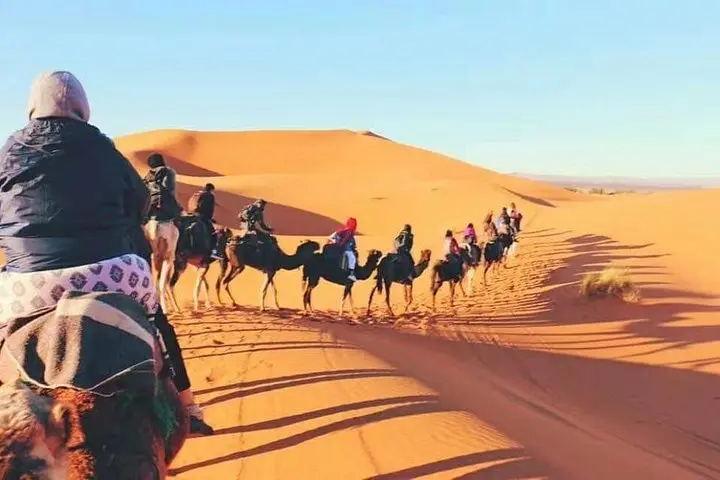
Dawn pulls a thin gold line across Erg Chebbi as camels file away from the camp; the dunes inhale and shift under each step. On this 2-day loop from Fes you trade cedar forests and mountain passes for scrub, fossil-strewn plateaus and a night beneath a wide desert sky.
Dawn pulls a thin gold line across Erg Chebbi as camels file away from the camp; the dunes inhale and shift under each step. On this 2-day loop from Fes you trade cedar forests and mountain passes for scrub, fossil-strewn plateaus and a night beneath a wide desert sky.
The route threads the Middle Atlas—Ifrane’s alpine-style houses and Azrou’s cedar groves give way to Midelt’s apple orchards and the dusty towns of Erfoud and Rissani. Geologically the Erg Chebbi dunes are wind-built ridges of Saharan sand that migrate seasonally; culturally the corridor is steeped in Amazigh (Berber) traditions and the old trans-Saharan trade roads that once linked caravans and markets.
Expect a long day of driving (roughly 470 km; 7–9 hours depending on stops) on day one, broken by short cultural and photo stops, then a late-afternoon camel trek to a traditional desert camp. Dinner is typically communal with local music; tents range from basic to comfortable—confirm standards with your operator. An early-morning climb of a dune rewards you with one of the Sahara’s most striking sunrises before the return drive with a stop in Rissani’s souk.
Practical edge: layer for big diurnal swings, carry at least 1–2 liters of water beyond what’s provided, and time camel walks for late afternoon or pre-dawn to avoid heat. Footwear should handle both sand and paved stops. Leave no trace on fragile dune surfaces and follow guide instructions when viewing wildlife or visiting remote villages.