THE ADVENTURE COLLECTIVE® · Independent discovery and booking for outdoor travel

Drive from Fes across the Atlas to the towering dunes of Erg Chebbi on this private two-day tour. Expect cedar forests, caravan towns, a sunset camel trek and an overnight in a luxury desert camp.
Drive from Fes across the Atlas to the towering dunes of Erg Chebbi on this private two-day tour. Expect cedar forests, caravan towns, a sunset camel trek and an overnight in a luxury desert camp.
Dawn finds you on the road out of Fes, the Atlas rising like an old map folding into the horizon. The drive threads through cedar forests and high plateaus, dipping into the scarred red of the Ziz Valley before the dunes of Erg Chebbi appear like a sea arrested on the sand.
Verified experiences and guided adventures in the surrounding area.
Operated by In-Morocco · Merzouga, Drâa-Tafilalet
Dawn finds you on the road out of Fes, the Atlas rising like an old map folding into the horizon. The drive threads through cedar forests and high plateaus, dipping into the scarred red of the Ziz Valley before the dunes of Erg Chebbi appear like a sea arrested on the sand.
This two-day loop follows a historic trans-Saharan corridor used by Berber caravans. Geologically, Erg Chebbi is a large sand erg formed by wind-driven deposits over millennia; dunes can tower 150–250 meters in places. Culturally the route is lined with ksar villages, date palm oases and the music of Gnawa tribes around Merzouga—places where hospitality and slow meals are still part of the day.
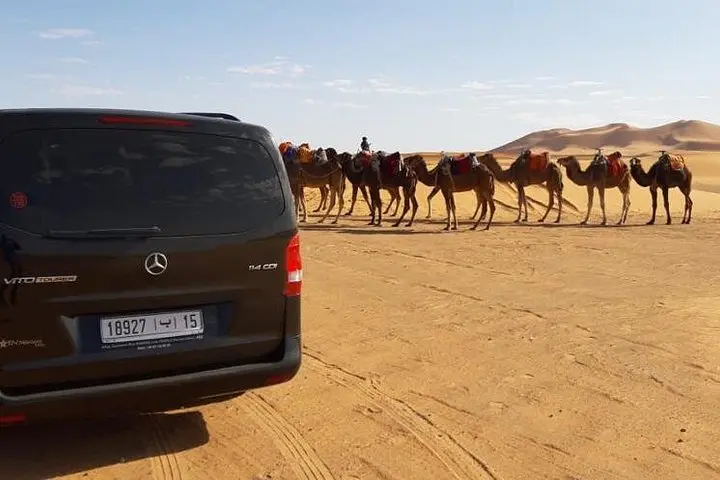
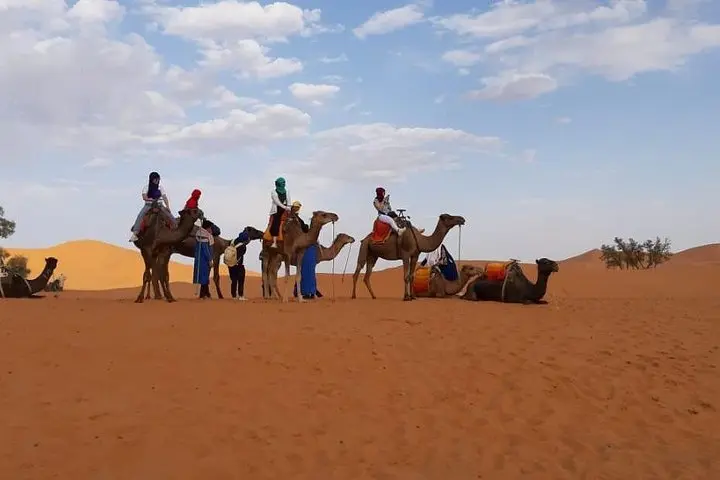
Expect about 8–10 hours of driving split across the itinerary (Fes to Merzouga ≈ 470 km total one-way via Midelt and Erfoud), punctuated by short walks, a late-afternoon camel trek and a night in a desert camp under a broad sky. The camel ride is gentle—mostly pacing over dune slopes—and sandboarding or quad biking are optional extras if you want more adrenaline.
Practical guidance: start early to avoid mid-day heat, carry 2–3 liters of water, layered clothing for hot days and cool nights, and sturdy shoes for rocky stops. Plan for basic mobile reception in towns but limited service at the camp. Respect local customs—ask before photographing people—and limit single-use plastics to protect the fragile desert. The reward is a vast, quiet landscape and a nighttime sky that seems to push toward you with its stars.
Typical camel treks for this tour are 60–90 minutes, timed to reach a sunset viewpoint, with gentler walking suitable for first-timers.
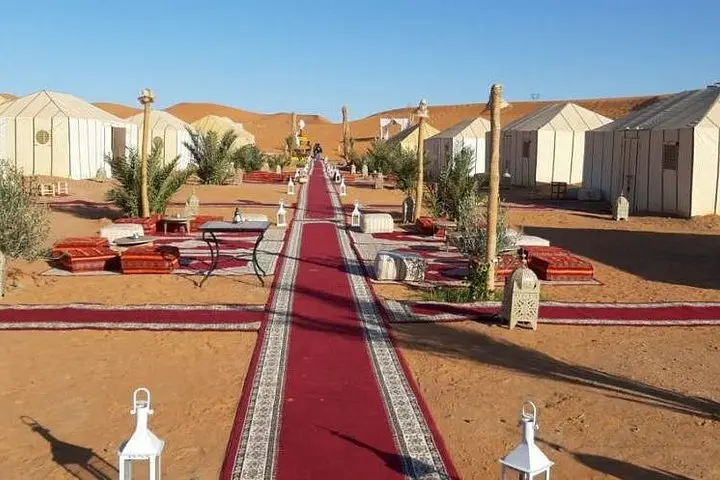
Yes—dinner and breakfast at the desert camp are included; the tour offers standard and luxury camp options depending on booking.
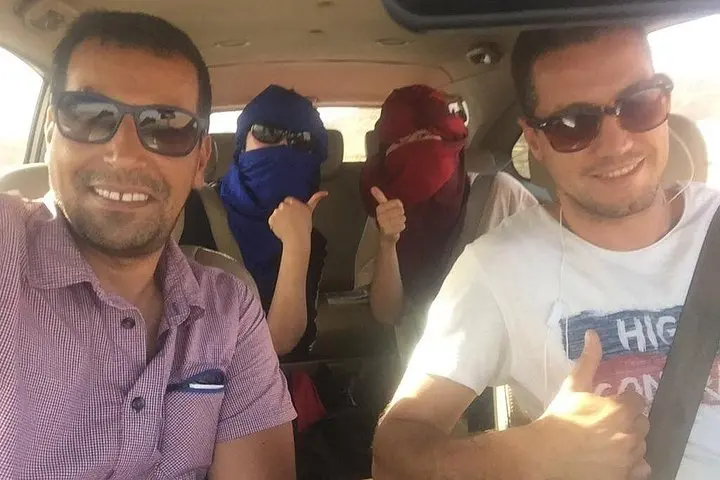
Yes—private pick-up from a Riad, hotel or Fes airport is included; pickup time is usually early morning to maximize daylight.
In spring and autumn nights are cool; in winter it can be near freezing, so bring warm layers; summers stay warm after sunset but can become breezy.
In-Morocco operates guided outdoor trips and adventures with an emphasis on safety, stewardship, and memorable experiences.
Dawn finds you on the road out of Fes, the Atlas rising like an old map folding into the horizon. The drive threads through cedar forests and high plateaus, dipping into the scarred red of the Ziz Valley before the dunes of Erg Chebbi appear like a sea arrested on the sand.
Dawn finds you on the road out of Fes, the Atlas rising like an old map folding into the horizon. The drive threads through cedar forests and high plateaus, dipping into the scarred red of the Ziz Valley before the dunes of Erg Chebbi appear like a sea arrested on the sand.
This two-day loop follows a historic trans-Saharan corridor used by Berber caravans. Geologically, Erg Chebbi is a large sand erg formed by wind-driven deposits over millennia; dunes can tower 150–250 meters in places. Culturally the route is lined with ksar villages, date palm oases and the music of Gnawa tribes around Merzouga—places where hospitality and slow meals are still part of the day.
Expect about 8–10 hours of driving split across the itinerary (Fes to Merzouga ≈ 470 km total one-way via Midelt and Erfoud), punctuated by short walks, a late-afternoon camel trek and a night in a desert camp under a broad sky. The camel ride is gentle—mostly pacing over dune slopes—and sandboarding or quad biking are optional extras if you want more adrenaline.
Practical guidance: start early to avoid mid-day heat, carry 2–3 liters of water, layered clothing for hot days and cool nights, and sturdy shoes for rocky stops. Plan for basic mobile reception in towns but limited service at the camp. Respect local customs—ask before photographing people—and limit single-use plastics to protect the fragile desert. The reward is a vast, quiet landscape and a nighttime sky that seems to push toward you with its stars.