THE ADVENTURE COLLECTIVE® · Independent discovery and booking for outdoor travel

Drive from Fes across cedar forests, mountain passes and town markets to the Erg Chebbi dunes of Merzouga. Spend an evening in a Berber haima, ride camels among towering sand ribs, and watch sunrise from a dune crest.
Drive from Fes across cedar forests, mountain passes and town markets to the Erg Chebbi dunes of Merzouga. Spend an evening in a Berber haima, ride camels among towering sand ribs, and watch sunrise from a dune crest.
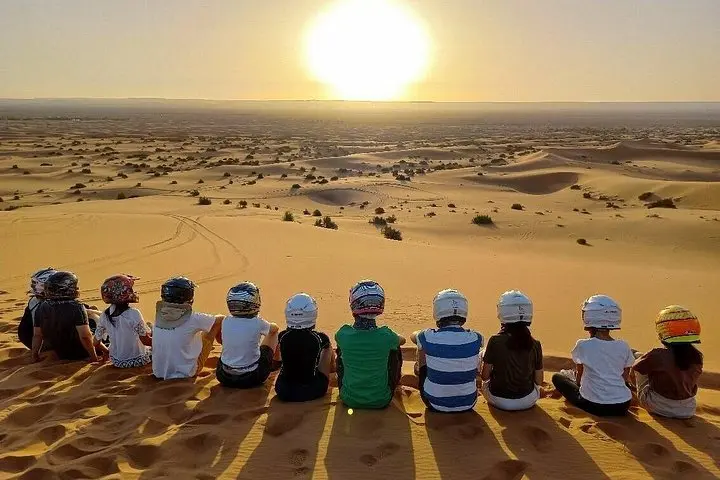
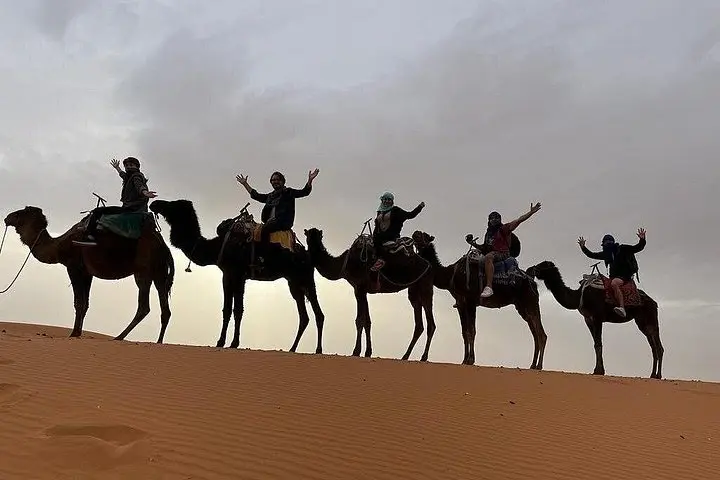
The road leaves Fes before dawn and the Atlas foothills open like a changing map: cedar forests and snow-smudged peaks give way to baked plateaus and a horizon that keeps getting flatter until sand rises again. By late afternoon the dunes of Erg Chebbi push up, golden and sharp-edged, daring you to climb. A caravan of camels and the low voices of your guides lead you to a haima — a traditional Berber tent — where high desert sky and campfire conversation replace the city lights.
Verified experiences and guided adventures in the surrounding area.
Operated by Morocco Shared Tours · Merzouga, Drâa-Tafilalet
The road leaves Fes before dawn and the Atlas foothills open like a changing map: cedar forests and snow-smudged peaks give way to baked plateaus and a horizon that keeps getting flatter until sand rises again. By late afternoon the dunes of Erg Chebbi push up, golden and sharp-edged, daring you to climb. A caravan of camels and the low voices of your guides lead you to a haima — a traditional Berber tent — where high desert sky and campfire conversation replace the city lights.
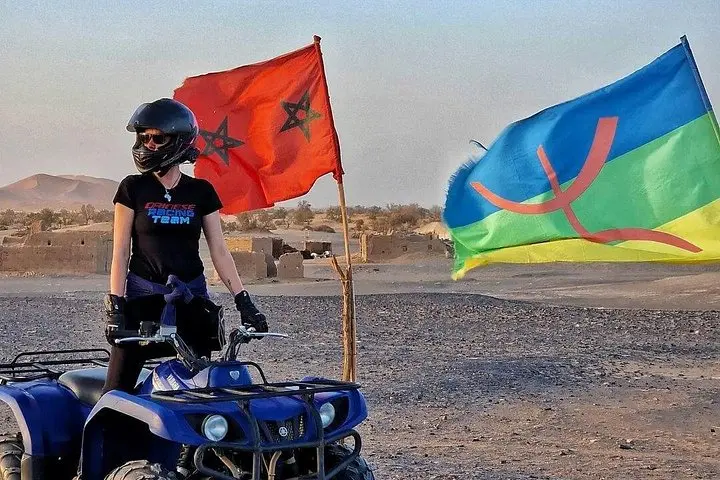
This route threads modern Morocco with deeper histories: Roman-era caravan tracks and Amazigh (Berber) settlements, French colonial road-building, and villages that grew around seasonal water and date palms. Geologically, Erg Chebbi is an active dune field formed by wind-driven sand from the nearby hamada; the dunes shift with each season so the landscape today will be subtly different next year.
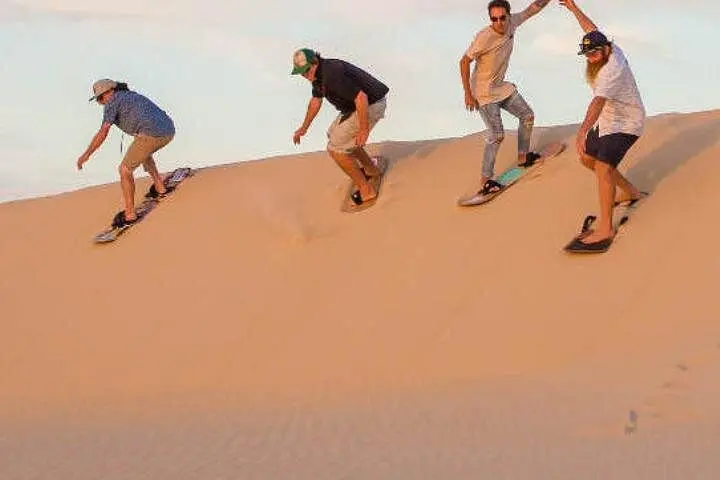
Culturally, expect hospitality — strong mint tea, communal dinners, and Gnawa rhythms after dark — and practical comforts: an air-conditioned vehicle, simple tent lodging, and a morning shower at camp. The trip mixes light dune trekking and a camel ride; it requires moderate fitness for sand walking and easy mounting of camels.
Practical guidance: pack layers for cold desert nights, sunscreen and a brimmed hat for daytime exposure, and gaiter-friendly shoes for walking on loose sand. Time your travel to watch both sunset and sunrise from a sand crest; early mornings give cooler air and clearer photos. Respect local customs around photography, carry reusable water to avoid single-use plastic, and leave the dunes as you found them — footprints, then forgetfulness.
Camel rides are gentle but mounting can be awkward; dune walks are short but on soft sand, so moderate fitness is recommended.
Tents are traditional haimas with bedding; many camps provide shared or simple private shower facilities depending on the operator.
Spring and fall offer mild temperatures; summer is very hot during the day, and winter nights can be cold.
Most operators can adjust meals with advance notice — include dietary needs when you book or at pickup.
Morocco Shared Tours operates guided outdoor trips and adventures with an emphasis on safety, stewardship, and memorable experiences.
The road leaves Fes before dawn and the Atlas foothills open like a changing map: cedar forests and snow-smudged peaks give way to baked plateaus and a horizon that keeps getting flatter until sand rises again. By late afternoon the dunes of Erg Chebbi push up, golden and sharp-edged, daring you to climb. A caravan of camels and the low voices of your guides lead you to a haima — a traditional Berber tent — where high desert sky and campfire conversation replace the city lights.
The road leaves Fes before dawn and the Atlas foothills open like a changing map: cedar forests and snow-smudged peaks give way to baked plateaus and a horizon that keeps getting flatter until sand rises again. By late afternoon the dunes of Erg Chebbi push up, golden and sharp-edged, daring you to climb. A caravan of camels and the low voices of your guides lead you to a haima — a traditional Berber tent — where high desert sky and campfire conversation replace the city lights.
This route threads modern Morocco with deeper histories: Roman-era caravan tracks and Amazigh (Berber) settlements, French colonial road-building, and villages that grew around seasonal water and date palms. Geologically, Erg Chebbi is an active dune field formed by wind-driven sand from the nearby hamada; the dunes shift with each season so the landscape today will be subtly different next year.
Culturally, expect hospitality — strong mint tea, communal dinners, and Gnawa rhythms after dark — and practical comforts: an air-conditioned vehicle, simple tent lodging, and a morning shower at camp. The trip mixes light dune trekking and a camel ride; it requires moderate fitness for sand walking and easy mounting of camels.
Practical guidance: pack layers for cold desert nights, sunscreen and a brimmed hat for daytime exposure, and gaiter-friendly shoes for walking on loose sand. Time your travel to watch both sunset and sunrise from a sand crest; early mornings give cooler air and clearer photos. Respect local customs around photography, carry reusable water to avoid single-use plastic, and leave the dunes as you found them — footprints, then forgetfulness.