THE ADVENTURE COLLECTIVE® · Independent discovery and booking for outdoor travel

Drive from Fes across cedar forests and Atlas foothills to the vast Erg Chebbi dunes, spend a night in a desert camp reached by camel, and continue to Marrakech or return to Fes. This two-day route combines scenic stops, simple desert camping and local guiding for an accessible Sahara experience.
Drive from Fes across cedar forests and Atlas foothills to the vast Erg Chebbi dunes, spend a night in a desert camp reached by camel, and continue to Marrakech or return to Fes. This two-day route combines scenic stops, simple desert camping and local guiding for an accessible Sahara experience.
You roll out of Fes before dawn, the city’s ochre roofs shrinking as the road unspools toward cedar forests, red-ochre gorges and the first silhouette of dunes. By midday the Atlas foothills give way to open scrub; by late afternoon the Erg Chebbi dunes push back against the sky, their ridgelines sharp and alive with wind.
Verified experiences and guided adventures in the surrounding area.
Operated by is time to travel · Merzouga, Drâa-Tafilalet
You roll out of Fes before dawn, the city’s ochre roofs shrinking as the road unspools toward cedar forests, red-ochre gorges and the first silhouette of dunes. By midday the Atlas foothills give way to open scrub; by late afternoon the Erg Chebbi dunes push back against the sky, their ridgelines sharp and alive with wind.
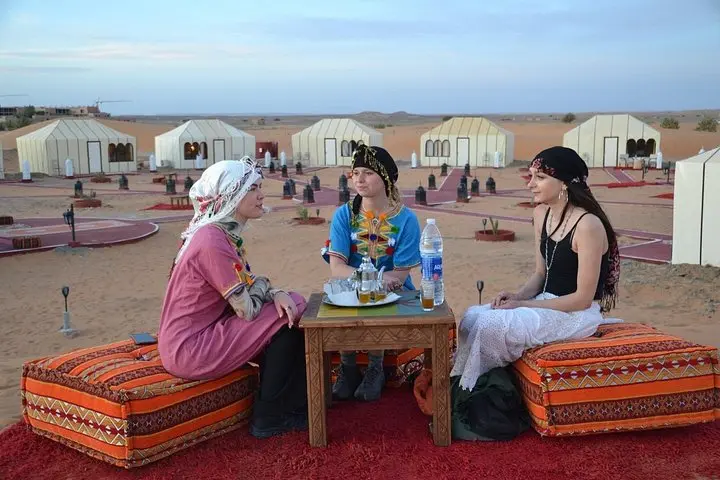
The route follows ancient caravan corridors: Azrou’s cedar stands host Barbary macaques, and the Middle Atlas pours into narrow river valleys and small falls where local villagers once ground grain. Geologically, the desert here is a field of wind-sculpted sand over older alluvial plains — dunes that shift seasonally and record the Sahara’s breathing. Culturally, the evenings lean on Berber hospitality: shared tagines, stories around a low fire, and nights in simple tents under wide stars.
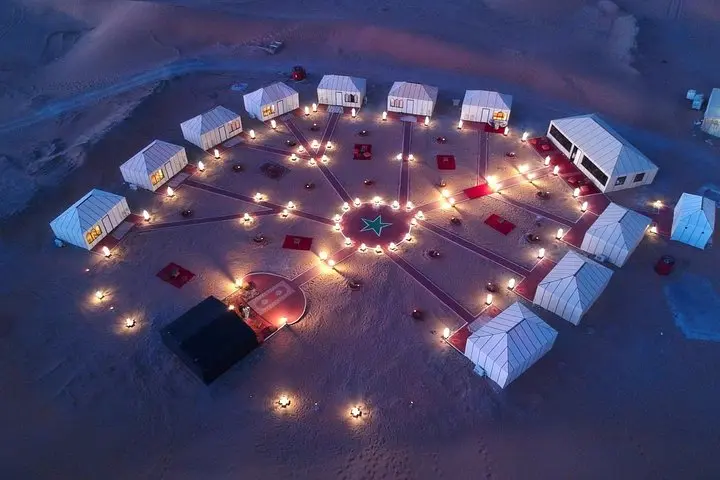
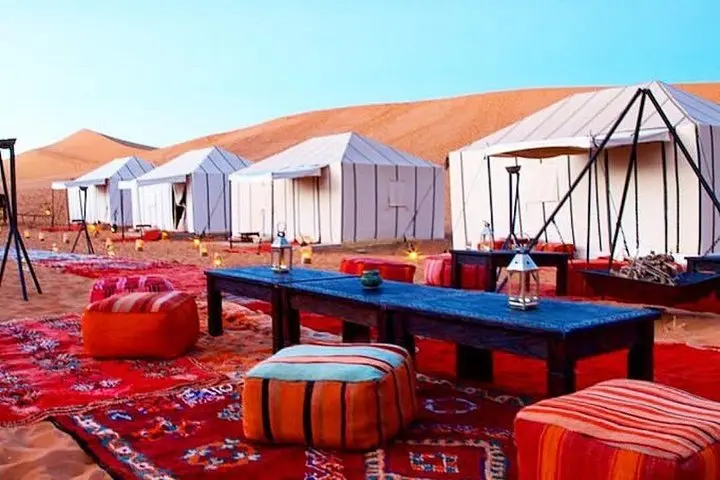
Practically, expect two full travel days separated by a camel-led camp night. Caravan-style camel rides are short transfers across dunes rather than technical treks; tents are basic desert camps with mattresses and blankets. Drivers and licensed guides usually provide bottled water, two meals and local transfers; communications can be intermittent on remote stretches.
Bring layered clothing for cool desert nights, a sun hat and sturdy closed shoes for dune scrambling. Time your trip for morning or late-afternoon dune walks to avoid peak heat. If you have mobility concerns, note the camel mounting and soft sand walking can be challenging. This tour is an accessible, immersive way to experience the Sahara’s scale — raw landscape, practical logistics and a direct line to Morocco’s desert traditions.
Camel transfers to the camp are typically short (30–60 minutes) across dunes, designed to reach the camp at sunset rather than as a long trek.
Camps are basic: most offer simple toilet facilities and optional bucket or solar-heated showers, but luxury amenities are not guaranteed on standard camps.
Yes — the tour operator commonly accommodates vegetarian, vegan and gluten-free needs if notified at booking.
The tour is advertised as suitable for a wide age range, but camel boarding, soft sand walking and long vehicle transfers may be difficult for some; consult the guide about mobility needs.
is time to travel operates guided outdoor trips and adventures with an emphasis on safety, stewardship, and memorable experiences.
You roll out of Fes before dawn, the city’s ochre roofs shrinking as the road unspools toward cedar forests, red-ochre gorges and the first silhouette of dunes. By midday the Atlas foothills give way to open scrub; by late afternoon the Erg Chebbi dunes push back against the sky, their ridgelines sharp and alive with wind.
You roll out of Fes before dawn, the city’s ochre roofs shrinking as the road unspools toward cedar forests, red-ochre gorges and the first silhouette of dunes. By midday the Atlas foothills give way to open scrub; by late afternoon the Erg Chebbi dunes push back against the sky, their ridgelines sharp and alive with wind.
The route follows ancient caravan corridors: Azrou’s cedar stands host Barbary macaques, and the Middle Atlas pours into narrow river valleys and small falls where local villagers once ground grain. Geologically, the desert here is a field of wind-sculpted sand over older alluvial plains — dunes that shift seasonally and record the Sahara’s breathing. Culturally, the evenings lean on Berber hospitality: shared tagines, stories around a low fire, and nights in simple tents under wide stars.
Practically, expect two full travel days separated by a camel-led camp night. Caravan-style camel rides are short transfers across dunes rather than technical treks; tents are basic desert camps with mattresses and blankets. Drivers and licensed guides usually provide bottled water, two meals and local transfers; communications can be intermittent on remote stretches.
Bring layered clothing for cool desert nights, a sun hat and sturdy closed shoes for dune scrambling. Time your trip for morning or late-afternoon dune walks to avoid peak heat. If you have mobility concerns, note the camel mounting and soft sand walking can be challenging. This tour is an accessible, immersive way to experience the Sahara’s scale — raw landscape, practical logistics and a direct line to Morocco’s desert traditions.